Desk work in NYC can make pain feel like part of the job. You sit through back-to-back meetings, answer emails on a laptop, look down at your phone on the subway, carry a tote or backpack across town, then repeat it all tomorrow. Over time, those small stresses can add up to neck tension, low back pain, headaches, tight hips, wrist irritation, and fatigue.
The good news is that pain relief and wellness do not require a total lifestyle overhaul. For most desk workers, the biggest improvements come from a smarter workstation, more frequent movement, better recovery habits, and knowing when to get professional help.
This guide is built for busy New Yorkers who want practical, realistic steps they can use in an office, coworking space, or small apartment setup.
Why desk work causes so much pain
Desk pain is rarely caused by one bad posture. More often, it comes from staying in one position too long. Even a posture that looks ideal can become uncomfortable if your joints and muscles never get a chance to move.
Common desk-related pain triggers include prolonged sitting, rounded shoulders, forward head posture, unsupported wrists, repetitive mouse use, shallow breathing, and stress-related muscle tension. NYC adds a few extra challenges: long commutes, crowded trains, small workspaces, walking in dress shoes, and switching between office days and work-from-home days.
The body is designed for movement. The World Health Organization recommends that adults get 150 to 300 minutes of moderate-intensity aerobic activity each week, plus muscle-strengthening activity at least 2 days per week. Desk workers often struggle to reach that baseline unless movement is built into the day intentionally.
Think of your workday goal this way: do not chase perfect posture, chase posture variety. Your next position is often more important than your current one.
Start with a 5-minute NYC desk setup audit
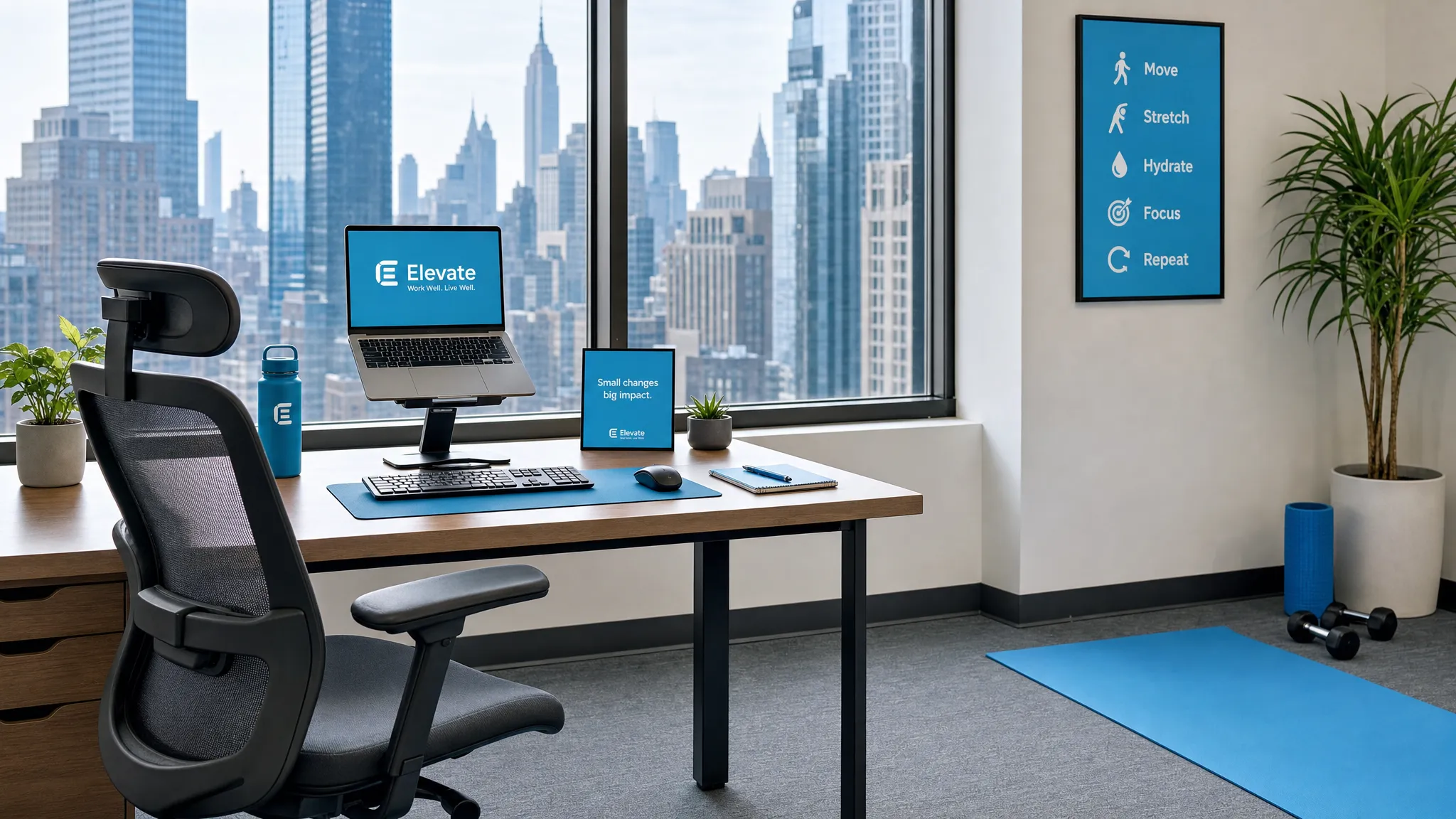
You do not need a luxury ergonomic chair to improve your setup. Small adjustments can reduce strain quickly, especially if you work from a compact Manhattan office, a dining table, or a shared workspace.
OSHA's computer workstation guidance emphasizes neutral posture, proper monitor height, adjustable seating, and comfortable keyboard and mouse placement. Use the table below as a quick self-check.
| Desk area | Quick check | Simple adjustment |
|---|---|---|
| Monitor or laptop | Your eyes should look forward, not sharply down | Raise the screen with a stand or sturdy books, and use an external keyboard and mouse when possible |
| Chair | Feet should rest flat, with hips and knees comfortably supported | Use a footrest, adjust chair height, or place a small cushion behind the low back |
| Keyboard and mouse | Elbows should stay close to your sides, wrists relaxed | Move keyboard and mouse closer, and avoid reaching forward all day |
| Phone use | Neck should not bend down for long periods | Bring the phone closer to eye level, and avoid cradling it between your ear and shoulder |
| Lighting | You should not lean forward to see the screen | Reduce glare, enlarge text, and place your screen perpendicular to bright windows when possible |
| Standing desk | Standing should feel active, not stiff | Alternate sitting and standing, and shift weight often instead of locking your knees |
If you use a laptop as your main computer, prioritize two upgrades first: raise the screen and separate the keyboard from the screen. This single change can reduce the forward-head position that often contributes to neck and shoulder tension.
Use microbreaks before pain builds up
Many desk workers wait until pain is intense before moving. A better strategy is to interrupt stiffness early. Set a quiet reminder every 30 to 45 minutes, then take 60 to 120 seconds to reset your body.
A simple desk-worker microbreak can include:
- Chin tucks: Gently slide your head back as if making a double chin, hold for 2 seconds, and repeat 5 times.
- Shoulder blade squeezes: Pull your shoulder blades slightly back and down, hold for 3 seconds, and repeat 8 times.
- Standing back bends: Stand tall with hands on hips, gently lean back, and repeat 5 times if comfortable.
- Hip flexor reset: Step one foot back, squeeze the back-leg glute, and hold a gentle stretch for 20 seconds on each side.
- Walking reset: Walk to get water, take a hallway lap, or climb one flight of stairs if available.
These are not meant to replace exercise. They are movement snacks that prevent your body from staying locked in one position. If a movement causes sharp pain, radiating symptoms, dizziness, or numbness, stop and seek guidance.
For more gentle movement ideas, Move Well MD has a guide to chiropractic-inspired moves for stiffness that can complement your desk routine.
Match the fix to your pain pattern
Desk pain is not all the same. Neck tension, low back stiffness, wrist irritation, and headaches often need different adjustments. Use your symptoms as clues, not as a diagnosis.
| Pain pattern | Common desk-related contributors | First steps to try | Get checked sooner if |
|---|---|---|---|
| Neck and upper shoulder tension | Low screen, forward head posture, stress, phone use | Raise the screen, take chin-tuck breaks, relax shoulders while typing | Pain travels into the arm, or numbness, tingling, or weakness appears |
| Low back stiffness | Long sitting, poor lumbar support, tight hips | Stand more often, use lumbar support, stretch hip flexors, walk after lunch | Pain radiates below the knee, or symptoms worsen with coughing or sneezing |
| Wrist or forearm discomfort | Repetitive typing, mouse reaching, bent wrists | Keep wrists neutral, move the mouse closer, change hand positions | Grip weakness, persistent numbness, or night symptoms occur |
| Headaches after screen time | Neck tension, eye strain, dehydration, jaw clenching | Adjust screen height, use the 20-20-20 eye rule, drink water, relax the jaw | Headache is sudden and severe, new after injury, or comes with vision, speech, or balance changes |
| Hip or knee tightness | Prolonged sitting, limited walking breaks, crossed legs | Change positions often, do gentle hip mobility, walk during calls | Joint swelling, locking, instability, or pain after a fall occurs |
For desk-related pain that keeps returning, it may help to look beyond the painful area. Low back pain can be influenced by hip stiffness. Neck pain can be influenced by mid-back mobility and shoulder mechanics. Headaches can be linked to stress, posture, sleep, and muscle tension. This is why a whole-body approach is often more effective than chasing symptoms one by one.
Build wellness into your NYC routine
Pain relief and wellness are easier to maintain when they fit your real schedule. Most New Yorkers do not need more complicated health advice. They need habits that work between meetings, subway stops, errands, and family responsibilities.
Start with your commute. If you carry a shoulder bag, switch sides throughout the day or consider a backpack worn on both straps. When standing on the train, avoid locking one hip out to the side for the entire ride. If you text during the commute, bring your phone higher instead of folding your neck forward.
Use walking strategically. A 10-minute walk after lunch can help loosen the hips, improve circulation, and give your eyes a break from screens. If your calendar is packed, turn one short phone call into a walking call. If you work in a high-rise, take the stairs for one or two floors when appropriate.
Add strength training in small doses. Desk workers often need stronger glutes, core muscles, upper back, and shoulder stabilizers. You do not need a long gym session to start. Twice a week, focus on simple movements like rows, glute bridges, dead bugs, step-ups, and controlled squats. If you are unsure what is safe for your pain pattern, get assessed before pushing through discomfort.
Sleep and stress matter too. Poor sleep can lower your pain tolerance, while stress can increase muscle tension around the neck, jaw, shoulders, and low back. A 3-minute breathing reset before bed, limiting late-night work emails, and setting a consistent wake time can support recovery.
If you want a broader overview, see Move Well MD's guide to natural pain solutions that may help you move better.
A realistic pain relief schedule for desk workers
Consistency beats intensity. Here is a simple framework you can adapt to your day.
| Time of day | Habit | Why it helps |
|---|---|---|
| Morning | Do 3 to 5 minutes of neck, shoulder, hip, and back mobility | Reduces stiffness before sitting begins |
| Commute | Keep phone closer to eye level and switch bag sides | Limits repeated neck and shoulder strain |
| First work block | Adjust chair, screen, keyboard, and mouse before opening email | Prevents hours of poor positioning |
| Midday | Take a 10-minute walk or stretch break | Breaks up sitting and helps reset posture |
| Afternoon | Do a 2-minute microbreak every 30 to 45 minutes | Reduces end-of-day tension |
| Evening | Add light strength work, stretching, or relaxation breathing | Supports recovery and long-term resilience |
The best plan is the one you will actually do. If 10 minutes feels impossible, start with 2 minutes. If daily stretching feels unrealistic, attach one stretch to an existing habit, such as making coffee or joining your first video call.
When self-care is not enough
Self-care is useful for mild stiffness and occasional tension. But if pain is persistent, recurring, worsening, or interfering with your sleep, commute, work focus, or workouts, it is time to get evaluated.
Seek urgent medical care if you have:
- New loss of bladder or bowel control
- Severe weakness, numbness, or loss of coordination
- Pain after a significant fall, accident, or injury
- Fever, unexplained weight loss, or history of cancer with new spine pain
- Sudden severe headache, vision changes, facial drooping, confusion, or trouble speaking
- Chest pain, shortness of breath, or symptoms that feel cardiac in nature
If your symptoms are not an emergency but keep coming back, a professional evaluation can help identify whether the issue is related to joint mobility, muscle tension, nerve irritation, posture habits, workload, or another factor. You can also review Move Well MD's article on same-day chiropractic booking if you are dealing with a flare-up and wondering what kind of visit may be appropriate.
How integrated care can support desk-related pain
Desk pain often responds best to a plan that combines hands-on care, movement retraining, and daily habit changes. Move Well MD is a Manhattan-based chiropractic and acupuncture clinic focused on helping patients move freely and live with less pain through an integrated approach to Western and Eastern medicine.
Depending on your evaluation and needs, care may include chiropractic care, acupuncture treatments, physical therapy, comprehensive pain management, sports medicine services, trigger point injections, physical rehabilitation, joint pain relief, and support for concerns such as knee pain, shoulder pain, migraines, and sciatica.
The goal is not simply to get temporary relief after a long workweek. The goal is to understand why symptoms are happening, reduce irritation, improve movement, and build habits that make pain less likely to return.
For stress-related pain and tension, you may also find Move Well MD's guide on how acupuncture supports stress and pain relief helpful.
Frequently Asked Questions
What is the best posture for desk workers? The best posture is one you can change often. Aim for a neutral setup with your screen at eye level, shoulders relaxed, elbows close to your sides, wrists neutral, and feet supported, but do not stay frozen in that position all day.
How often should I take breaks from sitting? A good starting point is a 1 to 2 minute movement break every 30 to 45 minutes. If you are already in pain, shorter and more frequent breaks may feel better than one long stretch session at the end of the day.
Can chiropractic care help with desk-related neck or back pain? Chiropractic care may help when pain is related to joint stiffness, movement limitations, muscle tension, or spinal mechanics. A proper evaluation should come first, especially if you have radiating pain, numbness, weakness, or a history of injury.
Is acupuncture useful for desk-worker pain and stress? Acupuncture may support pain relief, muscle relaxation, stress regulation, and recovery for some people. It is often used alongside chiropractic care, physical therapy, and other pain management strategies when appropriate.
When should a desk worker in NYC see a pain specialist or chiropractor? Consider an evaluation if pain lasts more than 1 to 2 weeks, keeps returning, affects sleep or work, radiates into an arm or leg, or limits your ability to exercise or commute comfortably. Seek urgent care for red flag symptoms such as severe weakness, loss of bladder or bowel control, or sudden neurological changes.
Make pain relief and wellness part of your workday
You do not have to accept desk pain as normal. A better workstation, frequent movement, smarter commuting habits, and the right care plan can make a meaningful difference.
If neck pain, back pain, headaches, sciatica, shoulder pain, or joint discomfort is affecting your workday, Move Well MD can help you take the next step. Visit Move Well MD to learn more about integrated chiropractic, acupuncture, physical therapy, and pain management care in Manhattan.
