If you are debating whether to book a chiropractor or a massage first, you are already thinking like a clinician: sequencing matters because soft tissue (muscles and fascia) and joints (spine and extremities) influence each other.
For many people, the best order depends on one thing: Are you trying to relax tight muscles, or fix a movement problem that keeps re-triggering the tightness? Below is a practical way to decide, plus a few “same-day” strategies that clinics use when combining both.
What chiropractic and massage each do (in plain English)
Massage therapy and chiropractic care can overlap in how they feel (less tension, better range of motion), but they typically target different drivers of pain.
Massage therapy: best for muscle tone, circulation, and downshifting stress
Massage primarily addresses:
- Muscle tightness and trigger points
- Short-term pain modulation and relaxation
- Soreness after training (DOMS)
- Stress-related tension (neck, shoulders, jaw)
It can be a powerful “volume knob” for the nervous system, helping your body feel safer and less guarded.
Chiropractic care: best for restoring joint motion and reducing mechanical irritation
Chiropractic evaluation and treatment typically focuses on:
- Joint mobility restrictions (spine, ribs, pelvis, shoulders, etc.)
- Movement patterns and posture that perpetuate strain
- Mechanical contributors to nerve irritation (for example, some cases of radiating pain)
If you keep getting the same tight spot after every commute, workout, or night of sleep, a joint and movement assessment often matters as much as soft-tissue work.
A quick evidence-based note
A major reason people pair these treatments is that they sit in the same “first-line, non-drug options” bucket for common musculoskeletal pain.
For example, the American College of Physicians clinical practice guideline for acute and subacute low back pain recommends nonpharmacologic options such as spinal manipulation and massage before medications for many patients, depending on the situation and patient preference (Annals of Internal Medicine guideline).
That does not mean everyone needs both. It does support the idea that combining conservative therapies is often reasonable when done thoughtfully.
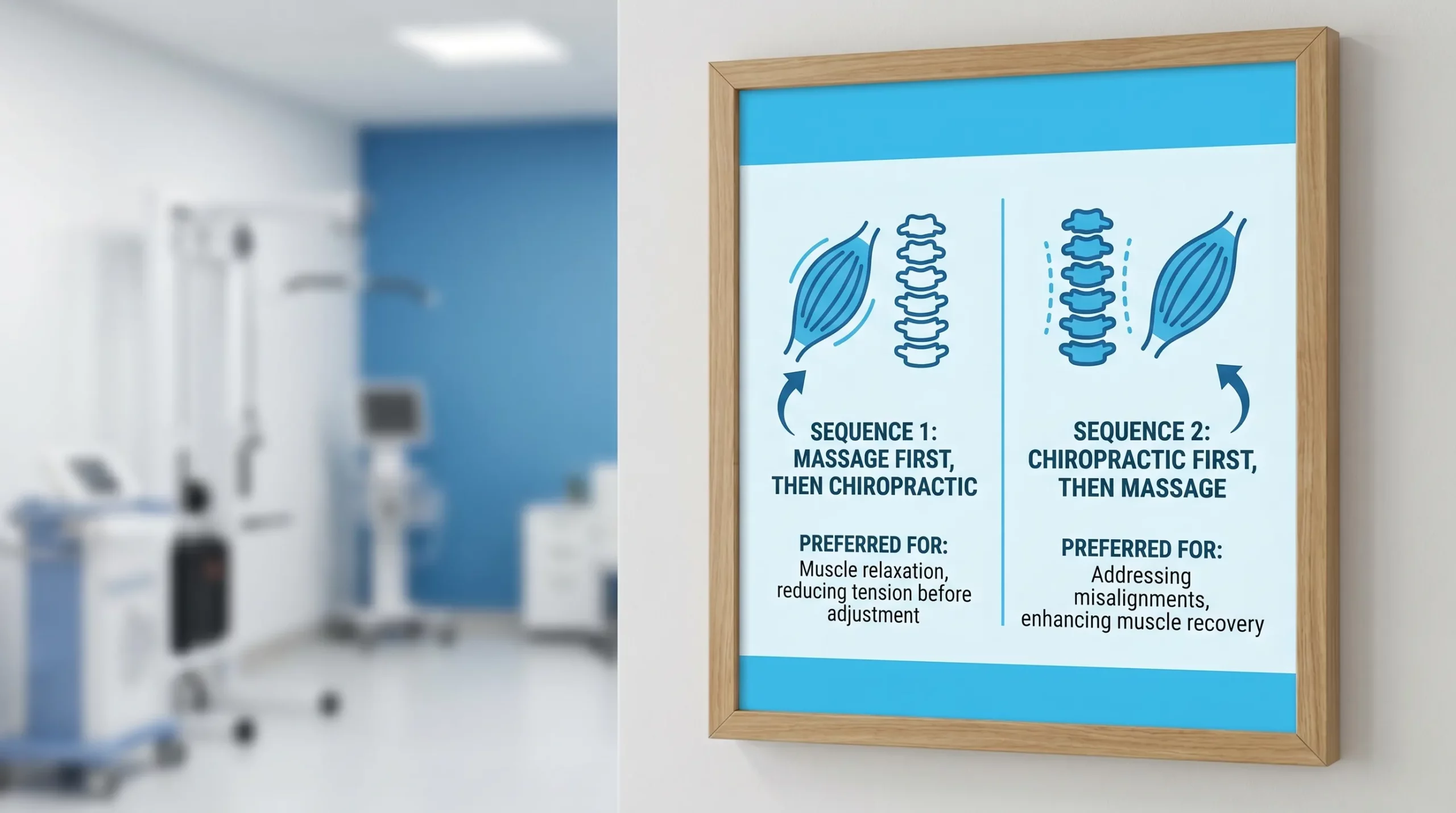
Chiropractor and massage: which comes first?
Choose the chiropractor first if you have a new or “mechanical” problem
If this is a new issue, or something that feels clearly linked to movement, start with a chiropractic assessment first.
Common examples:
- Sudden back pain after lifting, twisting, or a long flight
- Pain that changes with posture (worse sitting, better standing, or vice versa)
- Reduced range of motion (you cannot turn your head fully, you feel “stuck”)
- Pain that repeatedly returns in the same pattern
Why this order helps: you get a diagnosis-driven plan first. Massage can then be applied more precisely (which muscles, what intensity, what to avoid).
Choose massage first if the main goal is calming tightness and recovery
Massage first tends to make sense when the primary issue is muscular tension rather than a recurring movement restriction.
Common examples:
- General tightness after training or a stressful week
- Tension headaches linked to shoulder and neck tightness
- Mild stiffness without sharp pain or neurological symptoms
Why this order helps: reducing guarding can make later movement work easier. Some people also simply tolerate hands-on joint work better when they are already relaxed.
If you have radiating symptoms, get evaluated first
If your pain shoots down an arm or leg, or you have numbness/tingling, it is smart to start with an evaluation (chiropractic, sports medicine, or medical provider) before scheduling deep tissue work.
Massage may still be appropriate, but the intensity and areas treated matter when nerves are irritated.
The “same-day” approach: two common sequencing strategies
If you are doing both in the same visit window, there are two common ways clinicians sequence care.
Strategy A: brief soft tissue, then adjustment, then targeted release
This is often used when muscles are guarding so strongly that joint motion is hard to access.
- Light to moderate tissue work to reduce protective spasm
- Chiropractic adjustment or mobilization
- Follow-up release or stretching to reinforce the new range
Strategy B: adjustment first, then massage to “hold the gains”
This is often used when the joint restriction is the main driver, and the muscles tighten secondarily.
- Chiropractic adjustment or mobilization
- Massage to reduce residual tension and soreness
- Home plan (mobility, strengthening, ergonomics)
Clinically, the “right” choice is usually the one that matches your presentation and comfort level.
A decision table you can use before you book
| Your main situation | Most helpful first step | Why |
|---|---|---|
| New back or neck pain after a specific incident (lift, fall, awkward sleep) | Chiropractor first | Rule out red flags, assess joint mechanics, plan safely |
| You feel “stuck,” restricted, or uneven (posture-related pain) | Chiropractor first | Restoring motion can stop the cycle that keeps muscles tight |
| You are sore, tight, and stressed, but symptoms are mild and non-radiating | Massage first | Calms guarding and improves tolerance for movement work |
| You have numbness, tingling, or pain traveling into an arm/leg | Evaluation first | Treatment intensity and targets should be chosen carefully |
| You are training hard and want performance/recovery support | Either, often combined | Depends on whether your limiter is tissue tone or joint motion |
How to get better results from both (not just temporary relief)
Sequencing matters, but follow-through matters more. The best outcomes usually come from aligning three things.
1) Match intensity to the phase of your injury
A common mistake is going too deep, too soon.
- Acute flare-ups often respond better to gentler techniques and graded movement
- Chronic “knots” may tolerate deeper work, but only if it does not spike symptoms
If you are unsure, ask the provider to explain what tissue they are targeting and what response is expected in the next 24 to 48 hours.
2) Treat the cause, then retrain the pattern
Massage can reduce tone, and chiropractic care can restore motion, but your daily movement habits keep the change.
Helpful examples include:
- Hip mobility and glute strength for recurrent low back tightness
- Thoracic mobility and scapular control for desk-related neck and shoulder pain
- Breathing mechanics and rib mobility for persistent mid-back tightness
3) Time your sessions around life events
If you have a big day coming up (race, wedding, presentation, travel), do not wait until the last minute.
A practical rule:
- For relaxation and sleep: massage 1 to 3 days before
- For mobility changes: chiropractic plus light movement work several days before, then reassess
If you are planning something physically demanding like a long trip or an outdoor ceremony, it can help to build a mini “prep window.” For inspiration on logistics and pacing for travel-heavy events, some couples even use planning resources from storytellers like Stories by DJ to think through timing, terrain, and stress load (which your body feels too).
Safety and red flags (when not to “massage it out”)
Seek urgent medical evaluation if you have:
- Loss of bowel or bladder control
- Progressive weakness, foot drop, or significant numbness
- Fever, unexplained weight loss, or severe night pain
- Pain after major trauma (car accident, fall from height)
For everyday non-emergency situations, it is still wise to mention conditions like osteoporosis, bleeding disorders, or pregnancy so your provider can modify techniques.
What to expect when care is integrated in one clinic
Many patients search “chiropractor and massage near me” because they want coordinated care, not a guessing game.
In an integrated setting, the main advantage is that your providers can align on:
- The working diagnosis (what is most likely driving symptoms)
- The order of treatment that day
- What to do at home so you are not reliant on passive care
Move Well MD, for example, is a Manhattan-based clinic that combines chiropractic care with other pain-relief services such as acupuncture, physical therapy and comprehensive pain management. When multiple therapies are available under one roof, the goal is to pick the least invasive tools that get you moving better, then progress you toward long-term stability.
Frequently Asked Questions
Should I get a massage before a chiropractic adjustment? If you are very guarded, anxious about treatment, or mainly dealing with muscle tension, massage first can help you relax and improve tolerance. If the issue is new, recurring, or clearly mechanical, an evaluation first is often the safer and faster route.
Is it better to get a massage after seeing a chiropractor? Often, yes. Massage after an adjustment can reduce residual tightness and post-treatment soreness and help you maintain range of motion, especially if muscles tend to “pull you back” into old patterns.
Can massage make sciatica worse? It can, depending on the cause and the intensity. Deep, aggressive work in the wrong area may irritate symptoms. If you have radiating pain, numbness, or tingling, start with an evaluation so massage can be tailored safely.
How far apart should chiropractic and massage appointments be? Some people do them the same day. Others do massage 24 to 72 hours later. The best spacing depends on how you respond, your soreness level, and whether the priority is relaxation, mobility change, or rehab progression.
What if I only have time or budget for one? Choose the one that matches your primary goal: massage for stress and muscle tone, chiropractic for joint motion and recurring mechanical pain. If you are unsure, start with an evaluation-focused visit so you are not guessing.
Ready to stop guessing and start a plan?
If you want help deciding what comes first for your body (and your symptoms), consider scheduling an evaluation with Move Well MD in Manhattan. With chiropractic care alongside acupuncture, physical therapy, and pain management options, you can build a coordinated approach that prioritizes both relief and long-term movement.
Learn more or book a visit at movewellmd.com.
