If your back loosens after a massage but tightens again by dinner, or an adjustment helps your joints move but your muscles quickly pull you back into the same pattern, you may be dealing with two problems at once.
That is where chiropractic massage can make sense. The phrase typically refers to a coordinated approach that combines chiropractic evaluation and joint-focused care with therapeutic massage or soft tissue techniques. It is not just a relaxing add-on. The goal is to understand whether joint restriction, muscle tension, nerve irritation, posture, workload, or movement habits are all contributing to the same pain cycle.
This matters because many musculoskeletal problems are not purely a joint issue or purely a muscle issue. A stiff thoracic spine can make the neck and shoulders overwork. Tight hip flexors can increase low back strain. Guarded muscles can limit the benefit of an adjustment. When both sides of the problem are addressed, some patients find that relief is more complete and lasts longer.
The key word is when. Chiropractic massage is not automatically better for every ache. It works best when your symptoms show a mix of restricted movement, soft tissue tension, and recurring mechanical stress.
What chiropractic massage really means
Chiropractic massage is not a separate medical specialty in the way chiropractic, physical therapy, or acupuncture are licensed disciplines. In everyday patient language, it usually means that chiropractic care and massage-style soft tissue work are being used together as part of one treatment plan.
Chiropractic care focuses on how the spine, joints, nervous system, and movement mechanics relate to pain and function. Treatment may include spinal or joint adjustments, mobilization, posture and movement coaching, and rehab guidance. Massage and soft tissue techniques focus more directly on muscles, fascia, trigger points, circulation, and tissue sensitivity.
A good combined plan starts with assessment, not assumptions. Before deciding whether you need an adjustment, soft tissue work, rehab, acupuncture, or another option, a provider should ask about your symptoms, health history, daily activities, injury history, and goals. If you want a deeper explanation of where these approaches overlap, Move Well MD has a helpful guide on manual therapy vs chiropractic care.
Evidence-informed guidelines also support the idea that non-drug options can play a role in back pain care. The American College of Physicians guideline for low back pain includes options such as massage, spinal manipulation, exercise, heat, acupuncture, and other conservative approaches depending on whether pain is acute, subacute, or chronic.
Why the combination can work better than either alone
Pain often creates a loop. A joint becomes irritated or restricted, nearby muscles tighten to protect it, movement becomes less efficient, and the added strain keeps the area sensitive. If treatment only addresses one part of that loop, relief may be incomplete.
Massage can help reduce muscle guarding and improve comfort in overworked tissues. This may make it easier to move, stretch, breathe deeply, or tolerate hands-on care. The National Center for Complementary and Integrative Health notes that massage therapy is commonly used for pain and wellness, although results vary by condition and treatment quality.
Chiropractic adjustments or mobilizations, when appropriate, aim to improve joint motion and reduce mechanical irritation. The NCCIH overview of spinal manipulation describes it as a hands-on technique used by trained clinicians for issues such as low back pain, with safety depending on proper screening and provider training.
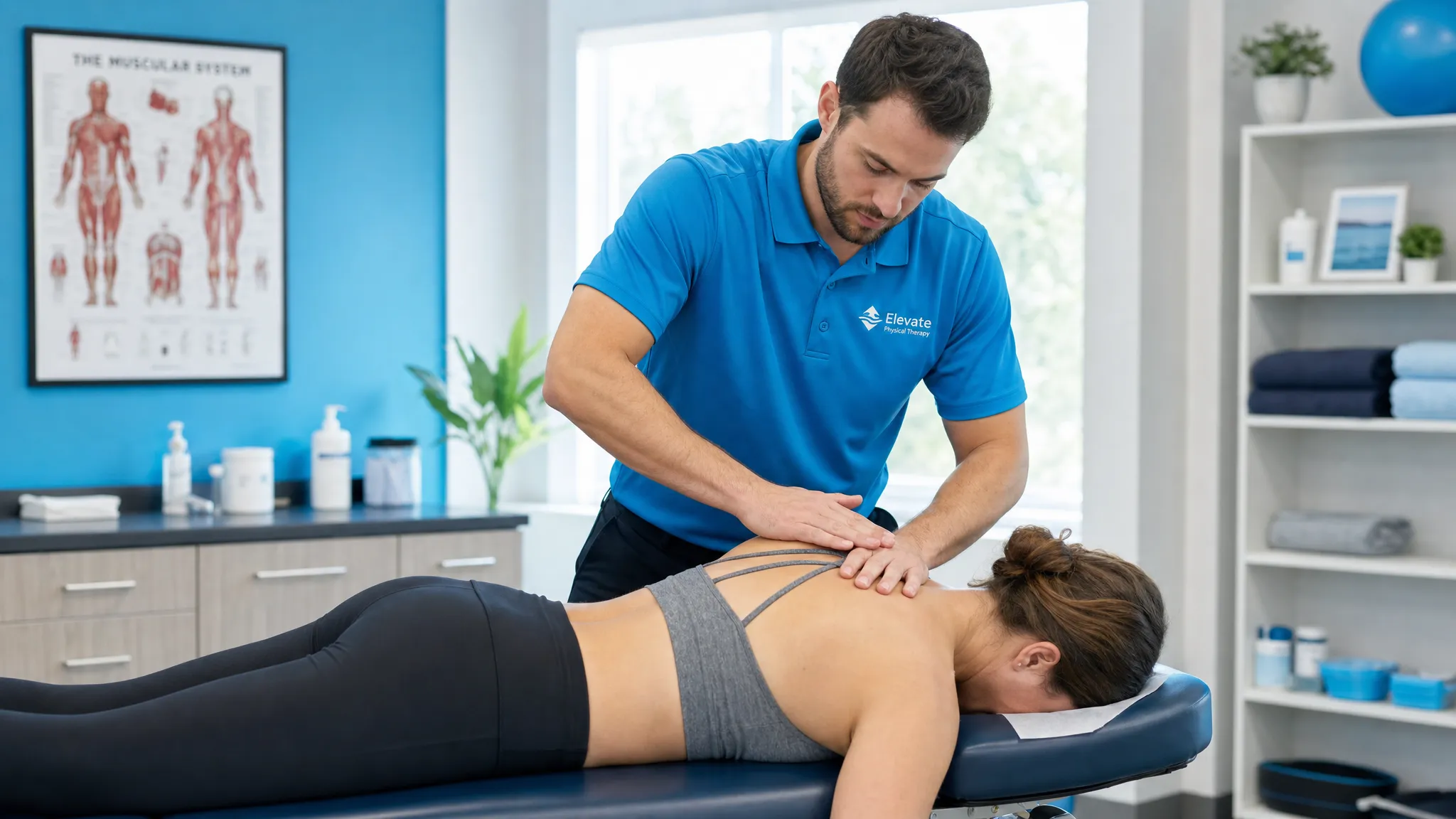
When soft tissue work and chiropractic care are paired thoughtfully, the massage component may help calm the tissues that are resisting movement, while the chiropractic component may address the joint mechanics that keep those tissues overloaded. Add targeted rehabilitation or physical therapy exercises, and the plan can move from short-term relief toward better long-term control.
When chiropractic massage is most likely to help
Chiropractic massage may be especially useful when pain feels muscular but keeps returning for mechanical reasons. It may also help when an adjustment provides some relief, but the surrounding muscles remain tight, tender, or guarded.
| Pain pattern | Why massage alone may fall short | Why chiropractic alone may fall short | Why the combination may help |
|---|---|---|---|
| Desk-related neck and shoulder tension | Tight muscles may relax temporarily, but posture and joint stiffness can keep reloading them | Joint motion may improve, but overactive traps, pecs, and neck muscles may stay guarded | Soft tissue work can reduce tension while chiropractic care addresses mobility and mechanics |
| Low back stiffness after sitting | Massage may ease soreness without changing how the pelvis, hips, or lumbar spine move | An adjustment may help motion, but tight hip flexors or back muscles can pull symptoms back | The plan can target both mobility and the muscle patterns caused by sitting |
| Recurring workout or sports tightness | Massage may help recovery, but repeated movement faults can keep causing irritation | Joint care may help mechanics, but tissue overload still needs attention | Combined care can support recovery while identifying movement habits that need correction |
| Tension-type or neck-related headache patterns | Scalp, jaw, and neck tension may improve briefly, but cervical or upper back stiffness may remain | Cervical mobility may improve, but trigger points and muscle tension may still refer pain | A coordinated approach may address both neck motion and soft tissue contributors |
| Sciatica-like discomfort with muscle guarding | Massage may ease glute or back tightness but may not address nerve irritation or spinal mechanics | Joint care may help mechanics, but protective muscle spasm can limit comfort | Evaluation can determine whether combined care, rehab, or medical pain management is needed |
This table is not a diagnosis. Similar symptoms can come from different causes, and some causes require medical evaluation before hands-on care. The value of an integrated approach is that treatment can be adjusted based on what your exam shows.
Signs massage alone may not be enough
Massage can be very helpful for stress-related tension, soreness, and general muscle tightness. But if the same area keeps tightening in the same way, the muscle may be reacting to something else.
You may need more than massage alone if relief only lasts a few hours, stiffness returns after sitting or sleeping, pain is worse with certain movements, or one side of the body always feels more restricted. You may also notice that stretching helps briefly but never seems to change the pattern.
In these cases, a chiropractor may look at joint motion, posture, nerve signs, gait, hip and shoulder mechanics, and how your symptoms respond to specific movements. If the exam suggests that joint restriction or movement compensation is part of the problem, combining massage with chiropractic care may be more effective than repeatedly working on the same tight muscle.
Signs an adjustment alone may not be enough
The reverse can also be true. Some patients feel better immediately after an adjustment, then notice the same tightness or soreness return because the surrounding muscles are still guarding. This is common when pain has been present for weeks or months, after a sports strain, after long workdays at a computer, or when stress keeps the nervous system on high alert.
An adjustment may improve motion, but irritated soft tissue may still need direct care. Trigger points, fascial restriction, muscle imbalance, and protective spasm can all make it harder for the body to hold onto improved movement. If you often feel sore after care, it may also be worth reviewing what is expected and what is not. Move Well MD explains this in more detail in Pain After Chiro Adjustment: What’s Normal and What’s Not.
In a combined visit, soft tissue work may come before or after the adjustment. Some people respond better when muscles are relaxed first. Others benefit from massage afterward to reduce residual tension. The right order depends on the exam, the irritability of your symptoms, and your comfort level.
When either treatment alone may be enough
Chiropractic massage is useful when the situation calls for it, but more care is not always better care. A straightforward muscle strain after a workout may respond well to massage, rest, gradual movement, and simple home care. A mild joint restriction without significant muscle guarding may respond well to chiropractic adjustment and mobility exercises.
A good provider should be able to explain why each part of the plan is being used. If massage is included, there should be a reason beyond relaxation. If an adjustment is included, there should be a reason beyond routine. If physical therapy, acupuncture, or pain management is recommended, those should also connect clearly to your symptoms and goals.
For people comparing conservative options, it can help to think in terms of the main driver of pain:
| Main issue | Care that may fit best | What to watch for |
|---|---|---|
| General stress tension or mild soreness | Massage or gentle mobility | Symptoms should improve steadily and not keep returning in the same pattern |
| Joint stiffness with limited range of motion | Chiropractic mobilization or adjustment | Care should include screening and a clear movement-based goal |
| Recurring pain with tightness and restricted motion | Chiropractic massage or integrated manual care | Progress should be measured by function, not just temporary relief |
| Weakness, balance issues, or post-injury recovery | Physical therapy or rehabilitation | Exercises should be specific, progressive, and matched to your condition |
| Persistent pain despite conservative care | Integrated medical evaluation | The plan may need imaging, injections, acupuncture, or referral depending on findings |
What a well-run combined visit should include
A chiropractic massage visit should feel structured, not random. The provider should first clarify what hurts, what makes it better or worse, how long it has been happening, and whether there are any signs that hands-on care should be delayed.
A typical evaluation may include posture assessment, range-of-motion testing, orthopedic or neurologic screening, muscle palpation, and movement testing. From there, treatment may involve soft tissue therapy, joint mobilization or adjustment, stretching, corrective exercise, ergonomic coaching, or referral to another service when needed. For a fuller breakdown, read What a Medical Chiropractor Visit May Include.
The most important part is that your plan should be personalized. A busy Manhattan professional with neck tension from computer work may need a different approach than a runner with hip and low back tightness, even if both describe their pain as stiffness.
When chiropractic massage is not the right first step
Hands-on care is not appropriate for every symptom. Seek urgent medical care before chiropractic massage if you have severe or worsening weakness, numbness in the groin or saddle area, loss of bowel or bladder control, fever with spinal pain, unexplained weight loss, major trauma, chest pain, sudden severe headache, dizziness with neurological symptoms, or pain associated with suspected fracture, infection, or cancer.
You should also tell your provider if you have osteoporosis, a bleeding disorder, active inflammatory disease, recent surgery, pregnancy, cancer history, or are taking blood thinners. These do not always rule out care, but they may change what techniques are safe.
The safest care is not the most aggressive care. It is the care that matches your diagnosis, health history, tissue irritability, and goals.
How to make results last longer
Chiropractic massage can help create a window of improved comfort and movement. What you do with that window matters. If your pain is driven by long work hours, poor sleep, limited activity, or repetitive training stress, hands-on care alone may not be enough to keep symptoms away.
Small changes can make a meaningful difference. Take walking breaks during long sitting blocks, adjust your monitor height, vary your workout intensity, strengthen weak areas, and avoid repeatedly stretching into pain. For more conservative strategies, see Move Well MD’s guide to natural pain solutions that may help you move better.
Progress should show up in daily life. You should be able to sit longer, turn your head more easily, commute with less discomfort, sleep better, lift with more confidence, or return to your workouts with fewer flare-ups. If treatment only feels good for a few hours and nothing else changes, the plan may need to be reassessed.
Frequently Asked Questions
Is chiropractic massage the same as a regular massage? Not exactly. Regular massage may focus on relaxation or general muscle tension. Chiropractic massage usually refers to therapeutic soft tissue work combined with chiropractic evaluation, joint care, and a movement-based plan.
Should massage come before or after a chiropractic adjustment? It depends on your body and your symptoms. Massage before an adjustment may help reduce guarding and make movement easier. Massage after an adjustment may help calm residual soft tissue tension. Your provider should choose the sequence based on your exam.
Can chiropractic massage help low back pain? It may help some types of mechanical low back pain, especially when stiffness, muscle guarding, posture, and movement habits are all involved. Low back pain has many causes, so proper evaluation is important before choosing treatment.
How many visits will I need? The answer depends on the condition, severity, duration of symptoms, and your response to care. A responsible plan should include reassessment and functional goals rather than open-ended treatment without clear progress.
Is chiropractic massage safe? It is generally safest when performed by qualified providers after proper screening. Tell your clinician about medical conditions, medications, surgeries, trauma, pregnancy, or neurological symptoms so techniques can be modified or delayed when needed.
Ready for a more integrated approach to pain relief?
If massage helps but does not last, or chiropractic care helps but muscle tightness keeps returning, it may be time to look at the full pain pattern. Move Well MD provides personalized care in Manhattan with chiropractic care, acupuncture, physical therapy, sports medicine, rehabilitation, and pain management options when appropriate.
To explore whether chiropractic massage or another integrated treatment plan fits your symptoms, schedule a visit with Move Well MD and take the next step toward moving with less pain and more confidence.
