If you are dealing with back pain, neck stiffness, headaches, sciatica, joint pain, or an injury that keeps coming back, a medical chiropractor visit may feel like the next logical step. But many patients are not sure what actually happens during the appointment. Is it just an adjustment? Will you need imaging? Will the visit include exercises, acupuncture, or pain management options?
A thorough visit should be more than a quick “crack.” In an integrated clinic setting, the goal is to understand what is causing your pain, how it affects your movement, and which treatment options are appropriate for your body and goals.
What does “medical chiropractor” mean?
“Medical chiropractor” is a phrase many patients use when they want chiropractic care that feels clinical, evidence-informed, and connected to broader healthcare. It is important to know that in New York, chiropractors are licensed healthcare professionals known as Doctors of Chiropractic, or DCs. You can learn more about chiropractic licensure through the New York State Office of the Professions.
The phrase does not automatically mean the chiropractor is a medical doctor, unless that provider also has an MD or DO degree. Instead, patients often use it to describe a chiropractor who evaluates musculoskeletal pain, coordinates with other providers when needed, and may work in a multidisciplinary setting with services such as physical rehabilitation, acupuncture, sports medicine, or pain management.
At a clinic like Move Well MD in Manhattan, a visit may include chiropractic evaluation and treatment alongside complementary services when appropriate, such as acupuncture, physical therapy, rehabilitation, or trigger point injections provided by qualified clinicians.
Your visit usually starts with a detailed health history
Before hands-on care begins, your provider will want to understand your symptoms and overall health. This conversation helps determine whether chiropractic care is appropriate, whether another service may be a better fit, or whether medical referral is needed.
Expect questions about when your pain started, what makes it better or worse, and whether it travels into your arms, legs, head, or shoulders. You may also be asked about previous injuries, surgeries, medications, work habits, exercise routine, sleep position, stress level, and prior imaging such as X-rays or MRI scans.
This part of the visit is especially important if you have symptoms like numbness, tingling, weakness, migraines, dizziness, or pain after a fall or accident. A good provider is not only looking for where it hurts. They are looking for patterns that explain why it hurts.
Screening for red flags and safety concerns
A medical-style chiropractic visit should include screening for symptoms that may require urgent medical attention or a different type of evaluation. Most back and neck pain is musculoskeletal, but some symptoms should not be ignored.
Seek urgent medical care if pain is associated with loss of bladder or bowel control, numbness in the groin or saddle area, major or worsening weakness, fever, unexplained weight loss, chest pain, recent significant trauma, or a known history of cancer with new severe spinal pain.
This safety-first approach matters because chiropractic care is most appropriate when the provider has ruled out warning signs and understands your health history. If your symptoms suggest something outside the chiropractor’s scope, you should be referred to the right medical professional.
Physical exam and movement assessment
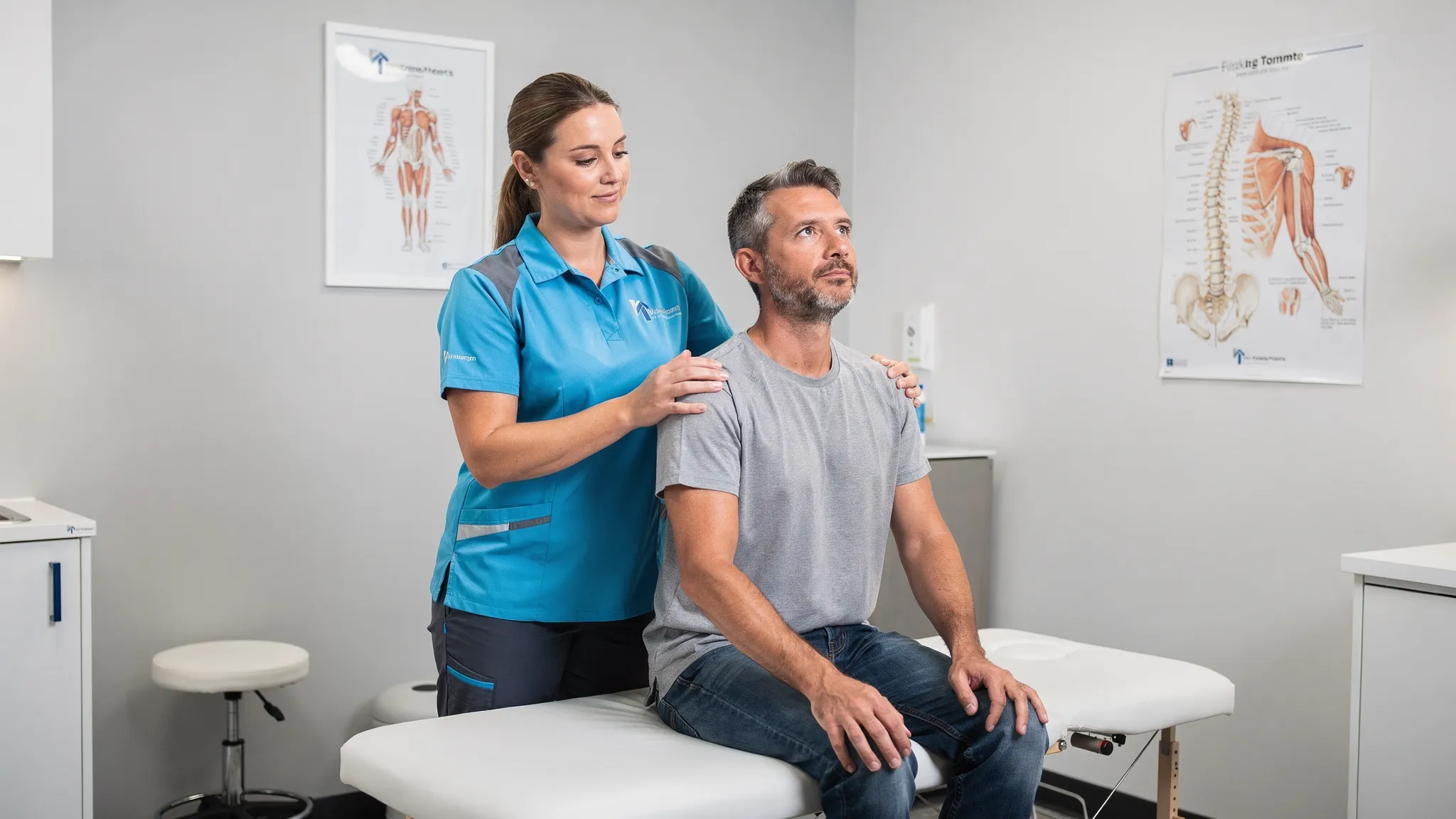
After your health history, the provider may perform a physical exam to understand how your joints, muscles, nerves, and movement patterns are functioning. This is often where the appointment becomes more specific.
A chiropractic exam may include posture assessment, spinal range of motion, orthopedic testing, muscle strength testing, reflex checks, sensation testing, joint mobility assessment, gait evaluation, and palpation of painful or restricted areas. If you have knee, shoulder, hip, or sports-related pain, the provider may also assess how the surrounding joints and muscles are contributing.
For example, knee pain may involve the knee itself, but it can also be influenced by hip weakness, ankle mobility, foot mechanics, or pelvic alignment. Neck pain and headaches may involve the cervical spine, jaw tension, shoulder posture, and desk ergonomics. A full assessment helps avoid treating only the painful spot while missing the underlying driver.
Imaging or referrals, only when clinically appropriate
Not every chiropractic visit requires X-rays or MRI scans. In fact, routine imaging for uncomplicated back pain is often not recommended unless there are red flags or specific clinical reasons. The American College of Physicians guideline for low back pain emphasizes non-drug therapies such as exercise, spinal manipulation, acupuncture, and other conservative options for many patients with acute or chronic low back pain. You can review the guideline in the Annals of Internal Medicine.
That said, imaging may be appropriate in certain cases, such as significant trauma, suspected fracture, progressive neurological symptoms, persistent pain that is not improving, or when results would change the treatment plan. If you already have imaging reports, bring them to your appointment so your provider can review them in context.
A responsible provider should explain why imaging is or is not needed, rather than ordering tests automatically.
Treatment options your visit may include
The treatment portion of a medical chiropractor visit depends on the diagnosis, your comfort level, your medical history, and your goals. Some patients receive treatment during the first visit, while others may need further evaluation or referral first.
Here are common components that may be included in an integrated visit:
| Visit component | What it may involve | Why it may be used |
|---|---|---|
| Chiropractic adjustment | Controlled joint manipulation or mobilization | To improve joint motion and reduce musculoskeletal pain |
| Soft tissue therapy | Hands-on work for muscles, fascia, or trigger points | To reduce tension and improve mobility |
| Physical rehabilitation | Corrective exercises, stretching, strengthening, or movement retraining | To build long-term stability and reduce recurrence |
| Acupuncture | Needle-based therapy performed by a licensed provider | To support pain relief, muscle relaxation, and nervous system regulation |
| Pain management options | Evaluation for therapies such as trigger point injections when appropriate | To address persistent muscle pain or complex pain patterns |
| Ergonomic and lifestyle guidance | Desk setup, sleep posture, training modifications, home care | To reduce daily stress on painful areas |
The best plan is usually not one-size-fits-all. A runner with hip and knee pain, an office worker with neck tension, and a patient with sciatica may all need different combinations of care.
Will you receive an adjustment on the first visit?
Sometimes, yes. If the provider determines that an adjustment or mobilization is appropriate and safe, your first visit may include hands-on treatment. Before doing so, the provider should explain what they are recommending, what you may feel, and any relevant risks or alternatives.
In other cases, your first visit may focus on evaluation, symptom calming, soft tissue work, gentle mobility, or a referral for additional testing. This is especially true if symptoms are severe, new, unusual, or neurologic in nature.
You should never feel pressured into a treatment you do not understand. Informed consent is part of quality care.
What treatment may feel like
Chiropractic treatment is usually designed to be targeted and tolerable. Some adjustments create an audible popping sound, which is gas releasing from the joint, but the sound itself is not the goal. Many effective techniques are gentle and do not involve a loud release.
After treatment, some patients feel immediate relief or improved range of motion. Others feel mild soreness for 24 to 48 hours, similar to post-exercise soreness. Your provider may recommend hydration, light movement, heat, ice, or specific exercises depending on your condition.
Pain relief can be quick for some issues, but lasting improvement often depends on correcting the movement habits, muscle imbalances, or repetitive stressors that contributed to the problem.
A care plan and home recommendations
A quality visit should end with a clear explanation of what the provider found and what comes next. This may include a working diagnosis, recommended treatment options, expected timeline, visit frequency, home exercises, posture changes, activity modifications, and measurable goals.
For example, your plan might focus on decreasing pain first, then restoring mobility, then building strength and resilience so symptoms are less likely to return. If you are an athlete, your plan may also include return-to-training guidance. If you work long hours at a desk, it may include ergonomic changes and movement breaks.
The plan should also include checkpoints. If you are not improving as expected, the provider should reassess and consider whether another approach, imaging, or referral is needed.
Questions to ask during your appointment
If your search started with “medical chiropractor near me,” use your first visit to make sure the provider’s approach matches your needs. Good questions can help you understand whether the clinic offers the level of evaluation and coordination you are looking for.
Consider asking:
- What do you think is causing my symptoms?
- Is chiropractic care appropriate for this condition?
- Are there any signs that suggest I need imaging or referral?
- What treatment options do you recommend and why?
- How will we measure progress?
- What should I do at home between visits?
- Can this be combined with acupuncture, physical rehabilitation, or pain management if needed?
Clear answers are a good sign. Vague promises or pressure for a long plan before a complete evaluation are reasons to be cautious.
Conditions that may be evaluated during a medical chiropractor visit
A chiropractic visit may be appropriate for many musculoskeletal concerns, especially when pain is related to joints, muscles, posture, movement, or nerve irritation. Common reasons patients seek this type of care include back pain, neck pain, sciatica, headaches related to neck tension, shoulder pain, knee pain, sports injuries, desk-related stiffness, and recurring muscle tightness.
For migraines, severe nerve symptoms, chronic joint pain, or complex injuries, integrated care may be especially helpful because multiple treatment options can be considered. At Move Well MD, available services include chiropractic care, acupuncture treatments, comprehensive pain management, physical therapy, sports medicine services, trigger point injections, physical rehabilitation, and care for knee, shoulder, migraine, and sciatica-related concerns.
Not every service is right for every patient. The value of an integrated visit is that the plan can be tailored based on the exam rather than forcing every patient into the same treatment path.
How to prepare for your first visit
To get the most out of your appointment, bring any relevant medical records, imaging reports, medication lists, and notes about previous treatments. Wear comfortable clothing that allows you to move. If your pain is activity-related, be ready to describe your workouts, work setup, commute, sleep position, and daily routines.
It can also help to write down your top goals. For one person, the goal may be sleeping without neck pain. For another, it may be returning to running, lifting, or playing a sport. Clear goals help your provider build a plan that is practical and measurable.
Frequently Asked Questions
Does a medical chiropractor visit always include an adjustment? No. An adjustment may be included if it is appropriate and safe, but the first visit may also focus on evaluation, soft tissue care, rehabilitation exercises, acupuncture, or referral when needed.
Will I need X-rays before chiropractic treatment? Not always. Imaging is typically based on your history, exam findings, red flags, and whether the results would change your care plan.
How long does it take to feel better? Some patients feel improvement after one visit, while others need a series of treatments and home exercises. The timeline depends on the condition, severity, duration, and contributing factors.
Can chiropractic care be combined with acupuncture or physical therapy? Yes, when clinically appropriate. Integrated care may combine chiropractic treatment with acupuncture, physical rehabilitation, sports medicine, or pain management options.
Is chiropractic care safe? Chiropractic care is generally considered safe when performed by a licensed provider after an appropriate evaluation. Always share your full medical history and speak up about any concerns before treatment.
Take the next step toward pain relief
A medical chiropractor visit should help you understand your pain, your movement, and your treatment options. Whether you are dealing with back pain, neck stiffness, sciatica, joint pain, migraines, or a sports injury, the first step is a careful evaluation.
If you are in Manhattan and want an integrated approach to chiropractic care, acupuncture, rehabilitation, and pain management, schedule a visit with Move Well MD. The right plan starts with understanding what your body needs and choosing care that helps you move well again.
