Massage therapy in chiropractic office settings may help ease muscle discomfort and make movement more comfortable, but adding another treatment is not automatically better. The useful questions are whether massage fits your symptoms, what risks need screening and how you will judge progress.
For someone managing desk-related neck tension, back soreness or activity-related stiffness, massage can be one part of a broader care plan. It should not replace an appropriate medical evaluation or become a reason to keep treating pain that is getting worse. Here is how to weigh the potential benefits against the practical safety considerations.
Understand what the appointment includes
Massage primarily involves hands-on treatment of muscles and other soft tissues. Chiropractic care may include joint manipulation, mobilization, exercise guidance and other approaches, depending on the clinician and your condition. These services have different roles, even when they happen in the same office.
A massage appointment might focus on a specific uncomfortable area or use broader techniques intended to promote relaxation. Pressure should be adjustable. Deep tissue work is not inherently more effective than gentler treatment, and discomfort is not proof that a technique is helping.
Before treatment, expect a discussion of your symptoms, medical history, medications and goals. The therapist should explain the proposed approach and obtain your consent. You can decline work on any area or stop the session at any point.
If you are unsure which approach matches your symptoms, understanding the differences between therapeutic massage and chiropractic care can help you ask more specific questions rather than choosing solely by treatment name.
What massage therapy in chiropractic office settings may help with
The most realistic benefits involve symptom relief and comfort, not correcting every underlying cause of pain.
Short-term relief of muscle discomfort
Massage may reduce perceived soreness or tension for some people. The National Center for Complementary and Integrative Health's massage overview describes potential benefits for several pain conditions while noting limitations in the research and the need for more high-quality studies.
For low back pain specifically, the American College of Physicians guideline for nonradicular low back pain includes massage among non-drug options for acute or subacute symptoms. The supporting evidence for massage in that recommendation is low quality. It does not establish that combining massage with spinal manipulation produces better results than either treatment alone.
More comfortable participation in activity
If muscle discomfort makes it difficult to turn your head, walk or perform prescribed exercises, temporary relief may make those activities easier. That can be useful when treatment supports an active rehabilitation plan rather than replacing it.
Relaxation is also a legitimate goal. A session does not need to produce a dramatic change in joint motion to be worthwhile. However, claims that massage permanently realigns the spine, removes toxins or cures nerve compression go beyond what the treatment can reliably promise.
Match the treatment to your symptoms
The suitability of massage therapy in chiropractic office settings depends more on your health history and symptoms than on the location of the massage table. A chiropractic office does not automatically make every massage technique appropriate.
| Situation | Practical next step |
|---|---|
| Familiar muscle soreness without new concerning symptoms | Discuss a focused, tolerable-pressure session after assessment |
| Pain spreading into an arm or leg, especially with tingling | Have the symptoms evaluated before assuming tight muscles are the cause |
| Recent injury, surgery or significant bruising | Obtain guidance on treatment timing and areas to avoid |
| Blood-thinning medication or fragile bones | Ask whether pressure, positioning or treatment choice needs modification |
| New weakness or loss of bladder or bowel control with back pain | Seek urgent medical evaluation rather than massage |
The table is a screening guide, not a diagnosis. Similar-looking symptoms can have different causes, and massage should not be used to test whether an unexplained problem is serious.
A reasonable candidate usually has a clear treatment goal and can communicate comfortably during the session. Someone seeking relief from recurring shoulder tension, for example, should be able to describe which tasks provoke it and what improvement would matter.
Safety concerns to address before treatment
Medical conditions and medications
Before starting massage therapy in chiropractic office care, disclose blood thinners, bleeding disorders, osteoporosis, recent surgery, cancer treatment and any history of blood clots. These factors may require medical clearance, a different technique or avoidance of particular areas.
Do not massage directly over open wounds, infected skin or an area with a suspected clot. Pregnancy is not an automatic reason to avoid massage, but positioning, pressure and provider experience matter. A high-risk pregnancy calls for guidance from the obstetric care team.
NCCIH reports that serious adverse effects are rare, but cases involving blood clots, nerve injury and bone fractures have been reported. Some involved vigorous techniques or people at increased risk of injury. Stronger pressure is therefore a treatment choice to justify, not a standard to endure.
Symptoms that should interrupt the plan
New or progressive weakness, numbness around the groin or loss of bladder or bowel control with back pain warrants urgent medical evaluation. Chest pain, shortness of breath or sudden stroke-like symptoms require emergency care.
Fever with significant back pain, unexplained weight loss or pain following substantial trauma also needs prompt medical assessment. Do not let a scheduled massage delay that assessment.
These warning signs concern the underlying symptoms, not just possible reactions to massage. If something feels meaningfully different from your usual soreness, tell the clinician before treatment begins.
What a safer session should look like
A good experience with massage therapy in chiropractic office settings starts with communication, not a preset pressure level. Describe your symptoms before anyone begins and identify any positions or areas that are uncomfortable.
Useful safeguards include:
- Clear consent: The therapist explains the areas and techniques being proposed and respects your choices about touch, draping and positioning.
- Adjustable pressure: Treatment stays within a tolerable range, with check-ins rather than instructions to endure pain.
- Appropriate credentials: In New York, verify the therapist's credentials through the New York State Office of the Professions massage therapy resources.
- A response plan: You know whom to contact if symptoms worsen afterward and when medical assessment is needed.
Stop if pressure causes sharp, electric or radiating pain, new numbness, dizziness or significant distress. Mild tenderness can occur afterward, but increasing pain, substantial bruising or new neurological symptoms should not be dismissed as a normal healing response.
There is no universal requirement to have massage immediately before or after an adjustment. If both are planned, the providers should consider your symptoms and treatment intensity. For more specific scheduling questions, review these timing and safety considerations for massage after chiropractic care.
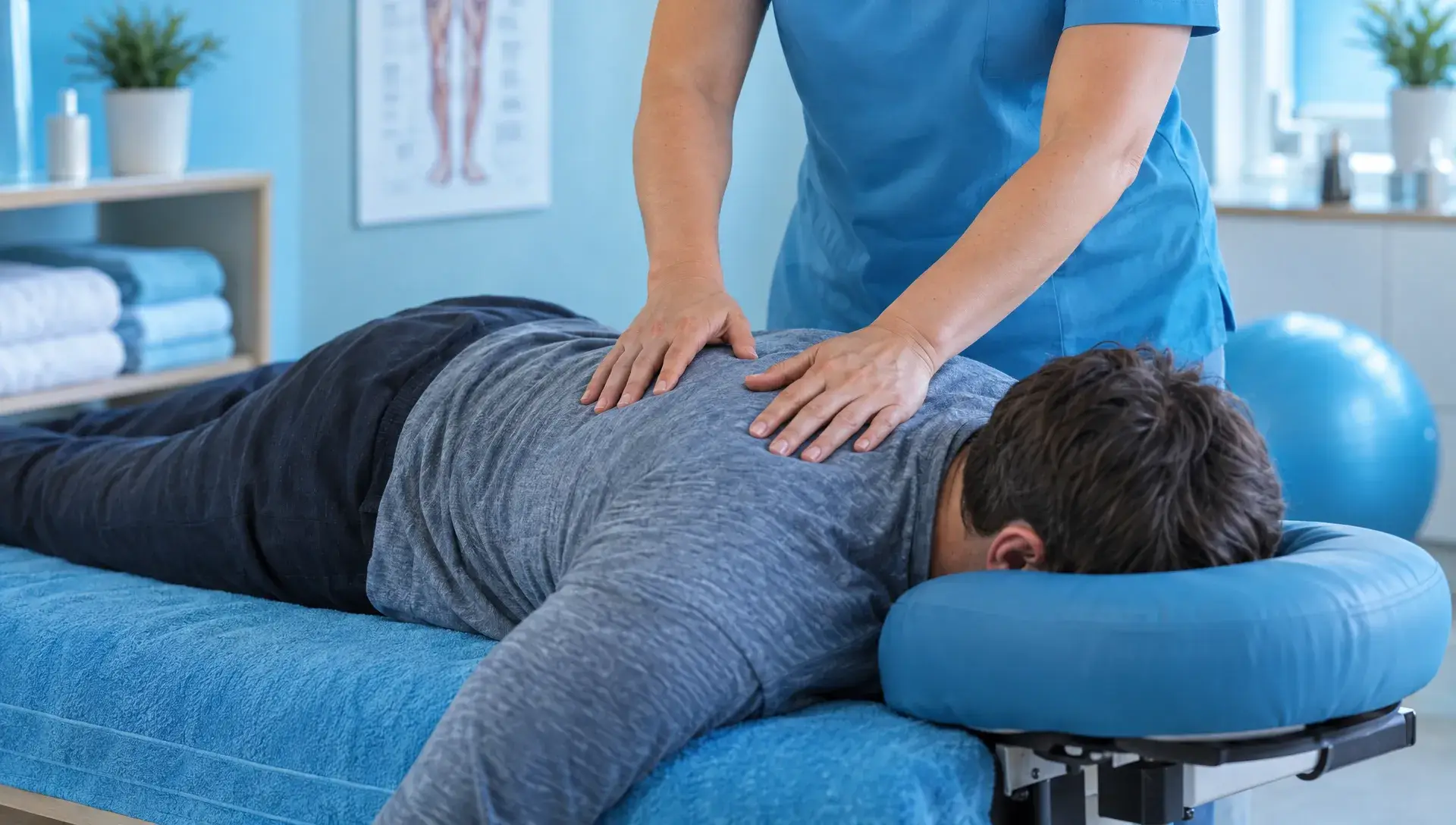
Measure benefit beyond how you feel on the table
The value of massage therapy in chiropractic office care is easier to judge when you choose a practical goal beforehand. “Less tight” is useful information, but a daily activity gives you a clearer reference point.
Examples include turning your head comfortably while checking traffic, sitting through a meeting with fewer interruptions or returning to a manageable exercise routine. Record your baseline and reassess the same task after treatment and between visits.
Agree on a review point with your clinician. If relief is brief and your function does not improve, reconsider the approach instead of automatically booking more sessions. Depending on the diagnosis, the next step may involve exercise changes, physical therapy or further medical evaluation.
Address the activity that keeps provoking discomfort
Recurring symptoms deserve attention to daily demands. Screen height, prolonged sitting, carrying a heavy bag and repetitive lifting can all affect how comfortable a task feels. Changing the task may be more useful than repeatedly treating soreness afterward.
For someone whose job involves packing shipments, an employer could review carton dimensions with a custom corrugated packaging supplier such as Fris Karton as part of a broader handling assessment. Load weight, grip, lifting height and repetition still need separate consideration; a different box alone does not make a lift safe.
The same principle applies at a desk or during exercise: identify the aggravating demand and adjust it where possible. Hands-on treatment should support that process, not obscure it.
Ask about costs and coordination before booking
When considering massage therapy in chiropractic office settings, compare the proposed plan rather than assuming bundled treatment is the best value. Ask whether massage and chiropractic services have separate charges, how long each appointment lasts and which services are optional.
Insurance coverage depends on your plan, provider participation, benefit rules and documentation requirements. Receiving massage inside a chiropractic office does not guarantee coverage. Confirm benefits with your insurer and ask the office about anticipated out-of-pocket costs before treatment.
Also clarify who will provide the massage and how treatment information is shared with your consent. Being in the same building is not the same as having a coordinated plan.
Be cautious about pressure to purchase a lengthy package before your response is known. A practical plan should explain the goal, the reason for each service and when progress will be reviewed. Affordability includes avoiding unnecessary visits, not just finding a lower price per session.
Frequently asked questions
Is massage in a chiropractic office safer than massage elsewhere? Not automatically. Safety depends on the therapist's qualifications, screening, technique, consent process and ability to recognize symptoms that need medical evaluation. The office setting alone does not establish those safeguards.
Does massage therapy in chiropractic office care need to be deep tissue? No. Pressure should match your condition, preferences and tolerance. Gentler techniques may be appropriate, especially if you bruise easily or have a condition that increases injury risk.
Can massage treat sciatica? Massage may ease accompanying muscle discomfort, but it does not reliably resolve every cause of radiating leg pain. Persistent symptoms, weakness or worsening numbness need assessment rather than increasingly forceful massage.
Should I expect soreness afterward? Mild temporary tenderness is possible. Severe or worsening pain, significant swelling, extensive bruising or new neurological symptoms need clinical advice. Pain is not evidence that the treatment worked.
How many sessions will I need? There is no universal number. The plan should reflect your symptoms, diagnosis, goals and response. Ask for a reassessment point rather than committing to an open-ended schedule.
Discuss a focused plan with Move Well MD
Move Well MD offers chiropractic care, acupuncture, physical therapy and pain-management services in Manhattan. If you want to include massage, ask whether it is currently available onsite or can be coordinated with an outside licensed therapist.
Bring your symptom history, medication list and one specific activity you want to improve. That gives the care team a useful starting point for discussing appropriate options, safety precautions and expected costs.
