Pain can feel deceptively simple, a stiff neck, a tight lower back, a sore shoulder. But the “best” treatment depends on what’s actually driving it: irritated muscles, restricted joints, nerve sensitivity, movement habits, or a combination.
That is why people often search for a therapeutic massage chiropractor and still feel unsure which appointment to book first. Massage and chiropractic care both help many common pain problems, but they work through different tissues and mechanisms.
Below is a practical, evidence-informed way to decide which approach is likely to help more for your situation, and when combining both can be the fastest path back to moving comfortably.
Therapeutic massage vs chiropractic: the core difference
Think of pain as coming from two overlapping systems:
- Soft tissue system (muscles, fascia, tendons, trigger points)
- Joint and movement system (spine and extremity joints, biomechanics, nervous system control)
Therapeutic massage primarily targets the soft tissue system. Chiropractic care primarily targets the joint and movement system (often including spinal manipulation or mobilization), and may also include rehab exercises and soft tissue work depending on the clinic.
In real life, most people have contributions from both, which is why an integrated plan often works best.
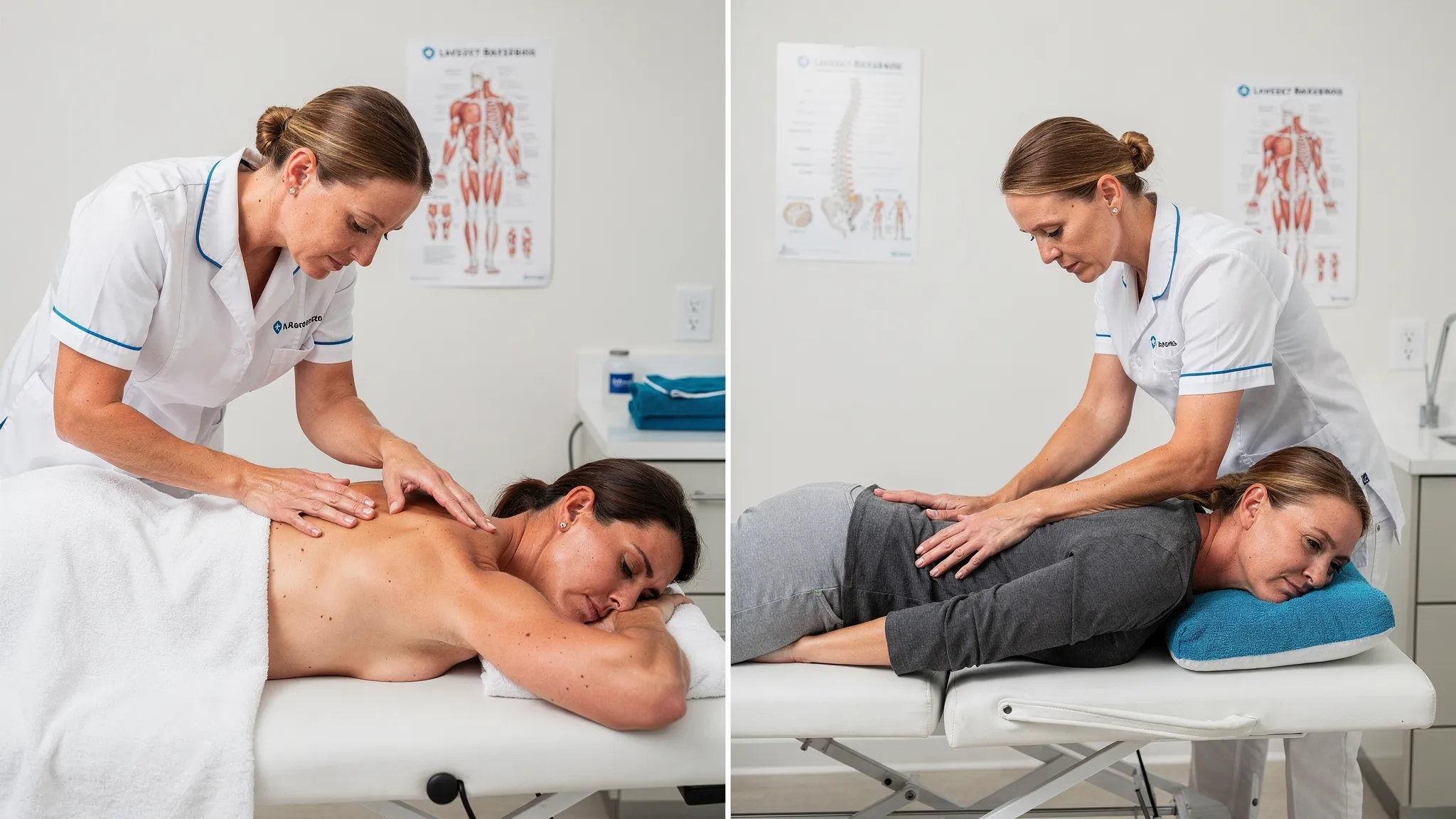
What therapeutic massage helps most
Therapeutic massage is not just relaxation. In a clinical setting, it is typically used to reduce pain and restore function by addressing muscle tone, trigger points, and sensitivity in the nervous system.
Massage can be especially helpful when:
- Pain is closely tied to muscle tightness, “knots,” or trigger points
- You feel stiffness that improves with heat and movement
- Symptoms flare with stress, poor sleep, or long desk days
- You have post-exercise soreness or training-related tightness
Massage may support pain relief through several pathways, including short-term changes in muscle tension, improved local circulation, and modulation of pain perception. The most important practical outcome is often this: massage can make movement feel safer and easier again, which helps you return to walking, training, and doing rehab.
Evidence snapshot (massage)
Clinical guidelines for low back pain include massage among non-drug options that can help some patients, particularly for short-term symptom relief. For example, the American College of Physicians guideline recommends several nonpharmacologic therapies for acute and subacute low back pain, including massage.
What chiropractic care helps most
Chiropractic care focuses on how joints move (or fail to move well), especially in the spine, and how movement patterns contribute to pain. A chiropractic visit may include:
- A history and physical exam (range of motion, orthopedic and neurologic tests)
- Joint mobilization or spinal manipulation (when appropriate)
- Rehab-style exercises and mobility work
- Ergonomic and activity guidance
Chiropractic care can be especially helpful when:
- Pain feels like joint restriction, catching, or sharp pain with a specific motion
- Symptoms radiate (for example, sciatica-like pain) and need careful mechanical evaluation
- You have recurring flare-ups linked to posture, lifting, or repetitive strain
- You need a plan that includes progressive movement and strengthening, not just symptom relief
Evidence snapshot (spinal manipulation)
For some people with low back pain, spinal manipulation can provide modest benefit as part of a conservative care plan. It is also included among options in the American College of Physicians guideline for acute, subacute, and chronic low back pain.
As with massage, the “best” results usually come when hands-on care is paired with targeted exercise and habit changes.
Side-by-side comparison (what to choose)
Use this as a quick orientation, not a substitute for a diagnosis.
| Factor | Therapeutic massage | Chiropractic care |
|---|---|---|
| Primary target | Muscles, fascia, trigger points, soft tissue sensitivity | Joint mobility (spine and extremities), biomechanics, movement patterns |
| Best fit for | Muscle tightness, stress-related tension, soreness, limited mobility from guarding | Joint restriction, mechanical back/neck pain, movement-provoked pain, recurring flare-ups |
| Typical feel afterward | Looser, calmer, sometimes tender for 24 to 48 hours | More mobile, sometimes sore or “worked” for 24 to 48 hours |
| When it may not be enough alone | If a joint restriction or nerve irritation is driving symptoms | If soft tissue guarding and trigger points are the main limiter |
| Often pairs well with | Stretching, breathing, mobility, recovery training | Rehab exercises, posture/lifting strategy, mobility plus strength |
Which helps more for common problems?
A better question than “massage vs chiropractic” is: “Which matches the main driver of my pain right now?”
Here are common scenarios and what often helps first.
Low back pain (new flare-up)
Many acute low back pain episodes involve protective muscle spasm and sensitivity. Massage can help you relax and move again, while chiropractic care can address joint restriction and guide a safe return to activity.
A practical approach:
- If you can’t straighten up and everything feels guarded: therapeutic massage first can reduce muscle spasm and fear of movement.
- If one specific motion reliably triggers pain (bending, extension, rotation): chiropractic evaluation may identify a mechanical driver and guide treatment plus rehab.
Neck pain and “tech neck” stiffness
Neck pain commonly combines muscle tension (upper traps, levator scapulae) and segmental stiffness.
Often, the best results come from combining:
- Massage to calm trigger points and reduce headache-provoking tension
- Chiropractic care to restore motion and address posture and loading habits
Headaches with neck tension
Some headaches are strongly linked to neck and upper back tension and movement limitations. While headache care should always consider medical red flags, many patients benefit from a plan that addresses neck mobility, muscle trigger points, and daily posture.
If headaches are new, severe, sudden, or accompanied by neurologic symptoms (vision changes, weakness, confusion), seek urgent medical evaluation.
Sciatica-like symptoms
Radiating pain, tingling, or numbness needs a careful assessment to determine whether nerve irritation is involved and what movements aggravate or relieve symptoms.
- Chiropractic evaluation can be useful for mechanical contributors and for directing rehab.
- Massage can help reduce guarding in surrounding muscles (hips, glutes, low back), but it should not be the only approach if nerve symptoms are present.
Shoulder, knee, and sports overuse pain
Overuse pain is frequently a load-management problem. Manual therapy can help symptoms, but long-term improvement often requires better mechanics and progressive strengthening.
- Massage helps when symptoms are driven by tightness and trigger points in surrounding muscles.
- Chiropractic care (often alongside rehab) helps when joint mechanics and movement patterns are contributing.
When combining massage + chiropractic helps more than either alone
Combination care tends to work well when pain has both a mobility problem and a soft tissue problem, which is extremely common.
A simple way to think about sequencing:
- Massage can “unlock” soft tissues so you can tolerate movement and rehab.
- Chiropractic care can restore joint motion so your body stops compensating, then rehab helps keep it.
This is also why many integrated clinics build plans that may include chiropractic, therapeutic massage (or soft tissue techniques), rehabilitation, and sometimes acupuncture depending on the case.
What to expect at your first visit (so you choose confidently)
A therapeutic massage appointment
In a therapeutic setting, you can expect questions about:
- Where symptoms are, what triggers them, and what relieves them
- Recent injuries, surgeries, and medical history
- Whether pressure should be light, moderate, or deep (deeper is not always better)
A good plan includes feedback during the session, and a short aftercare strategy (hydration, light movement, heat, or gentle mobility depending on your situation).
A chiropractic appointment
A chiropractor should start with a structured evaluation, often including orthopedic and neurologic screening, range-of-motion testing, and discussion of goals.
Depending on findings, the visit may include joint mobilization or manipulation, soft tissue work, exercise instruction, or referral for imaging or another provider if needed.
Safety considerations and red flags
Both massage and chiropractic care are widely used, but “safe” depends on the individual.
You should seek prompt medical evaluation (urgent or emergency, depending on severity) if you have back or neck pain with:
- New weakness, numbness spreading, or difficulty walking
- Changes in bowel or bladder control
- Fever, unexplained weight loss, history of cancer, or significant trauma
- Sudden severe headache unlike your usual pattern
Also tell your provider if you have osteoporosis, bleeding disorders, are on anticoagulant medication, or have known spinal conditions. A qualified clinician will modify techniques or recommend different care when appropriate.
For neck manipulation specifically, professional organizations emphasize careful screening and shared decision-making. If you want to review a detailed patient-focused overview of cervical artery dissection and associated warning signs, see this American Heart Association scientific statement (discussion can be technical, but it provides context).
A decision shortcut: choose based on your “dominant symptom”
If you are still torn, use this simple sorting tool.
| If your main issue feels like… | Start with… | Why |
|---|---|---|
| Constant tightness, knots, stress-driven tension | Therapeutic massage | Targets soft tissue drivers and downshifts sensitivity |
| A specific movement “catches” or feels blocked | Chiropractic evaluation | Targets joint mechanics and movement strategy |
| Pain keeps returning with sitting, lifting, training | Chiropractic plus rehab (massage as needed) | Hands-on care plus movement change is usually required |
| You are very guarded and afraid to move | Massage first, then chiropractic and rehab | Calms protective tension so movement work is tolerable |
How Move Well MD approaches massage and chiropractic (integrated care)
Move Well MD is a Manhattan-based clinic that combines Western and Eastern approaches for pain relief, including chiropractic care, acupuncture, and comprehensive pain management with a focus on helping patients move better.
If you are deciding between massage and chiropractic, an evaluation can help determine what is driving your symptoms and whether a combined plan makes sense for your body and your goals.
You can learn more or request an appointment here: Move Well MD.

The bottom line
Therapeutic massage helps more when soft tissue tension, trigger points, and stress-related guarding are the primary drivers.
Chiropractic helps more when joint restriction, mechanical movement patterns, or recurring flare-ups are central to the problem.
For many real-world cases, especially neck and back pain, the most effective choice is not either-or. It is the right combination of hands-on care, movement rehab, and a plan that fits your daily life.
