When you are in pain, it is easy to assume you need either a chiropractor or a massage therapist. In reality, many common problems (tight hips from sitting, neck tension from screen time, post-workout stiffness, headaches that start in the upper back) involve both joints and soft tissue. That is why so many people search for a “chiropractor near me with massage therapy”, they want one plan that addresses the full picture.
The challenge is that not every clinic that lists “massage” delivers truly coordinated care. Below is a practical guide to what to look for, what to ask, and what should make you walk away.
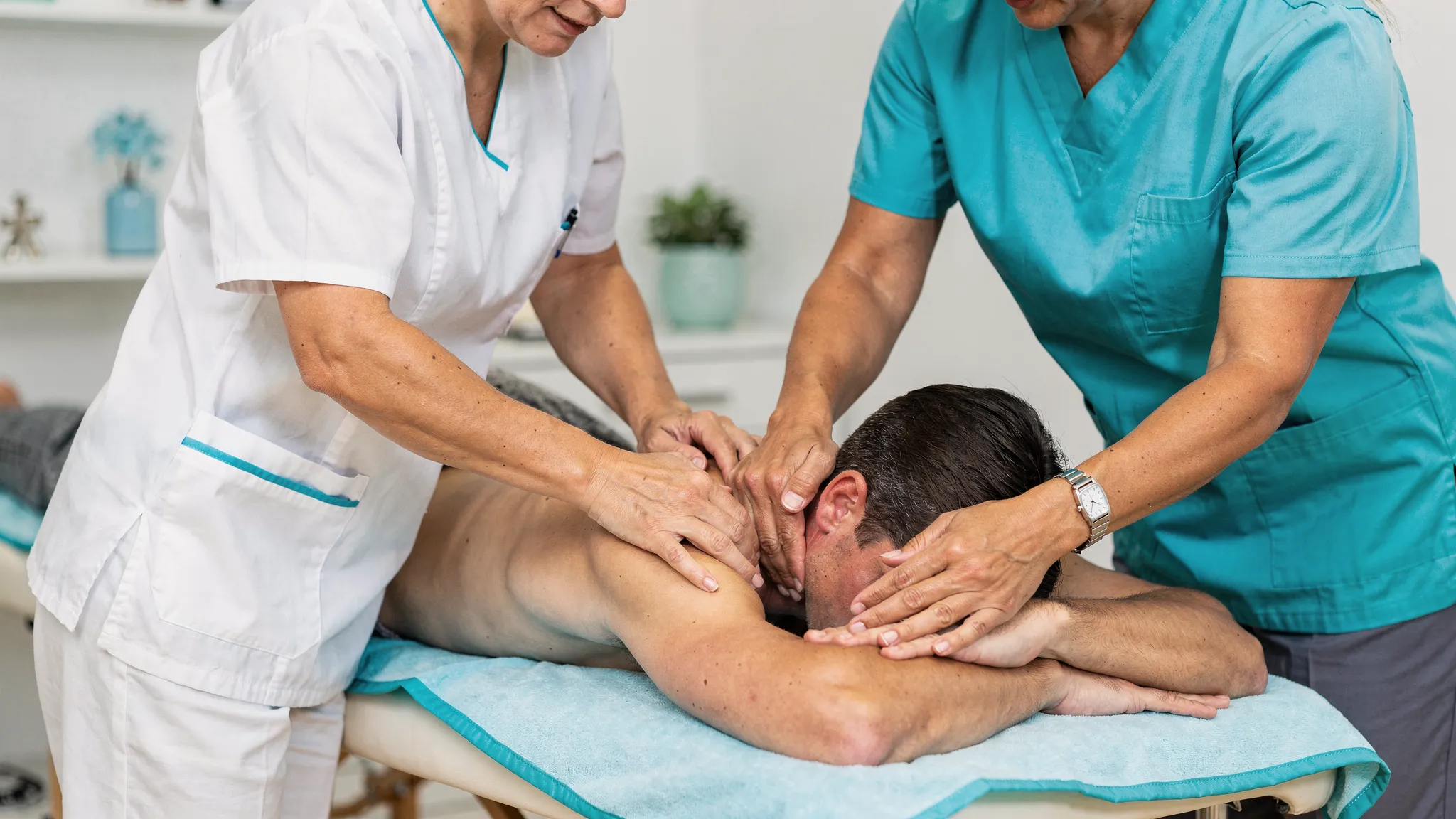
Why people pair chiropractic care and massage therapy
Chiropractic care focuses on the musculoskeletal system, especially how spinal and joint motion influences pain, function, and movement patterns. Massage therapy focuses on muscles, fascia, and trigger points, the “software” that moves the joints.
When the two are combined thoughtfully, it can be easier to:
- Reduce pain and muscle guarding so an adjustment or mobilization feels more comfortable.
- Improve range of motion when tight tissue is limiting movement.
- Make rehab exercises more effective because your body moves with less compensation.
This combined, conservative approach also aligns with major guideline recommendations for common issues like low back pain. For example, the American College of Physicians clinical practice guideline recommends non-drug options such as spinal manipulation and massage for many patients, depending on presentation and duration of symptoms (Annals of Internal Medicine).
What “chiropractor with massage therapy” should mean in practice
The phrase can describe very different setups. A great patient experience usually comes from clarity about who does what, when, and why.
The three most common models
| Model | What it looks like | Best for | Watch-outs |
|---|---|---|---|
| Integrated team in one clinic | Chiropractor and licensed massage therapist (LMT) coordinate, share notes, and build one plan | Complex or recurring pain, athletes, desk-job posture problems | Ask how they coordinate and how progress is measured |
| Same clinic, but “add-on massage” | Massage is offered, but not tied to a diagnosis or plan | General tension relief | Can turn into cookie-cutter care if there is no reassessment |
| Referral-based collaboration | Chiropractor treats joints and movement, refers to trusted massage therapist (or vice versa) | When you want specialists but still want coordination | Coordination depends on communication between offices |
No model is automatically “best”. The key is whether your care is personalized, safe, and goal-driven.
What to look for (the evaluation checklist)
1) A real assessment, not a sales pitch
A chiropractor who works well alongside massage therapy should still start with fundamentals:
- A history that clarifies your symptoms, triggers, and goals.
- An exam that evaluates range of motion, strength, neurologic signs (when appropriate), and pain behavior.
- A plan that explains what they think is driving the issue.
If your first visit is mostly about packages, memberships, or long-term contracts before anyone examines you, that is a red flag.
For patients with warning signs (progressive weakness, bowel or bladder changes, unexplained weight loss, fever, major trauma, suspected fracture), a responsible provider will pause hands-on care and refer you for appropriate medical evaluation.
2) Clear credentials and scope of practice
Look for transparency about licensing and training:
- Chiropractor: In the US, chiropractors are licensed health professionals. Verify that your provider is licensed in your state and ask about experience with your specific condition.
- Massage therapist: Licensing varies by state, but in New York, massage therapy is a licensed profession. Ask whether the massage is provided by an LMT and what techniques they use most often (sports massage, myofascial release, trigger point work, relaxation massage).
A clinic should be able to answer these questions directly, without defensiveness.
3) Communication between providers (coordination is the whole point)
If you are choosing a chiropractor with massage therapy because you want a unified plan, ask how the chiropractor and massage therapist coordinate:
- Do they share notes about what they found (tight areas, movement restrictions, triggers)?
- Do they adjust the plan based on how you respond?
- Do they coordinate timing (for example, soft tissue work before mobility work, or massage after an adjustment to reduce guarding)?
Even excellent massage and excellent chiropractic care can underdeliver if they are treated as unrelated services.
4) A plan with goals you can measure
A strong clinic will help you define success in concrete terms:
- Pain scale targets (for example, “from 7/10 to 2/10”).
- Function targets (sleep through the night, lift your child, sit through meetings, run without flare-ups).
- Range of motion or tolerance targets (turn your head fully, walk 30 minutes, return to training).
They should also explain what “progress” looks like and when they would change the plan.
5) The right technique choices for your body and your preferences
There is no single “best” adjustment style or massage style. What matters is matching technique to your condition, comfort level, and medical history.
For chiropractic care, you can ask about options such as:
- Manual adjustments
- Mobilization (gentler joint movement)
- Instrument-assisted approaches
For massage therapy, you can ask about:
- Deep tissue versus lighter pressure
- Trigger point work for focal knots
- Sports massage for training load and recovery
A quality provider explains trade-offs (including expected soreness) and gets consent before changing intensity.
6) Safety screening and sensible precautions
Massage and spinal manipulation are generally considered safe when performed appropriately, but “safe” depends on the patient.
You should expect questions about:
- Osteoporosis or fracture risk
- Blood thinners or bleeding disorders
- Neurologic symptoms (numbness, tingling, weakness)
- Pregnancy
- Recent surgery
If you want an evidence-based overview of safety and what spinal manipulation may help with, the National Center for Complementary and Integrative Health has a balanced summary (NCCIH).
The questions to ask before you book
Use these to quickly sort “integrated clinical care” from “menu of services.”
- How do you decide whether I need chiropractic care, massage therapy, or both?
- Who will perform the massage, and what license or training do they have?
- What is your plan if my symptoms do not improve after a few visits?
- Will you give me a home program (mobility, strength, ergonomics), or is care only in-office?
- What should I feel after treatment, and what would be a reason to contact you right away?
Good answers sound specific. Vague answers often signal generic care.
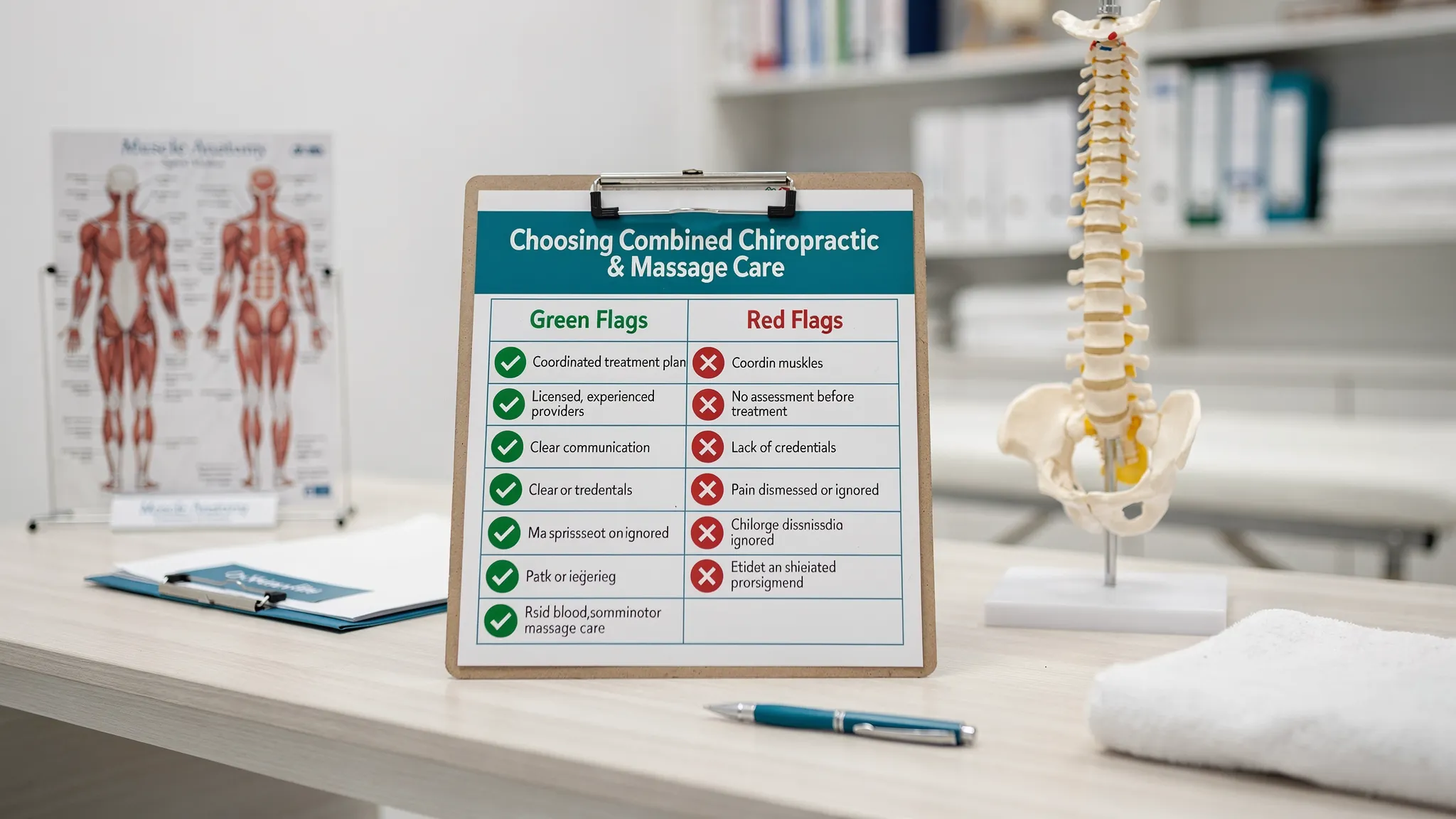
Green flags vs red flags
Green flags
A clinic is usually a strong fit when you see:
- A clear exam and explanation of findings.
- Shared decision-making, you are asked what you are comfortable with.
- Short-term goals plus a re-evaluation plan.
- Coordination between hands-on care and active rehab.
Red flags
Consider walking away if you encounter:
- Guarantees (“we cure everyone”) or fear-based messaging.
- Pressure to prepay for long packages before any diagnosis.
- No questions about medical history, medications, or neurologic symptoms.
- Pain is treated the same way every visit, with no progression.
Practical factors that matter in NYC (time, cost, and logistics)
Even great care is hard to stick with if logistics are a nightmare. When comparing options, consider:
Scheduling and visit flow
Ask how long appointments are and whether massage and chiropractic care happen on the same day or different days. For many busy New Yorkers, the best model is the one you can adhere to consistently.
Cost clarity
You do not need a clinic to be “cheap”, you need pricing to be transparent and tied to value.
Ask:
- What is included in the first visit?
- Are there separate charges for massage therapy?
- Do they offer superbills for out-of-network reimbursement?
If you are self-employed, it can also help to streamline your admin load so health appointments are not competing with paperwork. For example, some people use an IRS-authorized provider to file IRS Form 720 online and reduce time spent on compliance tasks, freeing up bandwidth for recovery routines.
Cleanliness and professionalism
This sounds basic, but it matters more with hands-on care:
- Linens should be clean.
- Treatment rooms should feel professional and private.
- Therapists should wash hands and explain draping policies.
When you may want a clinic that offers more than chiropractic and massage
Sometimes the best “chiropractor with massage therapy” is actually a clinic that can widen the plan when needed, especially if pain is persistent or complex.
Depending on your case, you may benefit from access to:
- Corrective exercise and physical rehabilitation
- Sports medicine-style evaluations
- Acupuncture for pain modulation and muscle tone
- Comprehensive pain management options
This is especially relevant if you have recurring flare-ups, sciatica-type symptoms, migraines linked to neck tension, or joint pain that keeps returning.
Frequently Asked Questions
Is it better to get massage before or after a chiropractic adjustment? It depends on your goals and how your body responds. Massage first can reduce guarding and make movement easier, while massage after can calm irritated tissue. A coordinated plan should explain the reasoning.
How many sessions should I try before deciding if it is working? Many clinics reassess after a short trial (often a few visits) using pain, function, and movement measures. If there is no meaningful change, the plan should be adjusted or you should be referred.
Can massage therapy make my pain worse? Temporary soreness can happen, especially with deeper work or trigger point techniques. Sharp worsening pain, new neurologic symptoms, or symptoms that escalate rather than settle should prompt a call to your provider.
What conditions respond well to combined chiropractic and massage therapy? Many people seek combined care for nonspecific low back pain, neck pain, posture-related tension, overuse injuries, and limited mobility driven by both joints and soft tissue. Your exam should determine whether you are an appropriate candidate.
How do I know if a clinic is using “massage” as a marketing add-on? If there is no diagnosis, no coordination between providers, no goals, and the plan is identical every visit, it is often an add-on rather than integrated care.
Explore integrated care at Move Well MD
If you are looking for a Manhattan-based clinic that focuses on helping patients move freely and live with less pain through an integrated approach, Move Well MD offers chiropractic care, acupuncture, physical rehabilitation, sports medicine services, and comprehensive pain management.
Learn more or request an appointment at Move Well MD.
