If your back feels locked up, your shoulders feel tense, or your neck pain keeps returning after a long workweek, it is natural to wonder which appointment should come first: chiropractic care or massage therapy. The honest answer is that it depends on what is driving your pain.
In many cases, seeing a chiropractor before massage therapy is the smarter first step when your pain is sharp, recurring, movement-limiting, related to a joint or nerve issue, or difficult to explain. Massage therapy may be a reasonable first choice when the problem feels like general muscle tension, stress-related tightness, or post-workout soreness without warning signs.
The best results often come from using both therapies strategically, not randomly. Chiropractic care can help identify the source of pain and improve joint motion, while massage therapy can address muscle tension, guarding, and soft tissue sensitivity that may be contributing to discomfort.
The short answer: start with the cause of your pain
Chiropractic care and massage therapy are often grouped together because both are hands-on, non-surgical approaches to pain relief. But they are not the same.
A chiropractor is trained to evaluate the musculoskeletal and nervous systems, including the spine, joints, movement patterns, posture, and signs of nerve irritation. Treatment may include spinal or joint adjustments, mobilization, soft tissue work, corrective exercises, and referrals when needed.
Massage therapy primarily focuses on muscles and soft tissues. It may help reduce muscle tension, improve circulation, promote relaxation, and make movement feel easier, especially when tight muscles are contributing to discomfort.
For low back pain, the American College of Physicians guideline includes several non-drug options, such as spinal manipulation and massage, depending on whether pain is acute, subacute, or chronic. That does not mean every person needs both. It means the right approach should match the condition, symptoms, and goals.
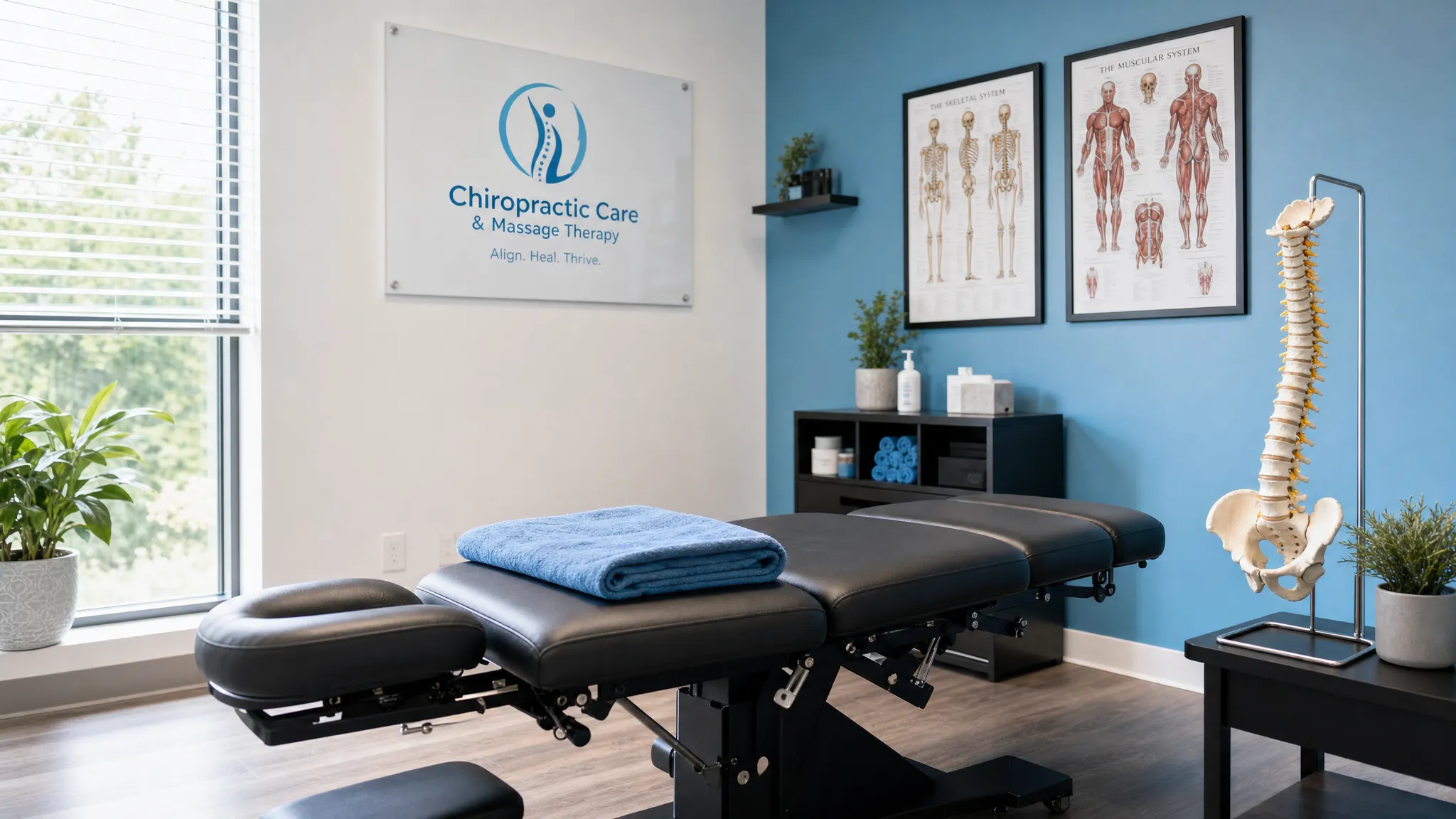
When seeing a chiropractor before massage therapy makes sense
A chiropractor-first approach is often helpful when you are unsure whether your pain is coming from a muscle, joint, disc, nerve, or movement pattern. Many people describe pain as “tightness,” but tight muscles may be a response to something deeper, such as restricted joint motion, poor mechanics, or nerve irritation.
For example, a tight low back may be protecting an irritated spinal joint. A tense shoulder may be compensating for neck stiffness. A painful glute muscle may be related to sciatica or hip mechanics. In these situations, massage alone may feel good temporarily but fail to address the reason the muscles keep tightening.
Consider seeing a chiropractor first if you have:
- Pain that returns soon after massage
- Neck or back pain with limited range of motion
- Numbness, tingling, or radiating pain into an arm or leg
- Pain after a fall, car accident, sports injury, or awkward lift
- Headaches that seem connected to neck tension or posture
- One-sided pain, pelvic imbalance, or recurring “locked up” joints
- Pain that affects walking, sleeping, sitting, or working
A chiropractic evaluation can help determine whether massage therapy is appropriate, what areas should be targeted, and whether other care, such as physical rehabilitation, acupuncture, or pain management, may be needed.
Massage first vs chiropractor first: a practical comparison
There is no universal rule, but your symptoms can point you in the right direction.
| Situation | Better first step | Why |
|---|---|---|
| General stress tension without sharp pain | Massage therapy may be first | Soft tissue relaxation may be enough when symptoms are mild and muscular |
| Recurrent back or neck pain that keeps coming back | Chiropractor first | A clinical evaluation can identify joint, nerve, posture, or movement contributors |
| Pain with numbness, tingling, or radiating symptoms | Chiropractor or medical provider first | Nerve symptoms should be assessed before deep soft tissue work |
| Post-workout soreness without injury | Massage therapy, rest, or gentle movement | Delayed soreness often improves with recovery-focused care |
| Feeling “stuck,” restricted, or unable to move normally | Chiropractor first | Joint mobility and movement mechanics may need assessment |
| Recent trauma, severe pain, fever, weakness, or bowel/bladder changes | Urgent medical evaluation | These symptoms may require immediate medical attention |
The key is not to choose based only on preference. Choose based on safety, symptom pattern, and what has or has not worked before.
What a chiropractor can do before you book a massage
A chiropractic visit before massage therapy can provide clarity. Instead of guessing where the tension is coming from, your provider can assess how your body is moving and whether there are signs that require caution.
A chiropractor may evaluate your spinal and joint motion, muscle strength, reflexes, sensation, posture, gait, and painful movements. If your symptoms suggest something outside the scope of chiropractic care, a responsible provider should refer you for the appropriate medical evaluation.
The National Center for Complementary and Integrative Health notes that spinal manipulation is commonly used for low back pain, neck pain, and headaches, and that it should be performed by trained, licensed practitioners. This is one reason a chiropractor-first approach can be helpful when pain is more complex than ordinary muscle tightness.
A chiropractor may also help you decide whether your massage should be gentle, therapeutic, sports-focused, or postponed. For instance, deep tissue massage may not be ideal over an acutely inflamed area, while lighter soft tissue work may be useful before or after joint mobilization.
If you want a deeper breakdown of the overlap between hands-on care options, Move Well MD’s guide to manual therapy vs chiropractic care explains how these approaches differ and where they can complement each other.
When massage before chiropractic care can be helpful
Massage before chiropractic care is not wrong. In fact, it can be helpful for some people, especially when muscle tension is the main barrier to comfortable movement.
If you are dealing with stress-related shoulder tension, mild stiffness from sitting, or general soreness after exercise, massage may help calm the nervous system and reduce muscle guarding. Some people also feel more relaxed and comfortable receiving chiropractic care after soft tissue work.
Massage therapy may be especially useful first when your goal is relaxation, general wellness, or relief from muscle tightness that is not associated with sharp pain, neurological symptoms, or injury. The NCCIH overview of massage therapy describes massage as a practice used for various health-related purposes, including pain and stress relief.
However, if massage gives you only short-term relief and the same tightness returns within days, that is a sign to look deeper. You may need an assessment of posture, joint mobility, work ergonomics, exercise habits, or underlying pain generators.
Can you have chiropractic care and massage on the same day?
Many people can receive chiropractic care and massage therapy on the same day, but the intensity and order matter. The safest plan depends on your condition, sensitivity, and treatment goals.
For some patients, light soft tissue work before an adjustment can help reduce guarding and make movement feel easier. For others, chiropractic evaluation and treatment should come first, followed by targeted massage to help muscles relax around improved joint motion.
Deep tissue massage and a more intense chiropractic session on the same day may be too much for sensitive, inflamed, or newly injured tissues. If you tend to feel sore after treatment, it may be better to separate appointments or keep one of them gentle.
A coordinated provider can help you decide whether to combine care, space it out, or start with one approach and reassess. If you are new to chiropractic care, this guide on what a medical chiropractor visit may include can help you prepare for the evaluation process.
What about specific symptoms?
Back pain
For mild back tightness after sitting or exercise, massage may be a reasonable starting point. But if your back pain is recurring, sharp, one-sided, related to lifting, or traveling into your hip or leg, a chiropractor or medical provider should evaluate it before deep massage.
Back pain can involve joints, discs, muscles, ligaments, nerves, or a combination of factors. A chiropractor can help determine whether your pain pattern suggests mechanical irritation, mobility restriction, muscle imbalance, or the need for additional care.
Neck pain
Neck pain often involves both joint stiffness and muscle guarding. If your neck feels tight from desk posture, massage may help. If you have restricted rotation, headaches, arm tingling, dizziness, or pain after trauma, see a qualified provider first.
Neck symptoms deserve careful screening because nerves, joints, muscles, and vascular red flags can overlap. A chiropractor-first approach may help determine whether massage is appropriate and what level of pressure is safe.
Headaches and migraines
Massage can help some people with tension-type headaches, especially when neck and shoulder muscles are involved. Chiropractic care may also be considered when headaches appear linked to neck mechanics or posture.
However, a sudden severe headache, a new headache after injury, headache with fever, neurological symptoms, vision changes, confusion, or the “worst headache of your life” should be treated as urgent and evaluated medically.
Sciatica or radiating leg pain
If pain travels from your low back or hip into your leg, or if you have numbness, tingling, burning, or weakness, do not assume it is just a tight muscle. Massage may help surrounding tension, but nerve-related symptoms should be assessed first.
A chiropractor can evaluate whether symptoms may be related to spinal mechanics, disc irritation, hip mobility, piriformis involvement, or another issue. From there, massage can be used more safely as part of a broader plan.
When not to start with massage or routine chiropractic care
Some symptoms require urgent medical attention before any routine hands-on treatment. Seek immediate care if you have loss of bowel or bladder control, saddle numbness, progressive weakness, fever with spinal pain, unexplained weight loss, history of cancer with new severe pain, chest pain, shortness of breath, severe trauma, or sudden severe headache.
You should also be cautious with deep massage or spinal manipulation if you have certain medical conditions, recent surgery, fractures, severe osteoporosis, infection, blood clot risk, or unexplained swelling. When in doubt, get evaluated first.
Questions to ask before combining chiropractic and massage
The right provider should welcome your questions. Before combining therapies, ask:
- What do you think is causing my pain or tightness?
- Is massage safe for my symptoms right now?
- Should the massage be light, therapeutic, sports-focused, or deep tissue?
- Are there areas the massage therapist should avoid?
- Should I do chiropractic care and massage on the same day or separate them?
- How will we measure progress over the next few visits?
Good care should not feel like a guessing game. You should understand why a treatment is recommended, what to expect afterward, and when the plan should change.
A simple decision rule
If your symptoms are mild, clearly muscular, and related to stress or soreness, massage therapy may be a good first step. If your pain is persistent, recurring, sharp, radiating, movement-limiting, or connected to an injury, see a chiropractor before massage therapy.
If you are unsure, choose an evaluation first. A clinical assessment can help you avoid wasting time on the wrong type of care and can make massage therapy more targeted when it is appropriate.
Why integrated care can be more cost-effective
For busy New Yorkers, the goal is not to schedule more appointments than necessary. The goal is to choose the right care at the right time.
An integrated approach can be more efficient because it looks at the full picture: joints, muscles, nerves, posture, movement habits, recovery, and pain triggers. At Move Well MD in Manhattan, care may include chiropractic care, acupuncture, physical rehabilitation, sports medicine services, and pain management depending on your evaluation and goals.
That does not mean everyone needs every service. It means your plan can be adjusted based on what your body actually needs, rather than relying on one-size-fits-all treatment.
For more practical ideas on conservative pain relief, you can also read Move Well MD’s guide to natural pain solutions that may help you move better.
Frequently Asked Questions
Is it better to see a chiropractor before massage therapy? It is often better to see a chiropractor first if your pain is recurring, sharp, radiating, related to an injury, or affecting your movement. Massage may be a good first choice for mild muscle tension, stress, or general soreness without red flags.
Should I get a massage before or after a chiropractic adjustment? Either order can work. Massage before chiropractic care may help relax tight muscles. Massage after chiropractic care may help reduce muscle guarding around improved joint motion. The best order depends on your symptoms and treatment plan.
Can massage replace chiropractic care? Massage and chiropractic care have different purposes. Massage focuses on soft tissue tension, while chiropractic care evaluates and treats joint motion, spinal mechanics, and related nervous system concerns. Massage may be enough for simple muscle tightness, but recurring or nerve-related pain often needs a clinical evaluation.
How long should I wait between a chiropractic visit and massage? Some people tolerate both on the same day, especially if one treatment is gentle. Others do better spacing appointments by 24 to 72 hours, particularly if they are sore, inflamed, or new to treatment. Ask your provider what is appropriate for your condition.
Can I get a deep tissue massage if I have sciatica? Be cautious. Sciatica-like symptoms can involve nerve irritation, not just tight muscles. Deep pressure may aggravate symptoms in some cases. It is wise to get evaluated before deep tissue massage if you have radiating pain, numbness, tingling, or weakness.
Get a clearer plan for pain relief in Manhattan
If you are trying to decide between chiropractic care and massage therapy, you do not have to guess. A focused evaluation can help identify what is driving your pain and whether massage, chiropractic care, acupuncture, rehabilitation, or another option makes the most sense.
Move Well MD offers integrated care in Manhattan for people dealing with back pain, neck pain, joint pain, sciatica, migraines, sports injuries, and movement limitations. To take the next step toward a more targeted plan, visit Move Well MD and schedule an appointment.
