Sciatica has a way of taking over your day. Sitting becomes uncomfortable, walking feels “off,” and even simple things like putting on shoes can trigger sharp, electric pain down the leg. When you are dealing with those symptoms, it is natural to wonder whether a chiropractor for sciatica is the right next step, or whether you should be looking elsewhere.
This guide helps you self-screen, understand what chiropractic care can and cannot do for sciatica, and recognize the signs that it is a good fit (and the red flags that mean you should seek medical evaluation urgently).
First, what “sciatica” really means
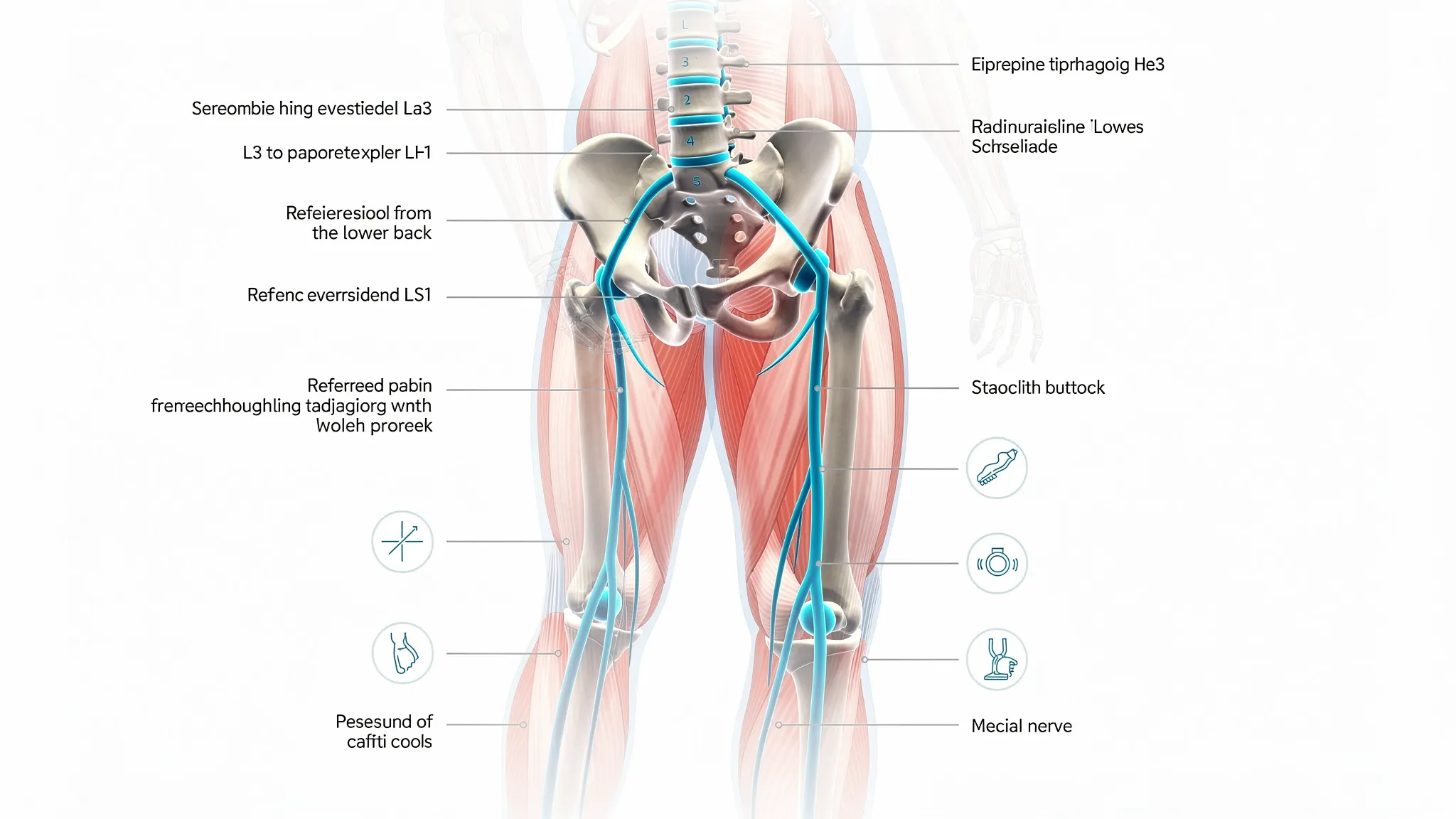
Sciatica is not a diagnosis by itself. It is a set of symptoms caused by irritation or compression of a spinal nerve root (most commonly L4, L5, or S1), which forms part of the sciatic nerve. That is why symptoms often travel from the low back or buttock into the leg.
Common sciatica symptoms include:
- Pain that radiates from the low back or buttock into the thigh, calf, and sometimes the foot
- Burning, tingling, pins-and-needles, or numbness down one leg
- Pain that worsens with sitting, bending, coughing, or sneezing
- Weakness in the leg or foot (in more significant cases)
Sciatica can be triggered by several underlying problems, including disc herniation, spinal stenosis, degenerative changes, or in some cases irritation in the deep gluteal region. The best care plan depends on what is actually driving the nerve irritation.
When a chiropractor for sciatica is often a good fit (green lights)
Chiropractic care tends to be most helpful when your sciatica appears mechanical, meaning it changes with posture and movement, and is tied to joint mobility, disc-related irritation, muscle tension, or movement patterns.
1) Your symptoms change with positions or movement
A strong sign of a mechanical component is when symptoms predictably change, for example:
- Sitting makes it worse, standing or walking changes it
- Bending forward increases leg pain, gentle back extension reduces it (or the opposite)
- Certain movements “reproduce” symptoms and others relieve them
This pattern often suggests there is a movement and loading strategy that can reduce nerve irritation. Chiropractors commonly evaluate these patterns and build a plan around them.
2) Your leg pain is mild to moderate, and you do not have progressive weakness
Many episodes of radicular pain improve with conservative care. Chiropractic care may be a reasonable option when:
- You can still walk, even if it is uncomfortable
- There is no rapidly worsening weakness
- There is no bowel or bladder dysfunction (more on this below)
If you do have weakness, you can still be a candidate for conservative care in some cases, but it becomes more important to be assessed promptly and monitored closely.
3) You want a non-drug, function-first plan
Clinical guidelines for low back pain commonly recommend starting with nonpharmacologic options. For example, the American College of Physicians guideline on noninvasive treatments for acute, subacute, and chronic low back pain includes spinal manipulation among options for appropriate patients, alongside exercise and other conservative approaches.
While sciatica is not identical to non-specific low back pain, the practical takeaway is that conservative, movement-based care is often an appropriate early step when red flags are absent.
4) Your pain has not improved with “wait and see,” and you want a structured plan
If you have tried basic self-care for a couple of weeks (activity modification, gentle walking, heat/ice, careful stretching) and you are stuck, structured conservative care can help by:
- Identifying aggravating movements and postures
- Improving joint mobility and tissue tolerance
- Progressing strengthening and stability work
- Coaching return to work, gym, and sport safely
5) You are looking for a whole-system approach, not “just an adjustment”
Sciatica care usually works best when it is more than a single technique. In a comprehensive plan, chiropractic adjustments and mobilization may be combined with rehab, soft tissue work, and other supportive services depending on the clinic.
At Move Well MD, care can integrate chiropractic and acupuncture, along with broader pain management and rehabilitation-oriented services, depending on what your presentation calls for.
Signs chiropractic care might NOT be the right first step (red flags)
Some symptoms require urgent medical evaluation. If you have any of the following, seek emergency care or urgent evaluation right away:
- New bowel or bladder control problems (incontinence or inability to urinate)
- Saddle anesthesia, numbness in the groin or inner thighs
- Rapidly progressive weakness in the leg or foot (for example, worsening foot drop)
- Severe, unrelenting pain that is not position-dependent and is not improving at all
- Sciatica with fever, chills, unexplained weight loss, history of cancer, or recent serious infection
- Recent significant trauma, or suspected fracture
These can indicate conditions that should be ruled out immediately.
The National Institute of Neurological Disorders and Stroke provides a helpful overview of sciatica symptoms and when to take them seriously.
- Source: NINDS: Sciatica information
A quick “fit check” table
| What you notice | What it may suggest | A reasonable next step |
|---|---|---|
| Pain travels below the knee with tingling or numbness | Nerve irritation (radicular symptoms) | Conservative exam to identify drivers and severity |
| Symptoms change with sitting, bending, walking | Mechanical component | Chiropractic and rehab-based plan may fit well |
| You can walk and function, but it is limiting | Mild to moderate severity | Trial of conservative care with monitoring |
| Progressive weakness, foot drop, bowel/bladder changes | Neurologic emergency risk | Urgent medical evaluation |
| Fever, cancer history, unexplained weight loss | Possible systemic cause | Medical workup before manual care |
What a good chiropractor should do for sciatica (especially at the first visit)
A high-quality sciatica evaluation is less about “cracking” and more about clinical decision-making.
History and symptom mapping
Expect questions like:
- Where does the pain start and where does it travel?
- What makes it worse or better?
- Any numbness, tingling, or weakness?
- How long has it been going on?
- What is your work setup, commute, training routine, and sleep position?
Neurologic and orthopedic testing
A sciatica-focused exam often includes:
- Reflexes, strength testing (ankle and big toe strength are common focal points)
- Sensory testing (pinpointing numb areas)
- Straight leg raise and other provocation tests
- Gait assessment and functional movements
Red-flag screening and referrals when needed
A trustworthy clinician will tell you when your presentation suggests:
- A need for imaging
- Co-management with another provider
- Or urgent medical evaluation
If your main goal is to find a “chiropractor near me for sciatica,” use that search as a starting point, but choose based on clinical thoroughness and willingness to refer, not just proximity.
What treatment may look like (and why)
There is no single best sciatica treatment for everyone. The plan should match the likely driver and your tolerance.
Common components in conservative care include:
Chiropractic adjustments or spinal mobilization
For some patients, improving motion and reducing mechanical irritation at the lumbar spine and pelvis may reduce symptom intensity and help you move more normally.
Soft tissue and movement work
Sciatica can come with protective muscle tension in the low back, hip rotators, and hamstrings. Treatment may include tissue techniques and guided mobility to reduce sensitivity and restore motion.
Progressive rehab (often the difference-maker)
Sciatica commonly improves faster when you pair symptom relief with a progression that rebuilds capacity:
- Core and hip strength
- Graded exposure to bending, lifting, and sitting
- Return-to-run or return-to-gym planning for active patients
Acupuncture as an adjunct
Some patients use acupuncture to help manage pain and muscle tone, especially when symptoms disrupt sleep or make movement difficult. When combined thoughtfully with active rehab, it can be a useful part of a broader plan.
How long should you “trial” chiropractic care for sciatica?
A reasonable trial is typically a short, time-bound window with measurable goals, not open-ended visits without reassessment.
Examples of measurable goals:
- You can sit 20 more minutes comfortably
- Leg pain intensity drops (for example, from 7/10 to 4/10)
- Numbness area shrinks or becomes less frequent
- You can walk farther with fewer symptoms
- You regain strength or stop losing strength
If you are not seeing any meaningful change, or symptoms are worsening, it is appropriate to re-evaluate the working diagnosis and consider imaging or referral.
Choosing the right provider in NYC (practical checklist)
Sciatica care quality varies. When comparing options, look for:
- A clinician who performs a neurologic exam (strength, reflexes, sensation)
- Clear explanation of what they think is causing symptoms and why
- A plan that includes active rehab, not only passive treatment
- Explicit red-flag screening and comfort referring out
- Transparent expectations about timeline and milestones
How Move Well MD approaches sciatica (integrated care)
Move Well MD is a Manhattan-based clinic that blends Western and Eastern approaches with a focus on pain relief and helping patients move better. For sciatica presentations that are appropriate for conservative care, an integrated plan may include chiropractic care, acupuncture, and rehabilitation-oriented strategies to reduce pain, restore function, and help prevent recurrence.
If your case suggests you need imaging, a different specialty, or a higher level of medical evaluation, the right next step is not “more treatment,” it is the right referral and a plan that matches what your body is signaling.
Frequently Asked Questions
Can a chiropractor help sciatica caused by a herniated disc? Yes, conservative care may help some disc-related sciatica cases by reducing mechanical irritation and improving function. The key is a proper exam, red-flag screening, and a plan that includes rehab, not only passive treatment.
How do I know if my sciatica is serious? Seek urgent evaluation if you have bowel or bladder changes, saddle anesthesia, rapidly worsening weakness, fever, unexplained weight loss, or pain that is severe and unrelenting.
Is it normal for sciatica to come and go? Yes. Sciatica symptoms often fluctuate with posture, activity, and inflammation. That variability can be a clue that the condition is mechanical and may respond to conservative care.
Should I rest or keep moving with sciatica? Total bed rest is rarely helpful. Many people do better with gentle activity (like short walks) and avoiding the specific movements that sharply worsen symptoms, while gradually rebuilding capacity.
How many visits does a chiropractor for sciatica usually take? It varies by severity and cause. A good approach is a short trial with clear milestones. If there is no meaningful improvement or symptoms worsen, the plan should be re-evaluated.
Ready to figure out if chiropractic is the right fit for your sciatica?
If you are dealing with radiating leg pain, numbness, or recurring flare-ups, the next best step is a focused evaluation that screens for red flags and identifies what is driving your symptoms.
Move Well MD offers integrated care in Manhattan, combining chiropractic and acupuncture with broader pain management and rehabilitation strategies. Learn more or request an appointment at Move Well MD.
