Walking into a chiropractic clinic for the first time can feel a little intimidating. You may see specialized tables, handheld tools, exercise equipment, electrical stimulation pads, acupuncture supplies, or devices you have never encountered in a standard primary care office. The good news is that most chiropractic equipment is designed for a simple purpose: to help your clinician evaluate movement, position your body comfortably, apply care with better control, and support recovery between visits.
If you searched for “chiropractor equipments,” the more common phrase is chiropractic equipment or chiropractor equipment. Either way, the important question is not what the device is called, but why it may be used, what it should feel like, and when it may or may not be appropriate for your condition.
This guide explains the equipment first-time patients are most likely to notice, from adjustment tables to rehab tools, so you can feel more prepared before your appointment.
First, equipment does not replace an exam
Before any table, tool, or therapy device is used, a good chiropractic visit should begin with a conversation and assessment. Your chiropractor needs to understand your symptoms, health history, prior injuries, medications, surgeries, activity level, and any warning signs that may require medical referral.
A first visit may include posture and movement checks, range-of-motion testing, orthopedic tests, neurological screening, muscle testing, and palpation of joints and soft tissues. If you want a broader picture of the evaluation process, Move Well MD has a helpful overview of what a medical chiropractor visit may include.
This matters because equipment should be chosen based on your exam, not used as a one-size-fits-all routine. For example, someone with acute low back pain may need gentle positioning and mobility work, while someone recovering from a sports injury may need rehabilitation tools and progressive strengthening.
Common chiropractic equipment and what it does
Not every clinic uses every piece of equipment below. Some chiropractors focus mostly on manual care, while integrated clinics may combine chiropractic, acupuncture, physical rehabilitation, sports medicine, and pain management. Still, these are some of the most common tools first-time patients may see.
| Equipment | What it is used for | What you may feel |
|---|---|---|
| Chiropractic adjustment table | Positions the body for examination, mobilization, or adjustment | Supportive padding, face-down positioning, table height changes |
| Drop table sections | Table segments that release slightly during certain adjustments | A quick drop or light thud under part of the body |
| Flexion-distraction table | Gently moves the lower back or neck through controlled motion | Slow stretching, decompression-like movement, reduced pressure |
| Handheld adjusting instrument | Delivers a small, controlled impulse to a joint | A quick tapping sensation, usually low-force |
| Positioning blocks or wedges | Helps place the pelvis, spine, or limbs in a specific position | Gentle pressure while lying still |
| Electrical stimulation pads | Sends mild electrical pulses to muscles | Tingling, pulsing, or rhythmic muscle contraction |
| Hot and cold therapy | Helps manage soreness, stiffness, or inflammation | Warmth, cooling, or alternating temperature sensations |
| Rehab tools | Supports strength, balance, mobility, and motor control | Guided exercises using bands, balls, weights, or balance tools |
| Acupuncture supplies | Used for acupuncture treatment when clinically appropriate | Fine needle insertion, often minimal discomfort |
The goal is not to use as much equipment as possible. The goal is to use the right tool, at the right time, for the right reason.
Chiropractic tables: the equipment patients notice first
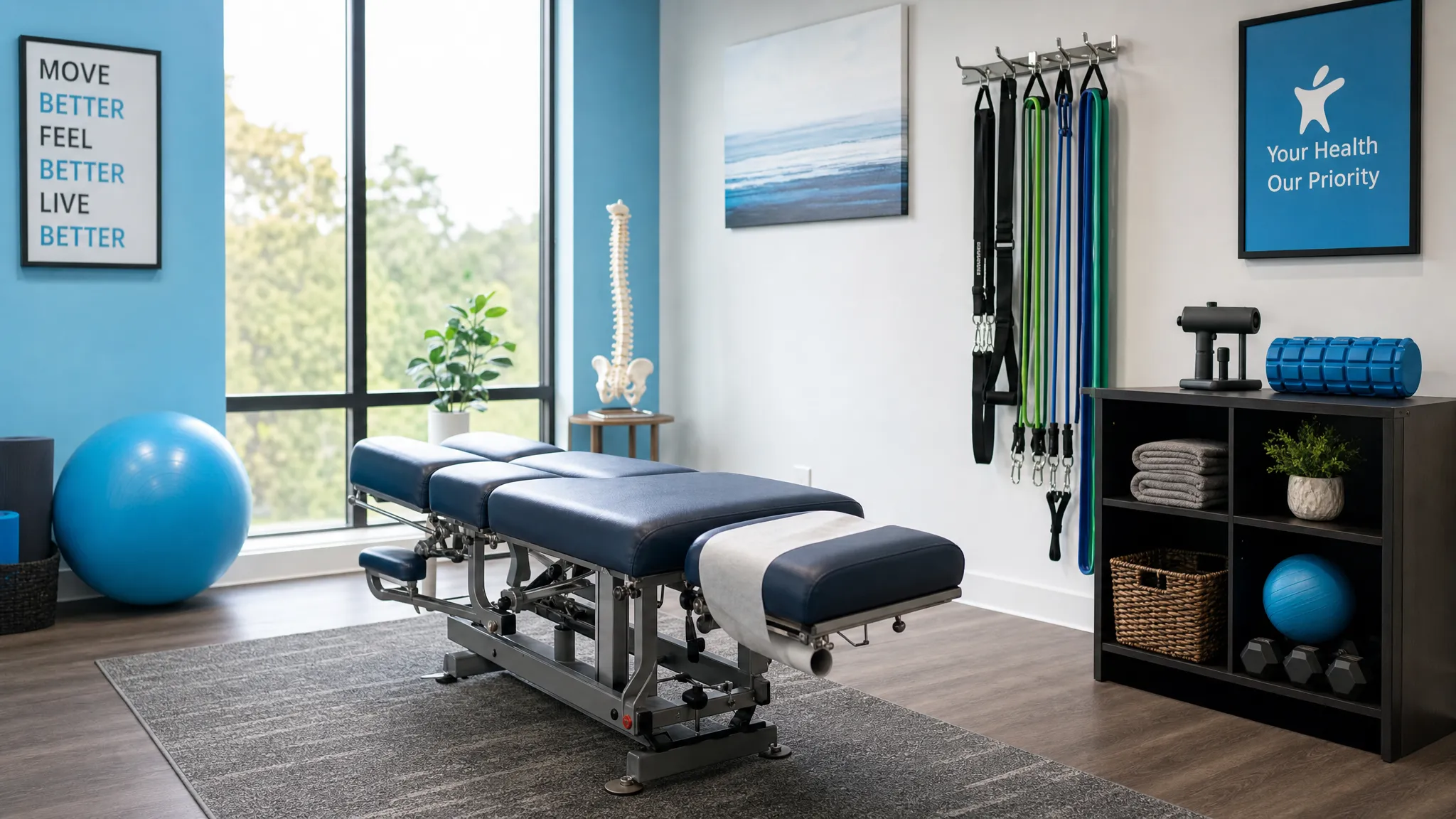
The chiropractic table is usually the most visible piece of equipment in the room. It may look like a massage table at first, but many chiropractic tables have specialized features that help with positioning and treatment.
A high-low table can move from a more upright position to a flat position, which may help patients who have difficulty getting on and off a standard table. A face cradle supports your head when lying face down. Some tables have movable sections for the head, chest, pelvis, or legs, allowing the chiropractor to adjust positioning without forcing your body into an uncomfortable posture.
Drop tables have sections that lift slightly and release during certain techniques. The movement can surprise first-time patients because it makes a sound and feels like the table briefly drops. The purpose is to allow a controlled adjustment with less force than some traditional manual techniques. If you are nervous, ask your chiropractor to demonstrate the drop mechanism before treatment begins.
Flexion-distraction tables are another common option, especially for certain low back complaints. These tables allow controlled, gentle movement while the patient lies down. They are often used to reduce pressure sensitivity, improve mobility, and help patients tolerate care when more direct techniques are not comfortable.
Handheld adjusting tools and low-force options
Some chiropractors use handheld instruments that deliver a quick, controlled impulse. Patients often describe the sensation as a light tap. These tools may be used when a clinician wants precision, a lower-force option, or a more gradual introduction to care.
This does not mean handheld tools are automatically better or worse than manual techniques. The best choice depends on your symptoms, comfort level, examination findings, and treatment goals. Some patients prefer hands-on adjustments, while others feel more comfortable starting with low-force methods.
If you are unsure, ask your clinician to explain the technique, the intended area of treatment, and what you should expect to feel. Move Well MD’s article on which chiropractic method fits your pain and mobility goals can also help you understand how different approaches may be matched to different needs.
Supportive therapies: e-stim, heat, ice, and traction
Chiropractic care is often associated with spinal adjustments, but many clinics use supportive therapies to help reduce discomfort, calm irritated tissues, or prepare the body for movement. These therapies are usually adjuncts, meaning they support the broader treatment plan rather than replacing hands-on assessment or active rehabilitation.
Electrical stimulation, sometimes called e-stim, uses pads placed on the skin to deliver mild electrical pulses. The sensation should be tolerable and adjustable. Some patients experience gentle tingling, while others feel rhythmic muscle contractions. If it feels sharp, painful, or too intense, tell the clinician right away.
Heat and cold therapy are simple but common. Heat may be used when stiffness and muscle guarding are prominent. Cold may be used when irritation, swelling, or acute soreness is a concern. Your clinician may recommend one or the other based on your symptoms and stage of recovery.
Traction or decompression-style devices may be used in certain cases to apply controlled pulling forces to the spine or limbs. These tools are not appropriate for every patient, especially if there are certain medical conditions, severe osteoporosis, instability, recent fracture, or other safety concerns. Screening matters.
The National Center for Complementary and Integrative Health notes that spinal manipulation is used for conditions such as low back pain, but also emphasizes the importance of trained practitioners and appropriate safety considerations. You can review their patient overview on spinal manipulation for additional context.
Rehab equipment: where long-term progress often happens
Many first-time patients focus on the adjustment table, but rehabilitation equipment can be just as important, especially for lasting improvement. Pain relief is often only one part of the plan. Restoring strength, control, balance, and mobility can help reduce repeated flare-ups.
Rehab equipment may include resistance bands, light weights, foam rollers, balance pads, stability balls, stretching straps, and mobility tools. These are used to train movement patterns in a safe, progressive way. For example, a patient with recurring neck tension may work on upper back mobility and postural endurance. A patient with knee or hip pain may work on glute strength, balance, and controlled lower-body mechanics.
In sports medicine and physical rehabilitation settings, equipment may also be used to assess how you move during squats, lunges, running mechanics, shoulder motion, or rotational movements. This can help connect your symptoms to the activities you actually care about, whether that is working at a desk, carrying groceries, lifting weights, running, or playing a sport.
The key is progression. Rehab should start at a level you can perform safely and then become more challenging as your symptoms, strength, and coordination improve.
Acupuncture supplies in an integrated clinic
In a clinic that offers both chiropractic and acupuncture, you may see sealed acupuncture needles, alcohol swabs, gloves, sharps containers, treatment tables, and heat lamps or other comfort supports. Acupuncture needles are very thin and are typically single-use and sterile.
Acupuncture may be considered for certain pain patterns, muscle tension, headaches, stress-related symptoms, or as part of a broader pain management plan. It is not the same as an injection, and it does not involve medication through the needle. Many patients feel only a brief pinch or pressure, while others feel heaviness, warmth, or a dull ache around the point.
As with chiropractic care, acupuncture should follow an appropriate history and safety screening. The National Center for Complementary and Integrative Health provides a patient-friendly summary of acupuncture safety and uses, including the importance of sterile needles and qualified practitioners.
Trigger point and pain management equipment
Some integrated pain clinics may offer trigger point injections or other pain management services when appropriate. This equipment is more medical in nature and may include exam gloves, antiseptic, syringes, medication supplies, bandages, and sharps disposal containers.
Trigger point injections are different from chiropractic adjustments and different from acupuncture. They involve placing medication into a painful muscle trigger point or irritated soft tissue area. Whether they are appropriate depends on your diagnosis, medical history, symptoms, and clinician judgment.
If a procedure is recommended, you should be told why it is being considered, what alternatives exist, what the expected benefits are, and what risks or side effects may apply. You should also have the opportunity to ask questions before consenting.
Imaging and diagnostic equipment: when X-rays or referrals may come up
First-time patients sometimes assume every chiropractic visit requires X-rays. In reality, imaging is not automatically needed for every case of back or neck pain. A clinician may consider imaging if there was trauma, significant weakness, suspected fracture, unexplained symptoms, cancer history, infection concern, progressive neurological findings, or another red flag.
Some clinics have imaging on site, while others refer patients to an imaging center or medical specialist. The decision should be based on clinical need, not routine habit. The U.S. Food and Drug Administration explains that medical X-rays can be valuable diagnostic tools, but they should be used when the expected benefit outweighs the radiation exposure. Their page on medical X-ray imaging offers a useful patient overview.
If imaging is recommended, ask what the clinician is looking for and how the result would change your treatment plan.
What should chiropractic equipment feel like?
Most chiropractic equipment should not feel scary or out of control. You may feel stretching, pressure, tapping, vibration, warmth, cooling, or gentle resistance during exercise. Some treatments may cause temporary soreness, especially if irritated joints or muscles are being treated, but you should not feel ignored, rushed, or unable to speak up.
Tell your chiropractor immediately if you feel sharp pain, dizziness, numbness, unusual weakness, shortness of breath, or symptoms that feel different from your usual complaint. Also tell your clinician if a position feels uncomfortable, if you are anxious about a technique, or if you prefer a lower-force approach.
Consent is part of good care. A clinician should explain what they are doing in plain language and adjust the plan when needed.
Questions to ask before equipment is used
You do not need to know the technical name of every device. A few simple questions can help you understand the plan and feel more comfortable.
- What is this equipment used for?
- What should I expect to feel during treatment?
- Is this required, or are there other options?
- Are there any risks based on my health history?
- How will we know if this is helping?
- What should I do if I feel discomfort during treatment?
These questions are especially important if you are pregnant, have osteoporosis, take blood thinners, have had spinal surgery, have inflammatory arthritis, have a neurological condition, or recently experienced trauma.
How equipment fits into a personalized care plan
The best chiropractic care is not defined by the number of devices in the room. It is defined by clinical reasoning, communication, safety screening, and a plan that matches your goals. Equipment can make care more comfortable and precise, but it should support a broader strategy.
For one patient, that may mean gentle mobilization, soft tissue work, and home exercises. For another, it may involve chiropractic adjustments, acupuncture, rehabilitation, and pain management coordination. For a third, it may mean referral for imaging or another medical opinion before hands-on care begins.
At Move Well MD in Manhattan, care may include chiropractic, acupuncture, physical therapy, sports medicine services, joint pain relief, and broader pain management depending on the patient’s needs. If you are exploring options for pain relief, mobility, posture, or recovery, you may also find it helpful to read about the benefits of chiropractic care in Manhattan.
Frequently Asked Questions
Are chiropractor equipments safe for first-time patients? Chiropractic equipment is generally designed to support evaluation and treatment, but safety depends on proper screening, appropriate technique, and your health history. Always tell your clinician about surgeries, fractures, osteoporosis, pregnancy, medications, and new or unusual symptoms.
Will every first chiropractic visit include an adjustment table? Most chiropractic visits use an exam or treatment table, but not every visit includes the same type of adjustment. Your chiropractor may use manual care, low-force tools, mobility work, rehab exercises, acupuncture, or other therapies depending on your evaluation.
Do I need X-rays before using chiropractic equipment? Not always. X-rays or other imaging may be recommended when there are red flags, trauma, neurological findings, or clinical reasons to look deeper. Many patients can be evaluated without imaging if their history and exam do not suggest a need.
What if I am nervous about cracking or popping sounds? Tell your chiropractor before treatment begins. Many techniques do not involve a cracking sound, including low-force instrument care, mobilization, positioning blocks, soft tissue work, and exercise-based treatment.
Can chiropractic equipment help with knee, shoulder, migraine, or sciatica symptoms? Equipment may support care for many musculoskeletal complaints, but the right approach depends on the cause of your symptoms. A thorough exam helps determine whether chiropractic care, acupuncture, rehab, sports medicine, pain management, or referral is most appropriate.
Ready for a more comfortable first visit?
Understanding chiropractic equipment can make your first appointment feel far less intimidating. The most important thing to remember is that every tool should have a purpose, and your clinician should be able to explain that purpose clearly.
If you are dealing with back pain, neck pain, joint pain, migraines, sciatica, or mobility limitations, Move Well MD offers integrated care in Manhattan that may include chiropractic, acupuncture, physical rehabilitation, sports medicine, and pain management. Visit Move Well MD to learn more or schedule an appointment.
