New York City has no shortage of options when you’re searching for help with back pain, neck tension, sciatica symptoms, headaches, or a nagging shoulder that never quite settles down. The hard part is not finding a provider, it’s finding a chiropractic practice that evaluates you carefully, treats you safely, and actually helps you build long-term resilience in a city that is tough on bodies.
Below is a practical, NYC-specific guide to what truly separates great chiropractic clinics from the rest, plus the questions and “green flags” that help you choose with confidence.
What a top chiropractic practice in NYC looks like
Great clinics tend to share a few patterns, regardless of whether they’re in Midtown, Downtown, or the Upper East Side.
First, they treat the person, not the body part. That means your chiropractor asks about your work setup, commute, training habits, sleep, stress, and prior injuries, not just “where does it hurt?”
Second, they are evidence-informed and conservative. For many common musculoskeletal problems (especially uncomplicated low back pain), clinical guidelines support starting with non-drug approaches. For example, the American College of Physicians lists spinal manipulation among options for acute and subacute low back pain, alongside exercise and other nonpharmacologic care (ACP guideline in Annals of Internal Medicine).
Third, they operate like a healthcare clinic, not a “cracking mill.” You can feel it in how they document, communicate, coordinate referrals, and measure progress.
Non-negotiables: licensing, scope, and safety
Before you get excited by reviews or social media clips, verify the basics.
Confirm they are licensed in New York
In NYC, chiropractors must be licensed by New York State. You can verify a clinician’s license using the NYSED Office of the Professions online directory (license verification tool). A great clinic will never be evasive about credentials.
Look for clear clinical boundaries
Chiropractic care is primarily for neuromusculoskeletal conditions. Be cautious if a clinic claims adjustments can “cure” unrelated diseases, promises guaranteed results, or discourages you from appropriate medical care.
Ask about red-flag screening
A high-quality practice screens for symptoms that may require urgent medical evaluation (not chiropractic care), such as:
- New bowel or bladder control issues
- Progressive weakness, severe numbness, or saddle anesthesia
- Fever, unexplained weight loss, history of cancer with new severe pain
- Recent major trauma or suspected fracture
If you mention these and the response is casual or dismissive, choose another clinic.
Great evaluations are thorough (and not always long)
A strong first visit usually includes:
- A detailed history (onset, aggravating factors, prior episodes, training/work demands)
- Orthopedic and neurologic screening (strength, sensation, reflexes when relevant)
- Movement assessment (how you hinge, squat, rotate, breathe, sit, and stand)
- Palpation and joint/soft-tissue assessment tied to your symptoms
The best clinicians explain what they are looking for and why.
Imaging is used when appropriate, not as a routine sales tool
In NYC, some clinics push X-rays for nearly everyone. That is not automatically “wrong,” but it should be clinically justified. Many guidelines recommend against routine imaging for non-specific low back pain unless red flags are present.
A good standard you can use: imaging should answer a specific question that changes management, not serve as a scare tactic.

Treatment quality: individualized care with measurable goals
A common misconception is that “good chiropractic” means a particular technique or a louder adjustment. In reality, what separates a great clinic is the plan around the adjustment.
You should hear a working diagnosis and a plan
After the evaluation, a high-quality chiropractor typically shares:
- What they think is driving your pain (in plain language)
- What they ruled out
- What they recommend doing in the clinic (manual therapy, spinal manipulation or mobilization, soft-tissue work)
- What you should do between visits (mobility, strength, walking, ergonomics)
- How progress will be measured (pain scale trends, range of motion, functional goals)
If you leave with only “come three times a week for three months,” without a clear rationale or milestones, that is a warning sign.
Great clinics blend passive care with active rehabilitation
Adjustments and hands-on work can be helpful, especially for short-term symptom relief. But long-term results in a demanding environment like NYC usually require active components, such as:
- Strengthening and endurance work (core, hips, upper back)
- Mobility work targeted to your movement deficits
- Return-to-sport or return-to-run progressions
- Ergonomic changes for desk work and commuting
Clinics that integrate physical therapy or structured rehab can be especially helpful for persistent pain or recurring flare-ups.
Integration with other therapies is a big differentiator
Many New Yorkers do best with a team-based approach. In a clinic that integrates multiple services, you may have access to additional options (when clinically appropriate), such as acupuncture, sports medicine-style rehab, or other pain management strategies.
If you are considering acupuncture as part of a pain plan, the National Center for Complementary and Integrative Health offers a balanced overview of where evidence is stronger (for example, some pain conditions) and what to expect (NCCIH acupuncture overview).
Communication and transparency: the “soft skill” that protects your outcomes
In practice, many disappointing chiropractic experiences come down to poor communication rather than the treatment itself.
A great NYC clinic is typically strong in these areas:
Informed consent, especially for neck treatment
You should be told what is being done, what alternatives exist, and what common side effects might occur (temporary soreness, fatigue). If cervical manipulation is considered, a good clinician discusses risks and alternatives and proceeds only with your informed consent.
Transparent financial policies
You do not need a clinic to be cheap to be “affordable.” You need it to be predictable and honest.
Expect clarity on:
- What the initial visit includes
- Estimated frequency and duration of care
- Insurance or out-of-network documentation practices
- Any cancellation fees or package policies
Be cautious with prepaid packages sold on day one, especially before you have seen how you respond to care.
Documentation that matches real healthcare
Good documentation is not just for insurance. It shows the clinician is tracking progress and thinking clinically. You may see this in re-exams, functional outcome checks, and updated plans.
NYC realities that great clinics handle better
New York adds constraints that matter when you are choosing care.
Scheduling that respects your life
If you are balancing commuting, childcare, and work, consistency is difficult. Great clinics make it easier through:
- Reliable appointment flow (minimal chronic overbooking)
- Clear communication if a provider is running behind
- Practical home programs that fit into small apartments and tight schedules
Coordination for travelers and high-mobility jobs
NYC has many frequent travelers (consultants, performers, sales teams). A strong clinic helps you create a “flare-up plan” for hotel gyms, long flights, and heavy luggage.
And if travel logistics are part of your stress load, simplifying the non-medical pieces helps too. Some travelers use services like SimpleVisa for eVisa processing so border-crossing administration is one less thing to manage while focusing on recovery and pain control.
Clear referral pathways
If you need imaging, a medical workup, or another specialty, a high-quality chiropractic practice knows when to collaborate and how to refer.
A quick checklist: great clinic signals vs red flags
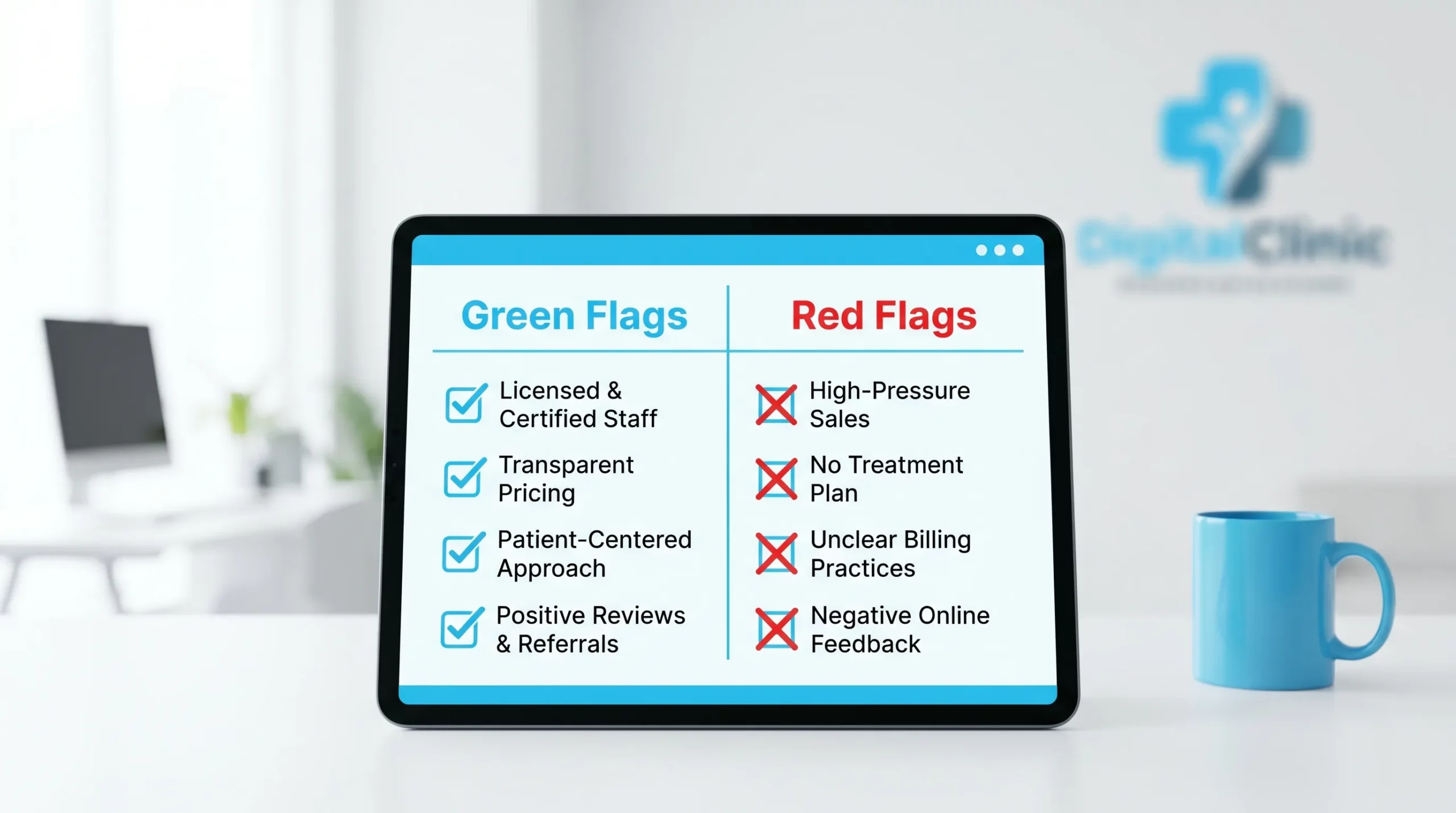
Use this table when comparing clinics (especially if you are choosing between two places with similar reviews).
| What great clinics do | Why it matters | Red flags to avoid |
|---|---|---|
| Verify licensing, explain scope of care | Protects safety and sets realistic expectations | “We treat everything” claims or refusal to share credentials |
| Perform history, exam, and red-flag screening | Reduces missed diagnoses and unsafe treatment | No exam, straight to adjustment in minutes |
| Create a plan with measurable goals | Prevents endless care with unclear benefit | Vague plan or pressure for long prepaid packages |
| Combine manual care with rehab and education | Improves long-term outcomes and recurrence risk | Passive-only care with no home plan |
| Use imaging selectively | Avoids unnecessary radiation and fear-based selling | Routine X-rays for everyone as a sales tool |
| Communicate risks, options, and consent | Builds trust and patient autonomy | Dismissive answers about risks or alternatives |
Questions to ask before you book (or during the first visit)
You do not need to interrogate your provider, but a few questions can quickly reveal clinic quality.
- How do you decide whether chiropractic care is appropriate for my case?
- What does the first visit include (history, exam, treatment), and how long is it?
- What is your approach if I don’t improve in 2 to 4 weeks?
- Will I receive exercises or an at-home plan?
- Do you coordinate with physical therapy, acupuncture, or other pain management options if needed?
- What side effects are common after treatment, and what symptoms would prompt me to call you or seek urgent care?
A clinic that welcomes these questions is usually a clinic that runs on good standards.
When chiropractic care is a great fit (and when to consider other options)
Chiropractic care is often a strong fit when you have:
- Mechanical back or neck pain tied to posture, movement, training load, or a strain
- Limited mobility and stiffness that responds to movement-based care
- Sciatica-like symptoms that are being evaluated carefully (including neuro screening)
- Headaches with a musculoskeletal component (often related to neck and upper back)
Consider a medical evaluation first (or in parallel) when symptoms are severe, rapidly worsening, systemic, or not behaving like a typical musculoskeletal issue.
Frequently Asked Questions
How many visits should a chiropractic plan take? Most reputable clinics set short-term goals first and reassess. If there’s no meaningful improvement within a few weeks, the plan should change or you should be referred for additional evaluation.
Is the best chiropractic practice in NYC the one with the most techniques? Not necessarily. The best practice is usually the one with strong clinical reasoning, a thorough exam process, clear communication, and a plan that includes active rehab.
Do I need X-rays before I get adjusted? Not always. Imaging is typically most useful when there are red flags, significant trauma, suspected structural issues, or when results would change the treatment approach.
Can chiropractic care and acupuncture be combined? Yes, many patients use both as part of a broader pain management plan. The best approach is individualized, with clear goals and reassessment.
What should I feel after an adjustment? Mild soreness, stiffness, or fatigue can happen temporarily, similar to how you might feel after a new workout. Severe or worsening symptoms should be discussed with your provider promptly.
Looking for an integrated chiropractic practice in Manhattan?
If you want a clinic that combines chiropractic care with complementary options like acupuncture, physical rehabilitation, sports medicine-style support, and broader pain management, you can learn more about Move Well MD and their approach at movewellmd.com. Booking a first visit is often the fastest way to get a clear diagnosis, a realistic plan, and a path back to moving comfortably in NYC.
