Back pain in New York City has a way of feeling unavoidable. Long hours at a desk, heavy bags, crowded commutes, walk-up stairs, workouts squeezed into tight schedules, and stress that shows up as muscle tension can all add up. When it does, it is common to search “back pain chiropractor near me” and hope for fast relief.
If you have never been to a chiropractor (or you have had mixed experiences), knowing what to expect can make it easier to choose a clinic and feel confident about your care. Below is a practical, NYC-specific walkthrough of what a back-pain chiropractic visit typically looks like, what treatments may be used, what questions to ask, and when you should seek urgent medical evaluation instead.
Why back pain is so common (and so disruptive)
Low back pain is one of the world’s leading causes of disability, according to major global burden of disease research published in The Lancet.
In real life, that statistic looks like:
- Trouble sitting through a workday.
- Pain bending to pick up groceries or a child.
- Waking up stiff and moving “like a robot.”
- Avoiding exercise because you are afraid of making it worse.
Clinical guidelines also increasingly emphasize non-drug approaches first for many types of back pain. For example, the American College of Physicians recommends nonpharmacologic options (including spinal manipulation) as initial treatments for many patients with acute, subacute, and chronic low back pain, depending on the situation.
- ACP guideline (2017): Noninvasive Treatments for Acute, Subacute, and Chronic Low Back Pain
That does not mean every back problem is a chiropractic problem, but it helps explain why so many New Yorkers start here.
Is seeing a chiropractor appropriate for your back pain?
Many cases of back pain are mechanical (muscles, joints, discs, posture, movement patterns). Chiropractic care often focuses on restoring joint motion, reducing irritation, and improving how your spine and surrounding muscles work together.
That said, there are red flags that should prompt urgent medical evaluation rather than “waiting it out” or booking a routine chiropractic visit.
Seek urgent care or ER evaluation if you have back pain with:
- Loss of bowel or bladder control.
- Numbness in the groin/saddle area.
- Progressive leg weakness.
- Fever, chills, unexplained weight loss.
- History of cancer, significant trauma, or osteoporosis with a new severe pain.
- Suspected infection or you are immunocompromised.
For non-emergency situations, it is still reasonable to call a clinic and describe your symptoms. A reputable office will screen you and refer out when appropriate.
What to expect at your first “back pain chiropractor near me” visit in NYC
In NYC, one of the biggest surprises for new patients is that a good first visit is not just a quick adjustment. Most clinics that handle back pain well start with a structured evaluation.
Here is what a thorough first appointment commonly includes.
1) Intake and history (your story matters)
You will usually review:
- Where your pain is (mid-back, low back, one side, both sides).
- What it feels like (sharp, aching, burning).
- What triggers it (sitting, walking, lifting, mornings).
- Whether symptoms travel into the glute, thigh, or foot (possible nerve involvement).
- Prior injuries (car accidents, sports injuries, falls).
- Your work setup (desk, laptop, standing desk, long commutes).
- What you have tried (rest, PT, meds, massage, injections).
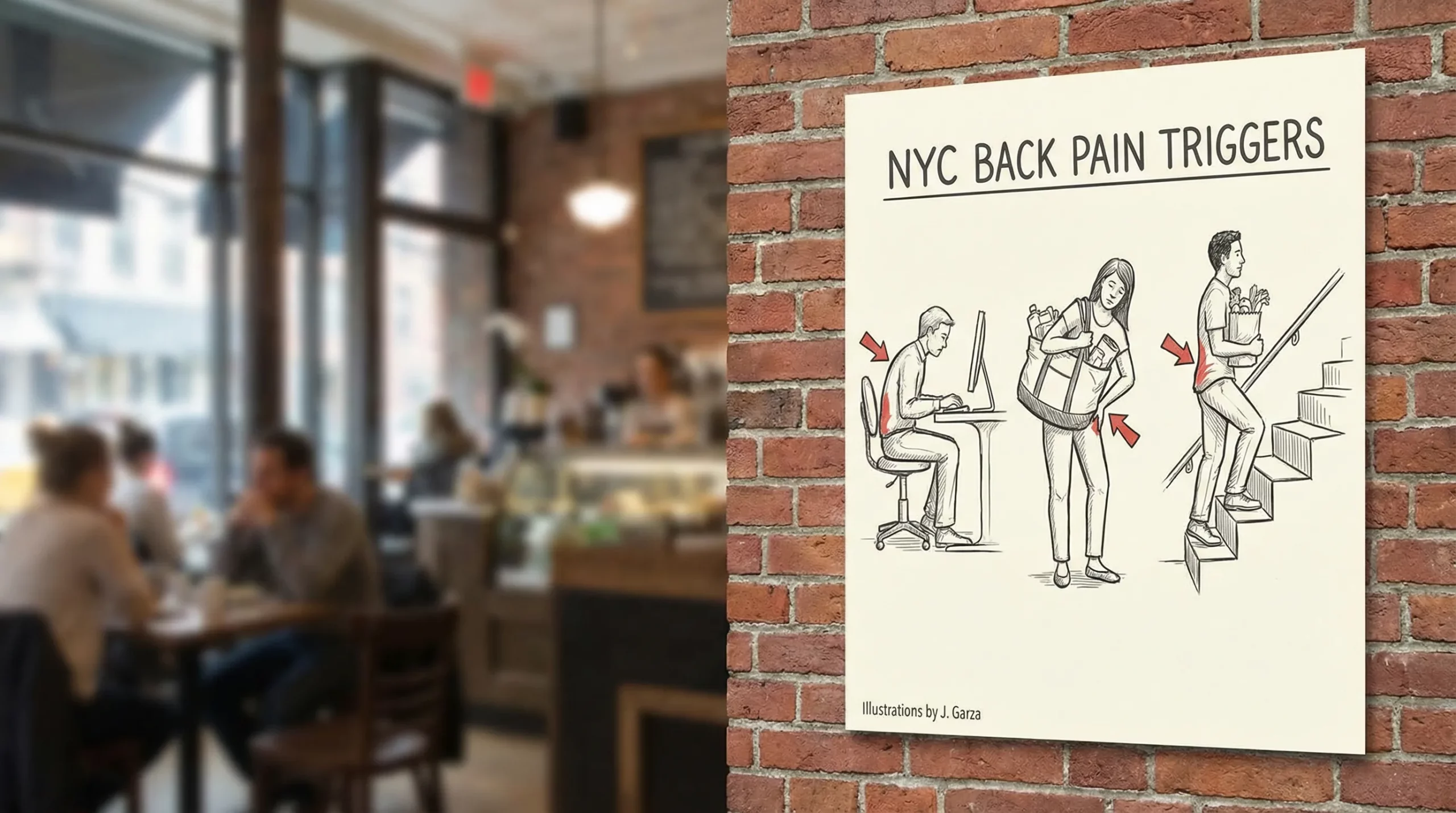
In NYC, lifestyle details often matter more than patients expect, like how many flights of stairs you climb daily or whether you carry a heavy bag on one shoulder.
2) Physical exam (movement and nerves)
A back pain exam may include:
- Posture and gait observation.
- Range of motion testing.
- Palpation of muscles and joints.
- Orthopedic tests for joint and disc irritation.
- Neurologic screening (reflexes, strength, sensation) to check for nerve involvement.
3) Imaging when clinically appropriate
Most back pain does not require immediate imaging, and many guidelines advise against routine early imaging without red flags.
However, if your history and exam suggest something that needs clarification (significant trauma, worsening neurologic signs, or symptoms that do not respond as expected), a clinician may recommend imaging or coordinate it.
4) A plan, not a guess
A high-quality first visit should end with clear next steps:
- What the clinician believes is driving your pain.
- What they want to improve first (pain, mobility, strength, tolerance for sitting).
- What care might involve over the next few weeks.
- What would prompt a referral (for example, for advanced imaging or a specialist consult).
To make the “first visit” easy to visualize, here is a simple overview.
| Step | What you experience | What the clinician is looking for |
|---|---|---|
| History | Questions about pain, habits, past care | Patterns, triggers, red flags |
| Exam | Movement tests, muscle/joint checks, nerve screening | Mechanical vs nerve-related contributors |
| Discussion | Explanation in plain language | Whether chiropractic care fits your case |
| Initial care (if appropriate) | May include gentle treatment and home guidance | Early symptom reduction and safer movement |

Common treatments used for back pain (and why clinics combine them)
Back pain is rarely just one “thing,” so many NYC clinics use a combination approach. Depending on your case, treatment may include:
Chiropractic adjustments or spinal manipulation
This is the most recognized part of chiropractic care. The goal is typically to improve joint motion and reduce pain sensitivity. Some adjustments produce an audible “pop,” which is often gas release from the joint (similar to cracking knuckles). A pop is not required for an adjustment to be effective.
If you are anxious about twisting or cracking, say so. Many clinicians can use lower-force techniques or mobilization.
Soft tissue work
Back pain often involves protective muscle guarding, trigger points, and irritated tissues around the spine and hips. Soft tissue approaches can help reduce tone and improve comfort so you can move more normally.
Therapeutic exercise and rehabilitation
For many people, lasting improvement depends on building capacity, not only reducing pain. Rehab may focus on:
- Core and hip strength
- Breathing and bracing strategies
- Hip mobility
- Gradual exposure to bending, lifting, and sitting
If you sit for work, a clinic may also coach you on “micro-break” strategies that are realistic in NYC schedules.
Acupuncture as part of an integrated plan
Some NYC clinics integrate acupuncture for pain modulation, muscle relaxation, and stress-related tension patterns. If you are curious how it fits into a broader pain plan, Move Well MD shares more background here: acupuncture benefits.
Pain management options when needed
For some patients, especially with significant inflammation or stubborn myofascial pain, clinicians may discuss additional interventions. At Move Well MD, services include broader pain management options, and in some cases trigger point injections may be considered as part of care when clinically appropriate.
The important expectation: good clinics do not jump to procedures as a first move. They explain why, what the goal is, and what alternatives exist.
How long does it take to feel better?
This is one of the most important NYC questions, because people want to know how quickly they can get back to work, training, or parenting without constant pain.
The honest answer is: it depends on whether your pain is acute (new), recurrent (keeps coming back), or chronic (persisting for months), and on factors like sleep, stress, workload, and activity.
What you can generally expect from a thoughtful plan:
- Early phase (first few visits): focus on calming pain, restoring motion, and identifying aggravating habits.
- Build phase: add strengthening, walking or conditioning targets, and more independence.
- Maintenance or discharge: fewer visits, more self-management, return to normal activities.
A good clinician should define measurable markers of progress (for example, “sit 45 minutes with minimal pain” or “walk 30 minutes comfortably”), not just “feel better.”
What to wear and how to prepare (NYC practicalities)
Chiropractic visits in NYC often happen in the middle of a workday. You usually do not need to overthink it.
- Wear comfortable clothing, or bring athletic clothes to change into if you are coming from the office.
- Be ready to describe your symptoms clearly (where, when, what makes it worse).
- Bring a list of medications and prior imaging reports if you have them.
- If your pain is exercise-related, note what movements trigger it (deadlifts, running, long walks).
If you suspect your setup is part of the problem, take a quick photo of your workstation. Seeing your laptop height or chair setup can be more useful than trying to describe it.
Safety: is chiropractic care safe for back pain?
For many patients with mechanical low back pain, spinal manipulation is commonly used and widely studied. Like any healthcare intervention, it can have side effects. The most common are temporary soreness or fatigue, often similar to what you might feel after a new workout.
Your safety improves when the clinic:
- Screens for red flags.
- Performs a neurologic exam when symptoms suggest nerve involvement.
- Adapts technique to your comfort and medical history.
- Explains benefits and risks in plain language.
If something feels rushed or you feel pressured to continue care you do not understand, that is a reason to pause and ask questions.
What does “affordable” mean in NYC chiropractic care?
Cost is a real factor in New York. “Affordable” can mean different things depending on your insurance and needs.
When you call a clinic, ask:
- Do you accept my insurance, and are you in-network or out-of-network?
- What is my copay or expected responsibility per visit?
- Do you offer transparent self-pay pricing?
- Can I use HSA or FSA funds?
- If you recommend a care plan, what is the goal and how will we measure progress?
A trustworthy clinic will help you understand your options without locking you into a one-size-fits-all schedule.
How to choose the right “back pain chiropractor near me” in NYC
NYC has many chiropractors, and proximity matters, but it should not be the only factor. Use this quick checklist to choose well.
Verify licensure and look for clinical fit
In New York, chiropractors are licensed professionals. You can verify a license via the state’s official site: NYSED Office of the Professions.
Then look for fit:
- Do they routinely treat your type of case (desk-related pain, sports injury, sciatica-like symptoms)?
- Do they provide rehab or coordinate it, or is everything just passive treatment?
- Do they communicate clearly, including when you might need imaging or referral?
Consider an integrated clinic if your pain is multifactorial
Back pain is often influenced by multiple systems: joints, muscles, nerves, stress, movement habits, and sometimes inflammation.
An integrated clinic can be helpful when you want coordinated options such as chiropractic care plus acupuncture, physical therapy, and pain management under one roof. Move Well MD describes this kind of non-drug approach in their article on drug free treatment.
Watch for “care plan” transparency
Some patients need only a few visits. Others benefit from a longer plan. The key is whether the plan is individualized and re-evaluated.
A reasonable expectation is:
- You are told what the working diagnosis is.
- You understand why each treatment is being used.
- Your plan changes as you improve.
What you can do between visits to improve outcomes
In NYC, people often feel they “do not have time” for back care at home. The goal is not a perfect routine, it is consistency.
A clinician may recommend simple actions like:
- Short walks daily (even 10 to 15 minutes).
- Gentle mobility work for hips and mid-back.
- A paced return to gym activities instead of stopping completely.
- Ergonomic changes (monitor height, lumbar support, switching positions).
If posture is a major contributor for you, you may also find this helpful: how slouching can contribute to health-related problems.
When it makes sense to seek additional evaluation
If your pain is not improving as expected, or symptoms are progressing, you may need a different level of workup. That can include coordination for imaging (like MRI), referral to an orthopedist, neurologist, or a pain management specialist, or adjustments to the diagnosis and plan.
This is not a failure. It is normal clinical decision-making. The best back pain care is responsive, not rigid.
Booking back pain care in Manhattan
If you are looking for a back pain chiropractor near me in NYC and want a clinic that blends hands-on care with rehab and additional options when appropriate, Move Well MD provides integrated care in Manhattan focused on helping patients move better with less pain.
You can learn more about the clinic and request an appointment at Move Well MD.
