Stress does not stay neatly in your thoughts. For many people, it shows up as a stiff neck, tight shoulders, jaw clenching, headaches or a low back that feels locked after a long day. A chiropractor cannot remove the stressful deadline, family pressure or commute from your life, but chiropractic care can help address the physical tension patterns that stress leaves in your muscles, joints and nervous system.
The short answer is yes, a chiropractor may help with stress-related muscle tension, especially when that tension is tied to posture, joint restriction, repetitive strain or protective muscle guarding. The goal is not to “crack stress away.” It is to help your body move better, calm overworked tissues and give you practical ways to stop tension from building as quickly between visits.
Why stress causes muscle tension in the first place
The American Psychological Association describes muscle tension as an almost reflexive response to stress. When your body senses pressure, it prepares to protect you. Muscles contract, breathing becomes shallower and your nervous system shifts toward alertness. In a short burst, that response is useful. When it repeats all day, your neck, shoulders, jaw, hips and back can start acting as if they are always bracing.
In Manhattan, stress-related tension often has a mechanical component. Long hours at a laptop, crowded commutes, workouts squeezed into a tight schedule and poor sleep can all reinforce the same physical pattern: forward head posture, rounded shoulders, clenched jaw, shallow breathing and a rigid mid-back.
The physical pattern matters more than the job title. A finance professional reviewing spreadsheets, a healthcare worker on their feet, a parent carrying a child or a designer rushing production details, including ordering custom woven labels before a launch, can all end the day with the same elevated shoulders and tight jaw.
When stress becomes chronic, muscles may stop fully relaxing even after the trigger passes. That is when people often describe their body as “stuck,” “knotted” or “compressed.” Chiropractic care can be useful because it looks at how the joints, muscles and movement habits are contributing to that stuck feeling.
What a chiropractor can do for stress-related tension
A chiropractor evaluates how your spine, joints, muscles and posture are working together. For stress-related muscle tension, the visit often focuses on identifying where your body is overworking and where movement has become restricted. That may include the neck, upper back, ribs, shoulders, hips, jaw region or low back.
Chiropractic adjustments are one tool. They are used to improve joint motion when an area is restricted and contributing to discomfort. When joints move better, surrounding muscles may not need to guard as intensely. This can make stretching, strengthening and normal daily movement feel easier.
Soft tissue work may also be part of care. Stress tension is rarely only a joint issue. Tight trapezius muscles, irritated trigger points, stiff fascia and overworked postural muscles can all keep the nervous system on high alert. If your main complaint is tightness rather than sharp pain, you may benefit from approaches like therapeutic chiropractic massage for tight muscles as part of a broader treatment plan.
A good chiropractor also looks at the behaviors that keep tension returning. That may include your desk setup, how often you move during the workday, how you hold your phone, how you breathe when concentrating and whether your exercise routine is helping or adding more strain.
| Stress tension pattern | What you might notice | Chiropractic focus |
|---|---|---|
| Neck and upper shoulder guarding | Tight traps, neck stiffness, tension headaches | Cervical and upper back mobility, soft tissue release, posture changes |
| Jaw and face tension | Clenching, temple tightness, morning soreness | Neck mechanics, relaxation strategies, referral if dental support is needed |
| Mid-back and rib stiffness | Shallow breathing, tightness between shoulder blades | Thoracic mobility, rib mechanics, breathing drills |
| Low back bracing | Stiffness after sitting, tight hips, guarded movement | Lumbar and hip mobility, core control, movement coaching |
| Stress plus repetitive work | Knots that return quickly, fatigue, posture strain | Ergonomics, strength balance, recovery habits |
How chiropractic care may support stress relief
For many people, chiropractor stress relief is less about treating stress directly and more about reducing the body’s response to stress. When muscles are constantly tight, your brain receives ongoing signals that something is wrong. Pain, stiffness and restricted breathing can keep you feeling keyed up.
Manual care may help interrupt that loop by improving movement and reducing local discomfort. Some patients also find that lying still, breathing deeply and receiving hands-on treatment gives the nervous system a rare chance to downshift. That relaxation effect is not a substitute for sleep, therapy or stress management, but it can be a meaningful part of a pain-relief plan.
This is especially relevant when stress triggers headaches. Tension-type headaches often involve tight muscles in the neck, scalp and jaw, along with posture strain. Chiropractic care may help when restricted neck or upper back motion is contributing to the pattern. If headaches are sudden, severe, worsening or linked with neurological symptoms, they should be medically evaluated.
What to expect during a chiropractic visit for tension
Your first visit should begin with a conversation, not an adjustment. A chiropractor will usually ask where you feel tension, when it started, what makes it better or worse, what your workday looks like and whether symptoms include numbness, weakness, dizziness or radiating pain. These details help separate stress-related tension from problems that require a different type of medical care.
The physical exam may include posture assessment, range of motion testing, orthopedic or neurological screening and hands-on evaluation of restricted joints and tight tissues. From there, your clinician can recommend a plan that fits your body rather than using the same approach for every tight neck or back.
Treatment may include gentle spinal adjustments, mobilization, muscle release, stretching, rehabilitative exercises or advice on work habits. At Move Well MD, care may also be coordinated with acupuncture, pain management, physical rehabilitation or sports medicine services when appropriate. The right mix depends on your symptoms, health history and goals.
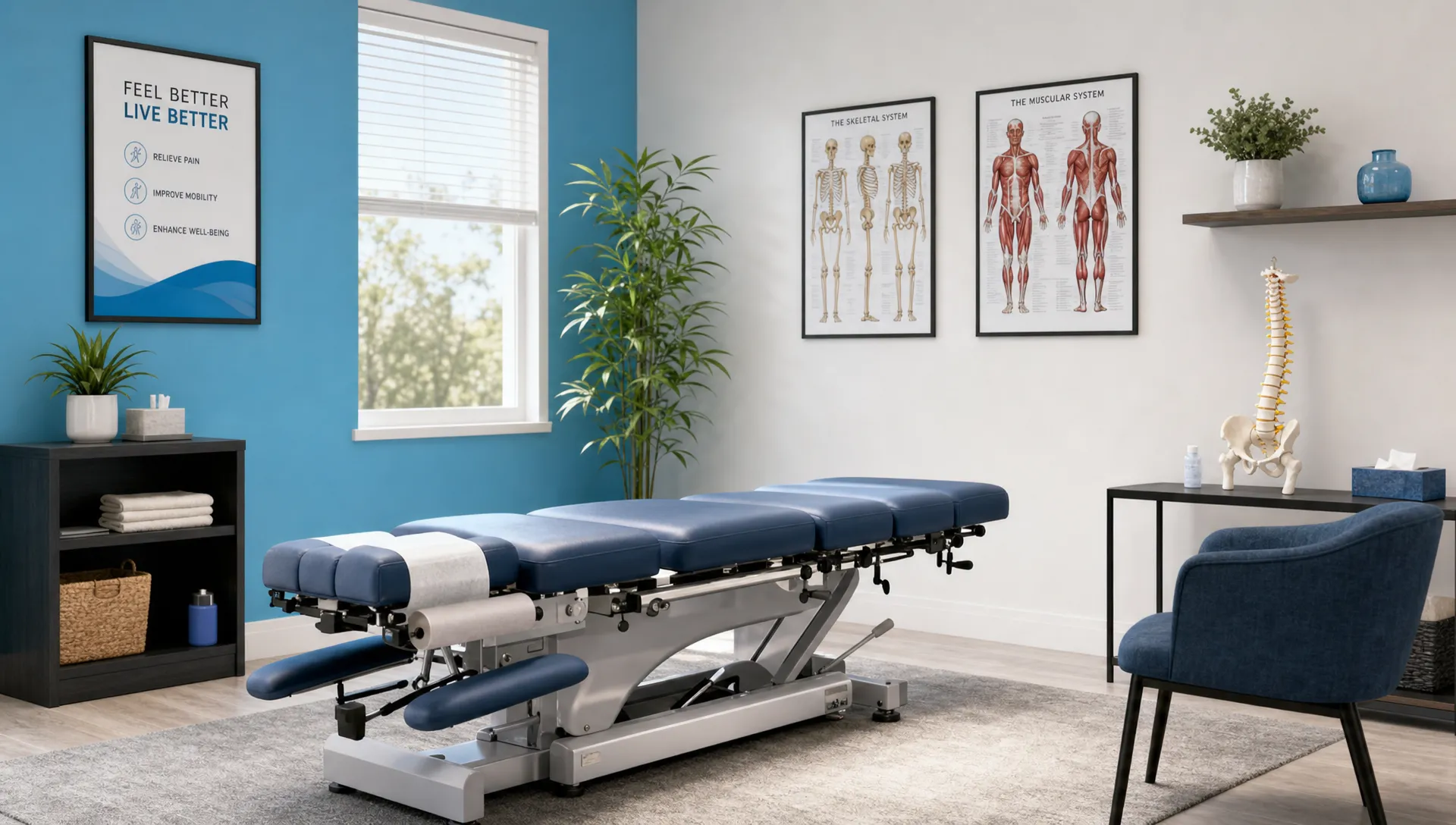
When acupuncture or massage may be a better fit alongside chiropractic care
Stress-related tension can be layered. A joint may be restricted, a muscle may be overactive and the nervous system may be stuck in a high-alert state. That is why combined care can be helpful for some patients.
Massage therapy can be especially useful when broad muscle tightness is the main issue. Chiropractic care may be more appropriate when joint restriction, posture mechanics or movement limitations are also involved. Many people benefit from both because soft tissue tension and joint stiffness often reinforce each other.
Acupuncture may also support relaxation and pain relief for people whose muscle tension is closely tied to stress, sleep disruption or nervous system sensitivity. If you are interested in an integrative approach, Move Well MD also discusses how East Village acupuncture can help with stress and muscle tension in a separate guide.
Signs your tension may be stress-related
Stress-related muscle tension often has a recognizable pattern. It tends to flare during busy periods, improve on vacation or after rest and return when the same daily pressures come back. It may also shift from one area to another, such as neck tightness one week and low back stiffness the next.
Common signs include:
- Tight shoulders that rise toward your ears during work
- Jaw clenching, especially while concentrating or sleeping
- Neck stiffness that worsens after screen time
- Headaches that build during the day
- Low back tightness after prolonged sitting
- A sense that stretching helps briefly but the tightness returns
These symptoms do not prove stress is the only cause. They do suggest that your treatment plan should include both physical care and practical stress-load management.
When to seek medical care first
Most stress-related muscle tension is not dangerous, but some symptoms need prompt medical attention. Seek urgent care if pain follows a major injury or comes with chest pain, shortness of breath, fainting, sudden weakness, loss of coordination, changes in bowel or bladder control or the worst headache of your life.
You should also get medical evaluation for unexplained weight loss, fever, cancer history, progressive neurological symptoms or pain that is severe at night and does not change with position. A responsible chiropractor will screen for these red flags and refer out when chiropractic care is not the right first step.
How to reduce stress tension between visits
Chiropractic care works best when your daily habits support the progress you make in the office. Small changes can reduce the amount of tension your body has to absorb.
Try building these into your day:
- Take a 60-second movement break every 30 to 60 minutes when sitting for long stretches
- Let your shoulders drop and unclench your jaw whenever you notice tension building
- Keep your screen at eye level when possible, rather than looking down for hours
- Use slow nasal breathing to expand the ribs and reduce shallow chest breathing
- Choose gentle mobility work over aggressive stretching when muscles feel guarded
The goal is not perfection. It is to give your nervous system repeated reminders that it does not have to brace all day.
How long does it take to feel better?
Some people feel looser after the first session, especially when the tension is recent and clearly tied to posture or overuse. Chronic stress-related tension usually takes more time because the body has learned the pattern over months or years. In those cases, progress often means fewer flare-ups, better range of motion, improved sleep comfort and less frequent headaches rather than instant permanent relief.
Your response depends on your stress load, sleep quality, activity level, injury history and how consistently you follow home recommendations. A personalized plan matters because two people can have the same tight shoulders for completely different reasons.
Frequently Asked Questions
Can a chiropractor help with stress itself? A chiropractor does not replace mental health care, therapy or medical treatment for anxiety. Chiropractic care can help address physical symptoms linked to stress, such as tight muscles, restricted movement, posture strain and tension-related discomfort.
Is stress-related muscle tension usually in the neck and shoulders? The neck and shoulders are common areas, but stress tension can also affect the jaw, upper back, ribs, hips and low back. The location often depends on posture, work habits, breathing patterns and past injuries.
Are chiropractic adjustments safe for tight muscles? Chiropractic care is generally considered safe when performed by a licensed clinician after an appropriate exam. Not every patient needs the same type of adjustment, and some people are better suited for gentle mobilization, soft tissue work or referral for additional care.
Should I choose chiropractic care, massage or acupuncture for stress tension? It depends on what is driving the tension. Chiropractic care is helpful when joint restriction and movement mechanics are involved. Massage can target broad muscle tightness, and acupuncture may support relaxation and pain relief. Many patients do best with a coordinated plan.
Feel less tense, move more freely
If stress keeps showing up as tight shoulders, neck pain, headaches or back stiffness, you do not have to wait until the discomfort becomes severe. Move Well MD provides Manhattan-based chiropractic care, acupuncture and pain management with a personalized approach to helping patients move better and feel more comfortable.
To explore care options for stress-related muscle tension, visit Move Well MD and take the next step toward moving with less tension.
