Running loops through Central Park, treadmill intervals, barbell days and boutique fitness classes all ask a lot from the same joints and soft tissues. If you are comparing New York sports acupuncture for a sore knee, tight calf, irritated shoulder or lower back flare-up, the goal is not just temporary relief. The better goal is to calm pain, restore comfortable movement and help you return to training with fewer setbacks.
Sports injuries in New York often happen in a specific context: crowded schedules, hard pavement, compact gym sessions and not enough recovery between workouts. Acupuncture can fit well into that reality because it is adaptable, conservative and often combined with movement assessment, chiropractic care, physical therapy or sports medicine when the injury needs more than one approach.
How New York Sports Acupuncture Supports Training Recovery
Sports acupuncture uses thin needles placed at carefully selected points to influence pain, muscle tone and the nervous system. The National Center for Complementary and Integrative Health notes that acupuncture is most commonly used for pain, including back, neck and joint pain. For athletes, that pain often comes with protective muscle guarding, limited range of motion and altered movement patterns.
A sports-focused visit usually looks beyond the painful spot. A runner with outside knee pain may also need hip, glute and ankle assessment. A lifter with shoulder irritation may need evaluation of thoracic mobility, scapular control and pressing volume. The needle placement may be local, regional or distant depending on what the clinician finds.
Acupuncture is not a replacement for progressive loading, sleep, nutrition or smart programming. It works best as one piece of a recovery plan, especially when pain is keeping you from moving normally enough to rebuild strength.
Common Running and Gym Injuries It May Help
New York sports acupuncture is usually most useful when symptoms are driven by soft tissue irritation, muscle tension, overuse or pain sensitivity rather than a traumatic fracture or complete tear. That makes it relevant for many runners and gym regulars, especially when symptoms build gradually.
Running injuries
Runners often seek acupuncture for problems that appear after increases in mileage, speed work, hill training or shoe changes. Common complaints include shin pain, Achilles irritation, plantar heel pain, hamstring tightness, hip flexor tension, IT band-related knee pain and recurring lower back discomfort.
The treatment target is not always the tissue named in the diagnosis. Plantar heel pain, for example, may involve calf tightness, foot mechanics, training load and recovery habits. IT band-related pain may be linked to hip strength, cadence, stride pattern and downhill running. A good plan connects symptom relief to the mechanics that made the tissue sensitive in the first place.
Gym injuries
Gym injuries often come from load spikes, poor recovery, fatigue under heavy sets or repeating the same movement pattern too often. Shoulder pain from pressing, elbow irritation from gripping, lower back pain after deadlifts, knee pain from squats and neck tension after overhead work are common examples.
| Injury pattern | Common signs | How acupuncture may fit |
|---|---|---|
| Calf or Achilles irritation | Morning stiffness, tightness during runs | May reduce pain sensitivity and muscle guarding while loading is adjusted |
| IT band-related knee pain | Outside knee pain during runs or stairs | May help calm surrounding muscle tension while hip and gait factors are addressed |
| Shoulder strain | Pain with pressing, pulling or overhead movement | May support pain relief while mobility and strength are restored |
| Lower back flare-up | Spasm, stiffness or pain after lifting | May help reduce guarding so movement can be reintroduced safely |
| Plantar heel pain | Sharp heel pain with first steps | May be used alongside calf mobility, foot strength and footwear review |
When to Book New York Sports Acupuncture After an Injury
The best time to book New York sports acupuncture is often when pain has lasted more than a few days, keeps changing your stride or lifting form, or returns every time you resume training. You do not need to wait until an injury becomes severe. Earlier care can help clarify whether you are dealing with a simple overload issue or something that needs deeper evaluation.
In the first few days
After a new tweak, start with basic load management. Reduce the activity that provokes symptoms, keep gentle movement that does not increase pain and avoid testing the injury repeatedly. If you cannot walk normally, cannot bear weight, notice major swelling or felt a pop during injury, get medical evaluation before trying to train through it.
When symptoms linger
If pain is not improving after a short period of rest and modified training, acupuncture may help reduce the sensitivity that keeps the area irritated. This is also when an integrated assessment matters. Pain that looks like a calf problem could be influenced by ankle stiffness, hip weakness, lumbar referral or footwear changes.
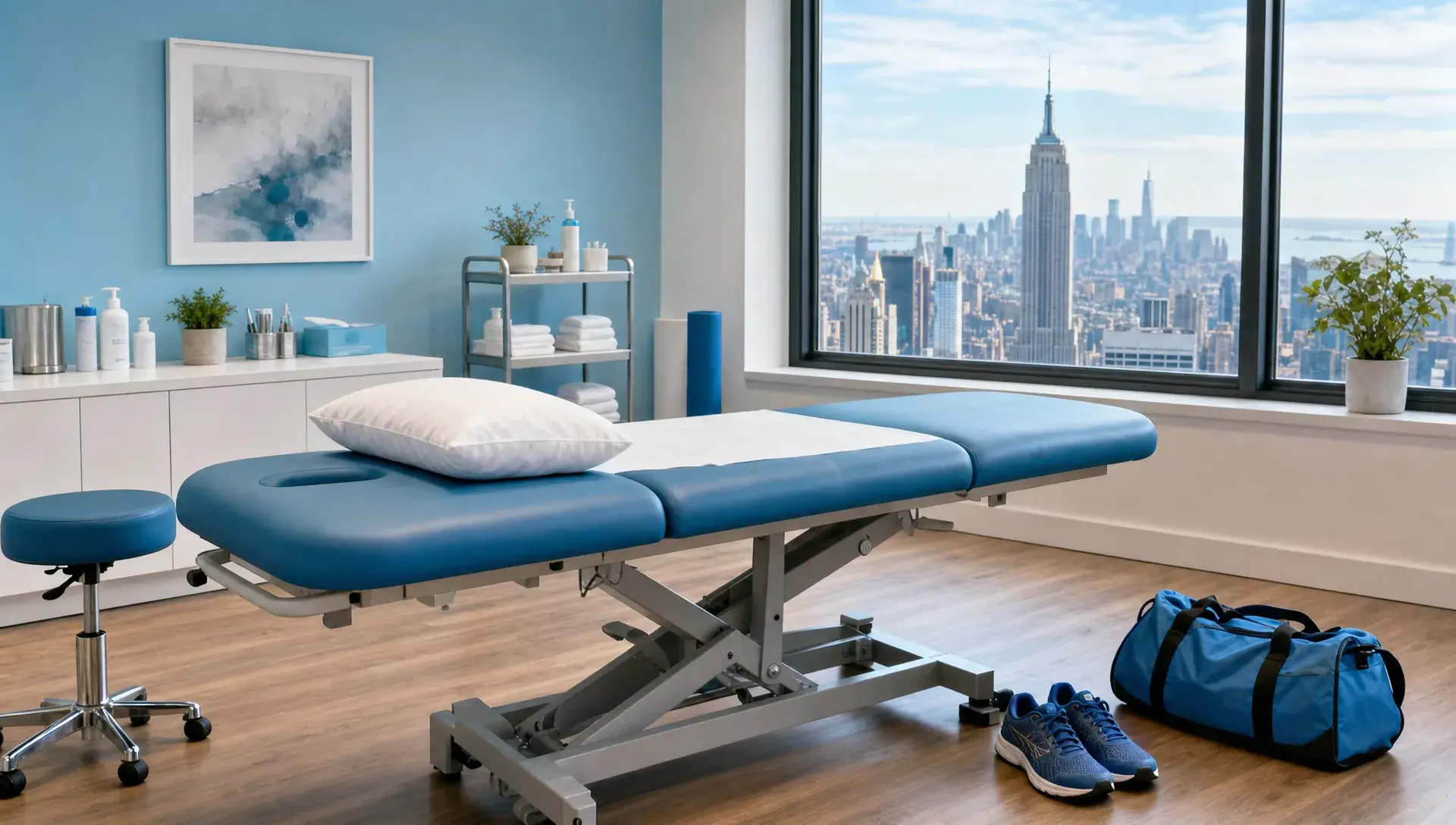
What Happens During a Sports Acupuncture Visit in Manhattan
For many athletes, New York sports acupuncture works best when the appointment starts with questions about training, not only symptoms. Your clinician should ask when the pain started, what changed in your routine, what movements provoke it, what relieves it and what goal you are trying to return to, such as a race, strength cycle or regular fitness class schedule.
A physical exam may include range of motion checks, palpation of tender tissues, orthopedic screening and basic movement testing. From there, the acupuncture plan can be tailored to the problem. Some sessions focus on local tissue sensitivity. Others target related areas that may be contributing to compensation.
Move Well MD is a Manhattan-based clinic that focuses on integrated care, including chiropractic, acupuncture and pain management. When joint mobility is part of the problem, combining acupuncture with sports chiropractic care for active NYC patients can help address both pain and movement restrictions without treating the body as separate parts.
Some athletes may also benefit from specific needling approaches. If the primary issue is a stubborn muscle knot or a painful band of tight tissue, trigger point acupuncture for muscle knots may be relevant. If mild electrical stimulation is appropriate, a clinician may discuss electroacupuncture benefits, uses and safety as another option.
How to Combine New York Sports Acupuncture With Training Adjustments
The value of New York sports acupuncture increases when your recovery plan matches your training reality. A runner who rests completely for two weeks, then returns to the same mileage and pace, may flare up again. A lifter who gets pain relief but keeps pushing the same volume may never give the tissue enough time to adapt.
Start by identifying the main aggravator. For runners, that might be speed work, downhill routes, long runs on concrete or back-to-back high mileage days. For gym injuries, it might be deep range squats, high-volume pressing, kipping movements, heavy hinging or training to failure too often.
Then keep the body moving in ways it tolerates. This may include shorter runs, incline walking, cycling, swimming, modified lifts, lighter tempo work or technique-focused sessions. The goal is not to become inactive. It is to maintain fitness while the irritated area becomes less reactive.
Recovery support between visits also matters. Hydration, protein intake, sleep and warm-ups are not glamorous, but they change how tissues respond to training. Some athletes also use compression gear for support during or after workouts. If your team, run club or gym group wants branded gear that supports training and recovery, custom compression wear can be a practical add-on for high-volume training environments.
Safety, Expectations and Red Flags
New York sports acupuncture should feel measured, clean and tailored to your condition. Most people feel a brief pinch, dull ache, heaviness or mild twitch during treatment. Temporary soreness or small bruises can happen. A licensed clinician should use sterile, single-use needles and should adjust the session if anything feels too intense.
Expectations should be realistic. Some people feel better after one visit, especially if their pain is largely driven by muscle guarding. Others need several sessions paired with exercise changes before progress is clear. Chronic or recurring injuries often need more time because the body has learned a protective pattern.
Do not rely on acupuncture alone if you have warning signs that suggest a more serious problem. Seek prompt medical care for major swelling, deformity, numbness, progressive weakness, chest pain, unexplained fever, severe night pain, loss of bladder or bowel control, inability to bear weight or pain after a fall or collision.
Choosing the Right Sports Acupuncture Provider in NYC
The right provider should understand both pain care and athletic demands. A runner does not just need to be told to stop running forever. A lifter does not need vague advice to avoid heavy weights without a pathway back. You want someone who can reduce symptoms while helping you make practical training decisions.
Look for a clinician who asks about mileage, surfaces, shoes, programming, lifting technique, recovery habits and deadlines such as races or competitions. They should be comfortable explaining what they are treating, why they are treating it and when they would refer you for imaging, sports medicine evaluation or a different type of care.
At Move Well MD, the broader care model includes acupuncture, chiropractic care, physical therapy, sports medicine services, trigger point injections and pain management. That integrated setting can be useful when an injury sits between categories, such as a hip issue that involves joint mobility, soft tissue sensitivity and training-load errors.
Frequently Asked Questions
Does New York sports acupuncture hurt? Most patients describe acupuncture as mild and manageable. You may feel a quick pinch, pressure, heaviness or a brief twitch if a tight muscle responds. The clinician can adjust needle placement or intensity based on your comfort.
How many sessions do runners or gym athletes usually need? It depends on the injury, how long it has been present and whether training habits change. A recent mild strain may respond faster than a recurring tendon or back issue that has been irritated for months.
Can acupuncture replace physical therapy or sports medicine? Not always. Acupuncture may help calm pain and muscle guarding, but rehab exercises, load progression and sports medicine evaluation may be needed for many injuries. The best plan matches the diagnosis and the athlete's goal.
Should I stop training while getting acupuncture? Not necessarily. Many people do better with modified training rather than complete rest. Your provider can help you decide which activities to reduce, which to keep and how to return gradually.
Is sports acupuncture only for competitive athletes? No. It can be relevant for recreational runners, gym beginners, weekend athletes and active professionals who want to move with less pain. The plan should be scaled to your current fitness level and goals.
Move Better With Integrated Care in Manhattan
If pain is changing the way you run, lift or move through daily life, getting assessed early can save weeks of guessing. Move Well MD offers integrated chiropractic, acupuncture and pain management care in Manhattan for patients dealing with sports injuries, joint pain, migraines, sciatica and other movement-limiting conditions.
A focused evaluation can help you understand what is irritated, what needs to change in your routine and which treatment options fit your goals. If you want a recovery plan that respects your training life, schedule a visit with Move Well MD and take the next step toward moving freely again.
