Knee pain can make everyday New York life feel much harder than it should. Subway stairs, long walks, workouts, office sitting, and weekend sports can all become frustrating when every step reminds you something is off.
So, can a chiropractor help with knee pain? In many cases, yes, especially when knee pain is linked to joint mechanics, muscle imbalance, gait, overuse, or problems in the hips, ankles, pelvis, or lower back. Chiropractic care is not a one-size-fits-all cure, and some knee conditions need imaging, orthopedic care, or urgent medical attention. But for many people, a chiropractor can play an important role in reducing pain, improving movement, and helping the knee tolerate daily activity again.
For someone searching for a “knee pain chiropractor near me” after a flare-up, the key is finding a provider who looks beyond the painful spot and evaluates the whole movement chain.
Why Knee Pain Is Often Not Just a Knee Problem
The knee is a hinge-like joint, but it does not work alone. It sits between the hip and ankle, which means it absorbs stress from above and below. If the hip lacks strength, the foot overpronates, the ankle is stiff, or the pelvis and lower back are not moving well, the knee may compensate.
This is why two people can have the same symptom, such as pain going downstairs, but need different treatment plans. One may have patellar tracking irritation. Another may have early osteoarthritis. Another may have a meniscus injury, tendon overload, or referred pain from the low back.
The American Academy of Orthopaedic Surgeons notes that common knee problems include ligament injuries, meniscus tears, tendon injuries, and arthritis. A good chiropractic evaluation helps determine whether your pain looks mechanical and conservative-care appropriate, or whether you need additional testing or referral.
How a Chiropractor May Help With Knee Pain
A chiropractor’s role is not limited to spinal adjustments. Chiropractors are trained to evaluate the musculoskeletal system, including joints, muscles, posture, and movement patterns. For knee pain, care often focuses on restoring better function to the knee and the surrounding areas that influence it.
Depending on the cause of your pain, chiropractic care may include:
- Joint mobilization or adjustment of the knee, hip, ankle, pelvis, or spine when restricted movement is contributing to stress.
- Soft tissue therapy for tight or irritated muscles around the quadriceps, hamstrings, calves, IT band, glutes, or hip flexors.
- Corrective exercises to improve strength, control, balance, and knee alignment during walking, squatting, running, or stair climbing.
- Gait, posture, and movement coaching to reduce repeated strain during daily activity or sports.
- Integrated care, such as acupuncture, physical rehabilitation, or pain management when clinically appropriate.
Research supports the broader idea that exercise and manual therapy can help certain knee conditions. For example, a randomized trial published in the Annals of Internal Medicine found that manual physical therapy combined with exercise improved pain and function in patients with knee osteoarthritis compared with placebo ultrasound care. While chiropractic treatment is not identical to physical therapy, many knee-focused chiropractic plans use similar principles: hands-on care, movement restoration, strengthening, and patient education.
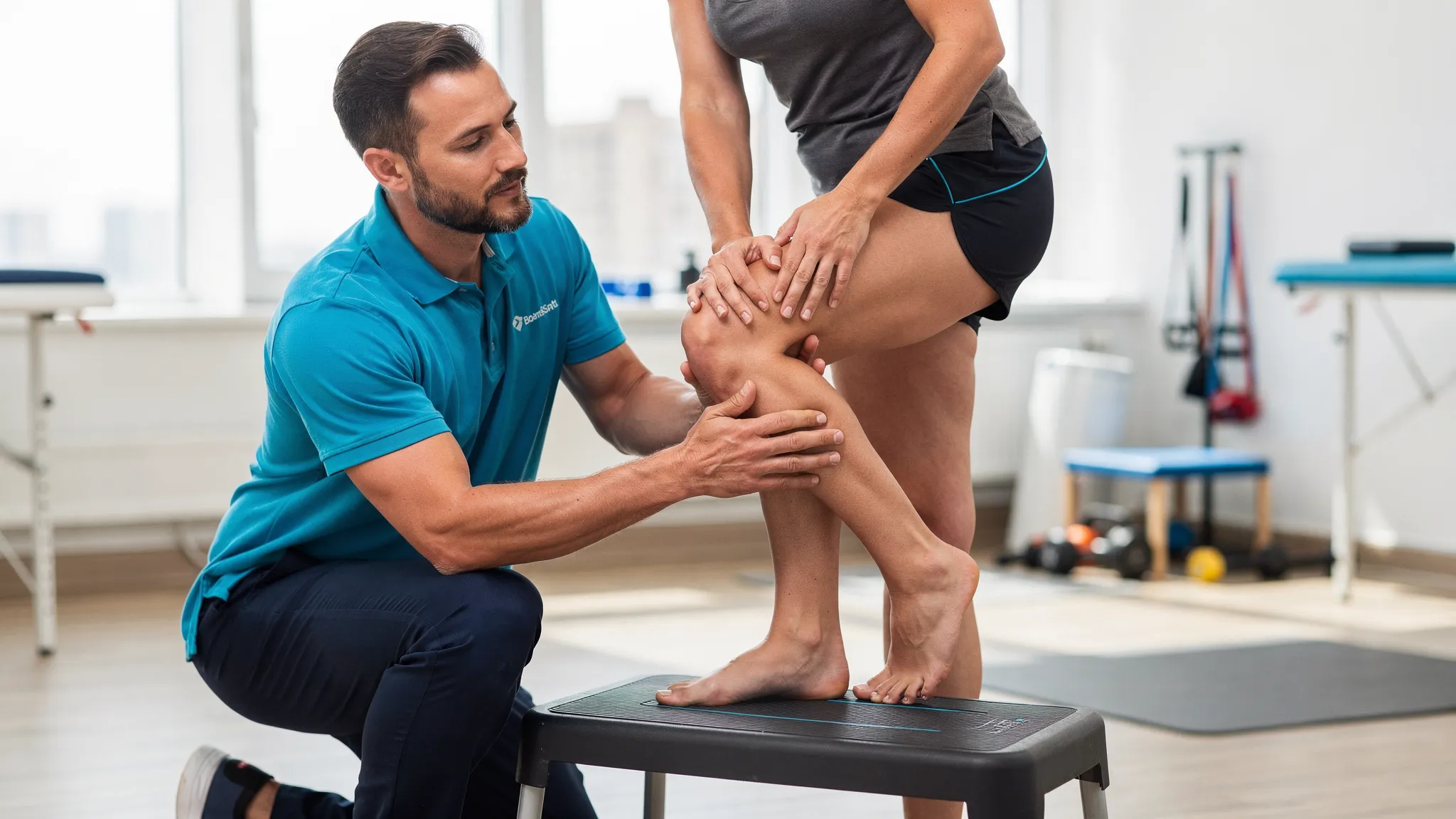
Common Knee Conditions Chiropractors Often Evaluate
Knee pain can come from many sources. A chiropractor can help identify likely contributors and decide whether conservative care is a good fit.
| Knee pain pattern | Possible causes | How chiropractic care may help | When referral may be needed |
|---|---|---|---|
| Pain around or behind the kneecap | Patellofemoral pain, tracking issues, weak hips, overuse | Hip and knee strengthening, soft tissue work, movement retraining | Severe swelling, locking, instability, or trauma |
| Pain on the inner or outer knee | Meniscus irritation, ligament sprain, joint line stress, arthritis | Joint mobility work, gait correction, rehab exercises | Catching, locking, inability to bear weight, major injury |
| Pain below the kneecap | Patellar tendon irritation, jumper’s knee, running or jumping overload | Load management, tendon-friendly strengthening, soft tissue therapy | Sudden pop, major weakness, suspected tendon rupture |
| Stiff, achy knee pain | Osteoarthritis, reduced mobility, muscle guarding | Mobility work, low-impact exercise planning, pain-reducing manual care | Rapid swelling, fever, unexplained redness, severe night pain |
| Knee pain with back, hip, or leg symptoms | Referred pain, nerve irritation, altered mechanics | Spine, hip, and gait assessment, conservative nerve-related care | Progressive numbness, weakness, bowel or bladder symptoms |
This table is not a diagnosis. It shows why a hands-on assessment matters. The same symptom can have different causes, and the safest plan starts with understanding what is driving the pain.
What to Expect During a Chiropractic Visit for Knee Pain
A knee pain visit should begin with a detailed history. Your chiropractor will usually ask when the pain started, what activities make it worse, whether there was an injury, and whether you notice swelling, clicking, locking, buckling, numbness, or weakness.
The physical exam may include checking knee range of motion, joint tenderness, ligament stability, meniscus signs, muscle strength, balance, gait, squat mechanics, hip mobility, ankle mobility, and lower back function. In some cases, imaging may be recommended if there are signs of fracture, significant trauma, advanced arthritis, or internal derangement.
A responsible chiropractor will not simply adjust the area and hope for the best. They should explain what they think is contributing to your pain, what treatment options make sense, and what signs would require referral to another medical provider.
At Move Well MD, knee pain care can be approached through a combination of chiropractic care, acupuncture, physical rehabilitation, sports medicine services, and comprehensive pain management when appropriate. This integrated model can be especially helpful when knee pain has more than one contributor, such as arthritis plus hip weakness, or running overload plus limited ankle mobility.
Can Chiropractic Care Help Knee Arthritis?
Knee osteoarthritis is one of the most common reasons adults develop chronic knee pain. It can cause stiffness, aching, swelling, reduced range of motion, and pain with stairs or prolonged walking.
Chiropractic care does not reverse advanced cartilage loss. However, it may help some people with knee arthritis move better, reduce joint stress, and manage symptoms as part of a broader care plan. Treatment often includes gentle manual therapy, mobility work, strengthening exercises, activity modification, and coordination with other therapies.
Major arthritis guidelines consistently emphasize exercise, education, and weight management when appropriate. The Arthritis Foundation summarizes guideline-supported strategies for osteoarthritis, including exercise and self-management. For many patients, chiropractic care fits best when it supports these fundamentals rather than replacing them.
Move Well MD has also covered related arthritis topics, including whether diet can help with arthritis and how regenerative approaches such as PRP therapy may be considered in certain cases after proper evaluation.
What About Sports and Running-Related Knee Pain?
Athletes, runners, cyclists, lifters, and active commuters often develop knee pain from repeated loading rather than one major injury. Common contributors include training errors, sudden mileage increases, poor recovery, limited hip control, stiff ankles, weak glutes, or repetitive movement patterns.
A chiropractor with sports medicine experience may assess how your knee behaves during sport-specific movements. For example, a runner may need cadence, hip stability, calf capacity, and footwear habits reviewed. A cyclist may need hip mobility, cleat position, and training volume considered. A gym-goer may need squat, lunge, or landing mechanics corrected.
The goal is not only to make the knee feel better today. It is to help you return to activity with a plan that reduces the chance of the same pain returning. That may include progressive strengthening, mobility work, manual care, acupuncture, or physical rehabilitation depending on your needs.
Chiropractic Care vs. Physical Therapy for Knee Pain
Many patients wonder whether they should see a chiropractor or a physical therapist. In reality, knee pain often benefits from both hands-on care and exercise-based rehabilitation.
Chiropractic care may be especially helpful when joint mobility, spinal or pelvic mechanics, gait, and soft tissue restrictions are part of the problem. Physical therapy is often central when strength, endurance, balance, post-surgical recovery, or movement retraining are the priority.
At an integrated clinic, the distinction can be less rigid. A care plan may include chiropractic treatment, physical rehabilitation, acupuncture, and pain management options in a coordinated way. You can learn more about Move Well MD’s rehabilitation approach in this guide to physical therapy in Manhattan.
When Knee Pain Needs Medical Attention First
Not every knee problem should start with chiropractic treatment. Some symptoms suggest a more serious injury or medical condition.
Seek prompt medical care if you have:
- Severe pain after a fall, twist, collision, or direct blow.
- Inability to bear weight or walk normally.
- Significant swelling soon after injury.
- A knee that locks, gives way, or feels unstable.
- Fever, redness, warmth, or unexplained swelling.
- Calf swelling, shortness of breath, or chest pain.
- Progressive numbness, weakness, or loss of function.
These symptoms may point to fracture, ligament rupture, infection, blood clot, or another condition that needs urgent evaluation. A chiropractor can still be part of recovery later, but safety comes first.
What You Can Do Before Your Appointment
If your knee pain is mild and not linked to a serious injury, a few simple steps may help you avoid making it worse while you wait for an evaluation.
Try reducing the activity that triggers pain, especially deep squats, running hills, jumping, or repeated stairs. Use ice or heat based on what feels best. Choose supportive shoes, avoid sudden training increases, and keep gentle motion in your day if it does not worsen symptoms. If you exercise, focus on pain-free range of motion and avoid pushing through sharp pain.
It also helps to track your symptoms. Write down where the pain is, what movements trigger it, whether swelling appears, and whether pain changes with sitting, walking, stairs, or sleep. This information gives your provider a clearer picture and can shorten the path to an effective plan.
How Long Does It Take to Feel Better?
Recovery time depends on the cause of the pain, how long it has been present, your activity level, and whether there is structural damage. A mild movement-related irritation may improve within a few visits when the right changes are made. Tendon pain, arthritis, or long-standing biomechanical problems often require a longer plan that includes progressive strengthening and activity modification.
A good provider should set realistic expectations. The goal is usually not only short-term relief, but also better movement, stronger support around the knee, and a plan you can maintain.
Frequently Asked Questions
Can a chiropractor adjust a knee? Yes, some chiropractors use gentle mobilization or adjustment techniques for the knee when joint restriction is contributing to pain. They may also treat the hip, ankle, pelvis, or spine if those areas are increasing stress on the knee.
Is chiropractic care safe for knee pain? It is generally considered low risk when performed after a proper evaluation and when serious injury has been ruled out. Safety depends on the diagnosis, the technique used, and whether the provider recognizes when referral or imaging is needed.
Can a chiropractor help with knee pain from running? Often, yes. Running-related knee pain may involve hip weakness, ankle stiffness, training errors, gait mechanics, or soft tissue overload. A chiropractor can assess these factors and build a plan that may include manual therapy, rehab exercises, and return-to-running guidance.
Can chiropractic care help bone-on-bone knee arthritis? Chiropractic care cannot regrow cartilage or reverse advanced arthritis. It may still help some patients manage pain, improve mobility, and reduce mechanical stress as part of a broader treatment plan.
Should I see a chiropractor or an orthopedic doctor for knee pain? If your pain followed major trauma, includes severe swelling, locking, instability, or inability to bear weight, start with medical or orthopedic evaluation. If the pain is gradual, mechanical, or related to movement, a chiropractor may be a reasonable first step.
How do I choose a chiropractor for knee pain in Manhattan? Look for a provider who evaluates the knee, hip, ankle, gait, and lower back, explains your likely pain drivers, offers rehabilitation guidance, and refers out when needed. Integrated care is a plus when knee pain involves multiple factors.
Get a Knee Pain Evaluation in Manhattan
If knee pain is limiting your walking, workouts, stairs, or daily routine, you do not have to guess what is causing it. Move Well MD offers integrated care for joint pain, combining chiropractic care with services such as acupuncture, physical rehabilitation, sports medicine, and pain management when appropriate.
Schedule a visit with Move Well MD to get a personalized evaluation and a care plan designed to help you move better, reduce pain, and return to the activities that matter most.
