A flare-up can feel like your progress disappeared overnight. One day your back, neck, shoulder, knee, or sciatic pain is manageable, and the next you are guarding every movement, sleeping poorly, and wondering whether you should rest completely or push through.
So, can acupuncture and rehab speed recovery after a flare-up? For many people, they can support a faster return to comfortable movement when they are used together and matched to the cause of the flare-up. Acupuncture may help calm pain sensitivity and muscle guarding, while rehab helps restore mobility, strength, and confidence so the same pattern is less likely to return.
The key is not to think of acupuncture as a stand-alone “quick fix” or rehab as a set of generic exercises. The most effective approach is usually phased: reduce irritability first, then rebuild motion, load tolerance, and daily function.
What actually happens during a flare-up?
A flare-up is a temporary spike in symptoms. It may follow a workout, long flight, stressful week, poor sleep, repetitive desk posture, lifting, or sometimes no obvious trigger at all. It does not always mean you have created major new tissue damage.
During a flare-up, several things can happen at once. Muscles may tighten to protect the area. Joints may feel stiff or compressed. Nerves can become more sensitive. Inflammation may increase locally. Your nervous system can also amplify pain signals, especially if you are tired, stressed, or worried about reinjury.
That is why a flare-up often needs more than one solution. If you only treat pain, you may feel better for a few days but miss the movement pattern or strength gap that contributed to the episode. If you only exercise aggressively, you may irritate an already sensitive system. Acupuncture and rehab can complement each other because they address different parts of the recovery process.
When a flare-up needs urgent medical attention
Most musculoskeletal flare-ups are not emergencies, but some symptoms deserve prompt medical evaluation. Seek urgent care if pain follows major trauma, comes with fever, unexplained weight loss, chest pain, new loss of bladder or bowel control, numbness in the groin area, progressive weakness, severe headache unlike your usual pattern, or symptoms that rapidly worsen.
If you are unsure whether your symptoms are safe to manage conservatively, it is better to be evaluated before starting acupuncture, chiropractic care, or therapeutic exercise.
How acupuncture may help calm a flare-up
Acupuncture involves inserting very thin needles at specific points on the body. In a pain flare-up, the goal is usually to reduce pain intensity, calm muscle guarding, and help the body shift out of a high-alert state.
Research is still evolving, but acupuncture has been studied for several pain conditions. The National Center for Complementary and Integrative Health notes that acupuncture may help with low-back pain, neck pain, osteoarthritis pain, knee pain, and headaches in some people. A large individual patient data meta-analysis published in JAMA Internal Medicine also found acupuncture to be more effective than no acupuncture and modestly more effective than sham acupuncture for several chronic pain conditions.
During a flare-up, the practical value is often this: if pain drops from “I can barely move” to “I can move carefully,” then rehab becomes more realistic. Pain relief can create a window where you can practice better movement, restore range of motion, and start rebuilding tolerance without constantly bracing.
Some patients feel relaxed or mildly sore after treatment. Others notice changes gradually over the next day or two. If you are new to acupuncture, Move Well MD has a helpful guide on what to expect after acupuncture treatment so you can understand common responses and when to ask follow-up questions.
What rehab adds that acupuncture cannot replace
Acupuncture may help settle the flare-up, but rehab helps answer a different question: why did this area become vulnerable, and how do we help it tolerate life again?
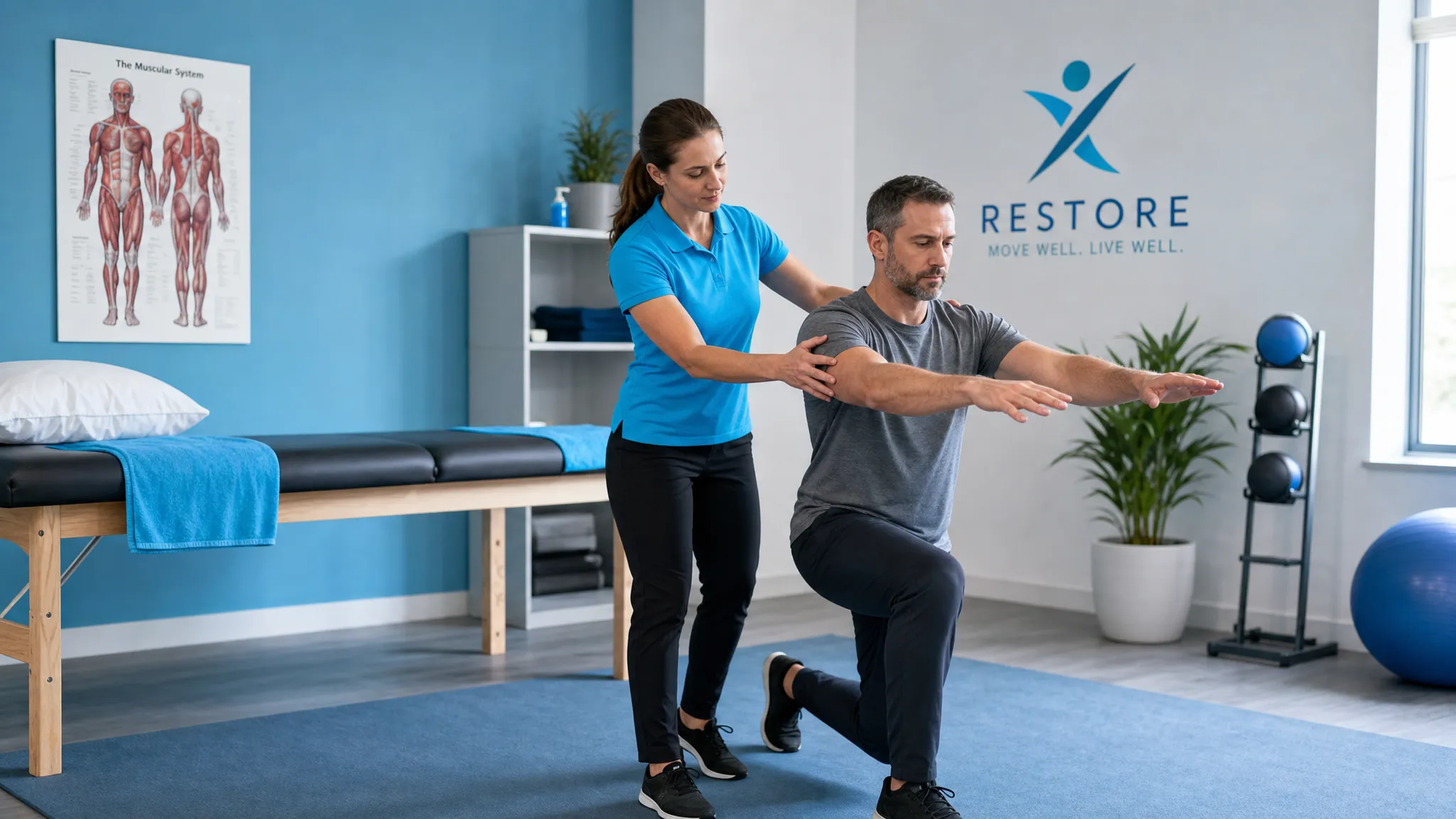
Rehab after a flare-up can include mobility work, therapeutic exercise, manual therapy, postural changes, gait or lifting mechanics, balance training, and graded return to sport or daily activity. The exact plan depends on the condition. A knee flare-up after running is not the same as a sciatica flare-up after sitting, and shoulder pain after overhead lifting needs a different strategy than a stiff neck from desk work.
The American College of Physicians guideline for low-back pain supports non-drug options such as superficial heat, massage, acupuncture, spinal manipulation, exercise, and multidisciplinary rehabilitation depending on whether pain is acute, subacute, or chronic. That aligns with the clinical reality that pain recovery is rarely just about one tissue. It often involves movement habits, strength, recovery, stress, and the nervous system.
A good rehab plan does not force you through sharp pain. It scales the challenge so your body receives a clear message: this movement is safe, controlled, and progressively stronger.
Why the combination can work better than either approach alone
Think of recovery after a flare-up in two overlapping phases. First, symptoms need to calm down enough for you to move without constant guarding. Second, the irritated area needs to regain capacity so normal life does not keep triggering the same cycle.
Acupuncture often fits well in the calming phase. Rehab becomes increasingly important as symptoms settle. In reality, both can start early, but the intensity changes as your body tolerates more.
| Recovery need | How acupuncture may help | How rehab may help |
|---|---|---|
| Pain sensitivity | Supports pain modulation and relaxation | Uses gentle movement to reduce fear and stiffness |
| Muscle guarding | May reduce protective tension | Retrains muscles to contract and relax appropriately |
| Joint stiffness | May make movement feel more comfortable | Restores range of motion through targeted mobility |
| Weakness or deconditioning | Not the main tool for rebuilding strength | Progressively restores strength and load tolerance |
| Recurring flare-ups | May help manage symptom spikes | Addresses mechanics, endurance, and activity progression |
The combination can be especially useful when pain is keeping you from doing the very things that would help you recover. For example, if a person with low-back pain is too guarded to practice hip hinging or walking, acupuncture may help reduce pain enough to begin those activities safely. If a runner’s knee pain calms after treatment but returns every time mileage increases, rehab can identify strength, mobility, or training-load factors that need attention.
A phased approach to flare-up recovery
The right plan depends on your diagnosis, irritability level, and goals, but many flare-up recovery plans follow a similar progression.
Phase 1: Calm symptoms without complete shutdown
In the first stage, the goal is to reduce irritability. This may include acupuncture, gentle manual therapy, heat or ice depending on what feels best, short walks, breathing work, and positions that reduce symptoms.
Complete bed rest is rarely helpful for routine back or joint pain. The better goal is relative rest, which means you avoid obvious triggers while keeping safe movement in your day. For example, that may mean shorter walks, lighter lifting, fewer stairs, or modified workouts for a few days.
Phase 2: Restore comfortable motion
Once symptoms begin to settle, rehab focuses on motion. This might include gentle spinal mobility, hip and thoracic movement, shoulder range-of-motion drills, nerve glides for certain sciatica presentations, or knee mobility work.
This stage should feel controlled. Mild discomfort may be acceptable, but sharp, worsening, or spreading pain is a sign to adjust the plan. The goal is to teach the body that movement is safe again.
Phase 3: Rebuild strength and tolerance
As pain becomes more predictable, strength work becomes more important. This can include core stabilization, glute strengthening, rotator cuff work, quad and hamstring strengthening, balance training, or sport-specific drills.
This is where many people stop too early. They feel less pain and return to full activity before the area has enough capacity. A structured rehab plan helps bridge the gap between “I feel better today” and “my body can handle my normal routine again.”
Phase 4: Prevent the next flare-up
Prevention is not about avoiding every trigger forever. It is about building enough resilience that normal stressors do not overwhelm the system. This may involve a home exercise plan, ergonomic changes, progressive loading, recovery strategies, and periodic check-ins when symptoms start to creep back.
For people dealing with recurring pain in multiple areas, it may be worth learning more about when an integrated pain clinic may be right for you, especially if flare-ups affect work, workouts, sleep, or daily movement.
Common flare-up examples where acupuncture and rehab may pair well
Back pain and sciatica are common reasons people explore integrative pain management in NYC. Acupuncture may help reduce pain sensitivity and muscle guarding, while rehab focuses on positions, nerve mobility when appropriate, core endurance, hip strength, and a gradual return to sitting, bending, lifting, or exercise.
Neck and shoulder flare-ups can also respond well to a combined plan. Acupuncture may help calm upper-trap tension, headache patterns, or protective tightness. Rehab may address thoracic mobility, shoulder blade control, rotator cuff strength, desk ergonomics, and overhead tolerance.
Knee pain flare-ups often require careful load management. Acupuncture may help with pain modulation, while rehab evaluates strength, mobility, gait, stairs, squats, running volume, or sport demands. For active patients, the goal is not just knee pain relief, but a safer return to training.
Migraine and tension-related head or neck pain can be more complex. Some people use acupuncture as part of a broader plan that also includes manual therapy, exercise, sleep changes, stress management, and medical evaluation when symptoms are severe or changing.
What to avoid when you are trying to recover faster
It is understandable to want a flare-up gone immediately, but a few common choices can delay recovery.
- Resting completely for too long can increase stiffness, fear, and deconditioning.
- Stretching aggressively into sharp pain can irritate sensitive tissues.
- Returning to full workouts as soon as pain drops can trigger another flare-up.
- Relying only on passive care may miss the strength or movement issue behind recurring symptoms.
- Ignoring sleep, stress, and hydration can keep the nervous system more reactive.
Faster recovery usually comes from the right dose of care, not the most intense care. In a flare-up, more is not always better. Better is better.
How long does recovery take?
There is no universal timeline. A mild flare-up may improve within a few days. A more irritable episode, a nerve-related flare-up, or pain linked to a long-standing condition may take longer. Recovery speed depends on the underlying diagnosis, your baseline fitness, sleep, stress, work demands, training load, and how consistently you follow the plan.
A useful sign of progress is not only lower pain. Look for better sleep, less morning stiffness, easier walking, improved range of motion, fewer symptom spikes, and more confidence with daily tasks. These functional changes often matter more than chasing a perfect pain score every day.
If symptoms are not improving, keep returning, or are limiting normal activity, a more comprehensive evaluation may help. Move Well MD’s perspective on rehabilitation medicine and restoring function offers more context on how rehab can support recovery after pain, injury, or reduced mobility.
Where chiropractic care fits in
For some flare-ups, chiropractic care may be part of the plan as well. Spinal or joint-focused care can help improve mobility and reduce mechanical irritation for certain patients. It is often most useful when paired with active rehab, because improved motion needs to be reinforced through strength, coordination, and better daily habits.
At Move Well MD in Manhattan, care may include chiropractic care, acupuncture, physical therapy, sports medicine, and pain management options depending on your evaluation and condition. The goal is to match the treatment to the person, not force every patient into the same protocol.
Frequently Asked Questions
Can acupuncture make a flare-up go away immediately? Some people feel noticeable relief after one session, while others improve gradually over several visits. Acupuncture may help calm pain and tension, but lasting recovery usually also requires movement, load management, and rehab when function is limited.
Should I start rehab while I am still in pain? Often, yes, but the rehab should be gentle and matched to your irritability level. Early rehab may focus on comfortable movement, breathing, walking, or simple activation rather than intense strengthening.
Is acupuncture safe during an acute pain flare-up? Acupuncture is generally considered safe when performed by a trained, licensed clinician using sterile needles. It may not be appropriate for every person or every condition, so your provider should review your health history and symptoms first.
What is better for a flare-up, acupuncture or physical therapy? It depends on the problem. Acupuncture may be better for calming pain sensitivity and muscle guarding, while physical therapy and rehab are better for restoring strength, mobility, and function. Many patients benefit from combining both.
When should I get help instead of waiting it out? Consider getting evaluated if pain is severe, keeps returning, spreads down an arm or leg, causes weakness or numbness, interrupts sleep, limits work or exercise, or does not improve with basic self-care.
Ready to recover from a flare-up with a more complete plan?
If a flare-up is keeping you from moving, working, training, or sleeping comfortably, you do not have to guess your way through it. A combined approach can help calm symptoms while rebuilding the strength and mobility needed for lasting progress.
Move Well MD offers integrated care in Manhattan, including chiropractic care, acupuncture, physical therapy, sports medicine, and pain management. Schedule an evaluation to understand what is driving your flare-up and what type of recovery plan makes sense for your body.
