If you are trying to figure out whether a chiropractor belongs in your healthcare plan, the most accurate answer is this: chiropractic care is often used as complementary medicine, but it can also be a first point of care for certain spine, joint, and movement-related problems. It is not, however, a full replacement for primary care.
That distinction matters. A patient with desk-related neck pain may reasonably start with a chiropractor. A patient with fever, unexplained weight loss, chest pain, new muscle weakness, or loss of bladder control needs medical evaluation first. In real life, the best care is not about choosing one label. It is about choosing the right provider, at the right time, for the right problem.
For many New Yorkers, especially those dealing with back pain, neck pain, headaches, sciatica symptoms, sports injuries, or posture-related discomfort, chiropractic complementary medicine can be part of a practical, conservative, and cost-conscious pain relief plan.
What complementary medicine means
The National Center for Complementary and Integrative Health explains that complementary health approaches are used together with conventional medical care, while alternative approaches are used instead of conventional care. Integrative health refers to coordinated care that brings conventional and complementary approaches together in a thoughtful way. You can read the NCCIH distinction in its guide to complementary, alternative, and integrative health.
Chiropractic care is often grouped under complementary medicine because it is non-surgical, typically drug-free, and focused on hands-on treatment of the musculoskeletal system. It may be used alongside primary care, orthopedics, pain management, physical therapy, acupuncture, sports medicine, or rehabilitation.
That does not mean chiropractic care is informal or unregulated. Chiropractors are licensed healthcare professionals, and their legal scope of practice varies by state. In New York, chiropractic licensure and professional standards are overseen by the New York State Office of the Professions.
What primary care actually covers
Primary care is broad, continuous healthcare. A primary care physician, nurse practitioner, or physician assistant typically manages preventive care, chronic conditions, prescriptions, vaccinations, lab testing, referrals, and general medical concerns across the whole body.
A chiropractor may be a first-contact provider for back pain, neck pain, joint stiffness, or movement problems, but that is different from serving as your primary care provider for all medical needs. Even if your chiropractor offers lifestyle advice, exercise guidance, or posture education, you still need a primary care provider for general health monitoring.
| Care category | Main role | Common examples | Where chiropractic fits |
|---|---|---|---|
| Primary care | Broad, ongoing medical care | Annual physicals, blood pressure, diabetes, infections, medications, preventive screenings | Chiropractors do not replace this role |
| Complementary medicine | Care used alongside conventional medicine | Acupuncture, chiropractic, massage therapy, certain mind-body practices | Chiropractic may support pain relief, mobility, and function |
| First-contact musculoskeletal care | Initial evaluation for movement and mechanical pain problems | Back pain, neck pain, stiffness, sports strains, posture-related pain | Chiropractors may be an appropriate first stop when no red flags are present |
| Integrated care | Coordinated treatment across disciplines | Chiropractic plus rehab, acupuncture, pain management, sports medicine, or medical referral | Often the best fit for complex or persistent pain |
So, is chiropractic complementary medicine or primary care?
Chiropractic can function in more than one way, depending on the patient, the condition, and the healthcare setting.
Chiropractic as complementary medicine
Chiropractic is complementary when it is used alongside other forms of care. For example, someone with chronic low back pain may see a primary care doctor to rule out medical causes, work with a chiropractor for spinal mobility and joint mechanics, use physical therapy for strengthening, and consider acupuncture for pain modulation or stress-related muscle tension.
This is the model many patients benefit from, especially when pain has more than one driver. Back pain can involve joints, discs, nerves, muscle guarding, stress, sleep, ergonomics, and deconditioning. Treating only one piece of the puzzle may not be enough.
At an integrated clinic like Move Well MD in Manhattan, chiropractic care may be part of a broader plan that can include acupuncture, physical rehabilitation, sports medicine, pain management, and other conservative or minimally invasive options when appropriate.
Chiropractic as first-contact musculoskeletal care
Chiropractic can also be first-contact care for certain problems. Many patients book with a chiropractor directly when they develop back pain after lifting, neck pain from computer work, reduced range of motion, or recurring stiffness.
A responsible chiropractor should still perform a health history, focused exam, orthopedic and neurological screening when indicated, and safety checks before treatment. If symptoms suggest something outside chiropractic scope, the provider should refer the patient to the appropriate medical professional.
This is why the phrase primary care can be confusing. A chiropractor may be your first provider for a musculoskeletal issue, but that does not make chiropractic primary care in the full medical sense.
Chiropractic is not a substitute for a PCP
A chiropractor should not replace your primary care clinician for general health needs such as high blood pressure, diabetes, cancer screening, infections, medication management, vaccines, or unexplained systemic symptoms.
Think of it this way: chiropractic care can be a front door for mechanical pain, but primary care remains the front door for whole-body medical care.
When a chiropractor can be a reasonable first step
A chiropractic visit may be a practical first step when your symptoms appear mechanical, movement-related, or posture-related, and you do not have urgent warning signs.
Common examples include:
- Low back pain that started after lifting, bending, prolonged sitting, or a workout.
- Neck pain or stiffness related to desk work, sleep posture, or stress-related muscle tension.
- Headaches that seem connected to neck tightness, posture, or upper back tension.
- Sciatica-like pain that travels into the buttock or leg without severe or worsening neurological symptoms.
- Sports-related aches involving the spine, hips, shoulders, knees, or ankles.
- Recurring stiffness or reduced mobility that improves with movement but keeps returning.
A good chiropractic plan should not be limited to a quick adjustment and a vague promise to come back indefinitely. It should include an exam-based explanation, realistic goals, home guidance, and a way to measure progress.
If you are unsure what a modern visit should involve, Move Well MD has a related guide on what a medical chiropractor visit may include.
When primary care, urgent care, or emergency care should come first
Some symptoms need medical evaluation before chiropractic treatment. This does not mean chiropractic is unsafe for everyone. It means the first priority is ruling out serious causes that may require imaging, medication, emergency care, or specialist treatment.
Seek medical care first if you have:
- Major trauma, a fall, or concern for fracture.
- New or worsening weakness, numbness, foot drop, or loss of coordination.
- Loss of bowel or bladder control, or numbness in the groin or saddle area.
- Fever, chills, unexplained infection symptoms, or recent serious illness.
- A history of cancer with new unexplained spine pain.
- Unexplained weight loss, severe night pain, or pain that does not change with position.
- Chest pain, shortness of breath, abdominal pain, or symptoms that do not seem musculoskeletal.
- Sudden severe headache, facial drooping, trouble speaking, vision changes, or severe dizziness.
- A hot, red, swollen joint, or inability to bear weight after an injury.
If you are not sure whether your symptoms are urgent, it is safer to contact a medical provider or seek urgent care. An evidence-informed chiropractor should also screen for these issues and refer when needed.
How chiropractic complementary medicine works in an integrated plan
The strongest use of chiropractic complementary medicine is often coordinated care. Pain rarely fits neatly into one category, especially in a city where many people sit for long hours, commute, train hard, sleep poorly, or delay care until symptoms become disruptive.
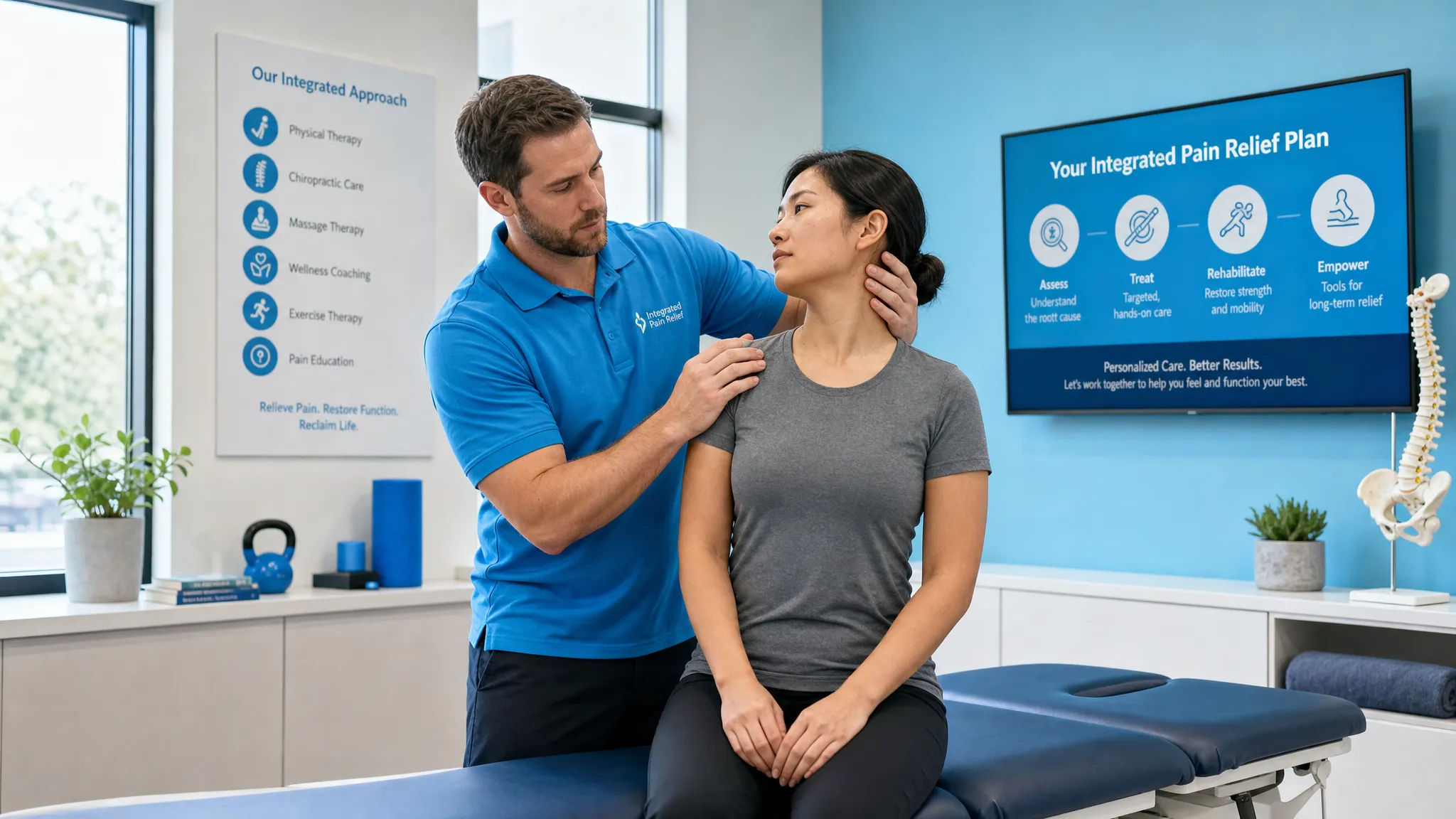
For office-related neck pain, an integrated plan may include chiropractic care for joint mobility, soft tissue work for muscle tension, rehabilitation exercises for postural endurance, and ergonomic changes to reduce recurrence. If stress or sleep problems are amplifying symptoms, acupuncture may be considered as part of the broader plan. You can learn more about this connection in Move Well MD's article on how acupuncture supports stress and pain relief.
For a runner with knee or hip pain, a chiropractor may assess spine, pelvis, hip, ankle, and foot mechanics. Treatment might include manual therapy, mobility work, strengthening, and sports medicine input if symptoms suggest a tendon, ligament, cartilage, or joint issue.
For headaches or migraine-like symptoms, the first step is determining whether the pain may be related to the neck, muscle tension, jaw mechanics, neurological causes, or another medical issue. Chiropractic may help some cervicogenic or tension-related patterns, but sudden, severe, unusual, or worsening headaches need medical evaluation.
What the evidence says, and what it does not say
Chiropractic care is best supported for musculoskeletal complaints, especially low back pain and some neck-related pain patterns. The American College of Physicians guideline for low back pain recommends starting with non-drug therapies for many patients, and spinal manipulation is included among options for acute, subacute, and chronic low back pain. The guideline is available through the Annals of Internal Medicine.
A systematic review and meta-analysis published in JAMA found that spinal manipulative therapy was associated with modest improvements in pain and function for acute low back pain. You can review the study in JAMA.
At the same time, evidence is not equally strong for every condition sometimes associated with chiropractic care. Patients should be cautious of broad claims that spinal adjustments can treat unrelated systemic diseases. The more credible approach is specific, measurable, and grounded in the patient's diagnosis, function, and goals.
Safety also depends on proper evaluation. Temporary soreness after treatment can happen, but serious or unusual symptoms should be addressed promptly. The NCCIH overview on spinal manipulation is a helpful patient-friendly resource on benefits, risks, and safety considerations.
What to ask before booking chiropractic care
Whether you view chiropractic as complementary medicine or first-contact musculoskeletal care, the quality of the provider matters. A strong first visit should feel like healthcare, not a sales pitch.
Useful questions include:
- Are you licensed to practice chiropractic in New York?
- What evaluation will you perform before treatment?
- What red flags would make you refer me to a physician or urgent care?
- How will we know whether treatment is working?
- Will my plan include exercises, movement guidance, or rehabilitation if needed?
- Do you coordinate with primary care doctors, pain specialists, acupuncturists, or physical therapy providers?
- What are the expected costs, insurance considerations, and visit frequency?
If a clinic recommends a long treatment package before doing a proper exam, avoids discussing risks, discourages medical care when warning signs are present, or promises to cure unrelated diseases, consider that a red flag.
For a deeper comparison of hands-on approaches, you may also find Move Well MD's guide to manual therapy vs chiropractic helpful.
The practical answer for NYC patients
For most patients, chiropractic is best understood as a musculoskeletal healthcare service that often works as complementary or integrative medicine. It may be your first stop for mechanical back, neck, joint, or movement-related pain, but it should not replace your primary care provider.
That balance is especially important if you want cost-effective care. Affordable pain relief is not just about finding the lowest visit price. It is about getting the right assessment early, avoiding unnecessary treatments, improving function, and knowing when to escalate care.
A chiropractor who practices within an integrated model can help you answer the key question: Is this a problem chiropractic care can reasonably address, or do I need another provider involved?
Frequently Asked Questions
Is chiropractic considered complementary medicine? Yes, chiropractic is often considered complementary medicine when it is used alongside conventional medical care. It may also be part of integrative care when coordinated with primary care, physical therapy, acupuncture, pain management, or sports medicine.
Can a chiropractor be my primary care doctor? In general, no. A chiropractor may be a first-contact provider for certain musculoskeletal problems, but a primary care doctor manages broader medical needs such as preventive screenings, chronic disease care, prescriptions, infections, and overall health monitoring.
Do I need a referral to see a chiropractor in New York? Many patients can contact a chiropractor directly, but insurance plans may have specific referral, authorization, or coverage requirements. It is wise to verify benefits before booking.
Can chiropractic care and acupuncture be used together? Yes, they can be used together when appropriate. Chiropractic may focus on joint motion, alignment, and movement mechanics, while acupuncture may support pain relief, muscle tension, stress regulation, and overall symptom management.
When should I see a medical doctor before a chiropractor? See a medical provider first for red flags such as major trauma, fever, unexplained weight loss, cancer history, new weakness, bowel or bladder changes, chest pain, sudden severe headache, or symptoms that do not seem movement-related.
Is chiropractic care evidence-based? Chiropractic care has evidence supporting its use for certain musculoskeletal conditions, especially low back pain. The best chiropractors use evidence-informed evaluation, set measurable goals, provide home guidance, and refer when another form of care is more appropriate.
Find the Right Level of Care for Your Pain
If you are dealing with back pain, neck pain, joint pain, sciatica symptoms, headaches, or a sports-related injury, the first step is understanding what type of care your body actually needs.
Move Well MD offers integrated pain relief services in Manhattan, including chiropractic care, acupuncture, pain management, physical rehabilitation, sports medicine, and related treatments. The goal is not to force every patient into the same plan. It is to evaluate your symptoms, identify the right starting point, and coordinate care when more than one approach is needed.
To explore whether chiropractic care should be part of your pain relief plan, visit Move Well MD and request an appointment.
