Pain rarely appears out of nowhere. For many New Yorkers, it builds in the ordinary parts of the day: sitting through back-to-back meetings, carrying a heavy bag, rushing down subway stairs, sleeping in a strained position, or pushing through workouts without enough recovery.
The good news is that less pain does not always require a complete lifestyle overhaul. The move well live well approach starts with small, repeatable habits that reduce strain, improve mobility, and help your body tolerate the demands of daily life.
This guide focuses on practical steps you can use today. It is not a replacement for medical care, especially if your pain is severe, worsening, or linked to an injury. But if your goal is to feel less stiff, move with more confidence, and support long-term pain relief, these habits are a strong place to start.
The move well live well mindset: build capacity, not perfection
Many people think pain prevention is about having perfect posture or never lifting the wrong way. In reality, the body is designed to move, adapt, and handle variety. Problems often begin when the same tissues are loaded the same way for too long, or when your daily demands exceed your current strength, mobility, or recovery.
That is why the most useful question is not, “Am I sitting perfectly?” It is, “Am I giving my body enough movement, strength, rest, and recovery to handle my life?”
A sustainable pain plan should focus on four goals:
- Move more often throughout the day.
- Build strength gradually so joints and muscles can tolerate load.
- Improve recovery through sleep, stress regulation, and smart self-care.
- Seek evaluation when pain persists, spreads, or limits normal activity.
Here is a simple overview of daily habits that can help.
| Daily habit | Why it may help | Simple way to start |
|---|---|---|
| Morning mobility | Reduces stiffness after sleep | Do 3 minutes of gentle movement before checking your phone |
| Movement breaks | Limits prolonged sitting strain | Stand or walk for 1 to 2 minutes every 30 to 60 minutes |
| Ergonomic variety | Reduces repeated stress | Change positions instead of chasing one “perfect” posture |
| Strength training | Improves joint support and load tolerance | Start with 2 short sessions per week |
| Walking | Supports circulation, mobility, and conditioning | Add a 10-minute walk after one meal |
| Better sleep setup | Helps tissues recover | Keep your neck and spine supported in a neutral position |
| Stress downshifting | Calms muscle guarding and nervous system tension | Try 2 minutes of slow breathing daily |
| Pain tracking | Reveals triggers and progress | Note pain level, activity, sleep, and stress for 1 week |
Start your day with a 3-minute mobility reset
Morning stiffness is common because joints and soft tissues have been relatively still for hours. A short, gentle routine can help your body transition from rest to movement without forcing painful ranges.
Keep it easy. The goal is not to “stretch hard” or test your limits. Move slowly, breathe normally, and stop if symptoms become sharp, radiating, or unusual.
A simple morning reset may include gentle neck turns, shoulder rolls, cat-cow movements, hip hinges, ankle circles, and a few slow bodyweight squats to a chair. If your back tends to feel tight, walking around your home for a few minutes before bending or lifting can also help.
For people with chronic pain, the first few movements of the day can feel discouraging. Try not to judge your whole day by the first five minutes. Stiffness often improves once the body warms up.
Take movement breaks before pain forces you to stop
If you work at a desk, commute for long periods, or spend time looking down at your phone, movement breaks are one of the highest-value habits you can build. Prolonged static positions can increase muscle tension, reduce circulation, and make your neck, shoulders, hips, and lower back feel compressed.
The UK Health and Safety Executive recommends breaking up display screen work with changes in activity or short breaks rather than staying fixed in one position for long stretches. You do not need a complicated routine. You just need consistency.
Try a simple rule: every 30 to 60 minutes, change your position for 60 to 120 seconds. Stand up, walk to get water, do a few calf raises, gently rotate your upper back, or take a quick lap around the office.
This matters because pain often behaves like a volume dial. A little stiffness early in the day can become a flare-up if you ignore it for hours. Frequent, low-effort movement keeps the dial from turning up too high.
Stop chasing perfect posture and add variety instead
Posture matters, but rigid posture advice can backfire. Sitting perfectly still with your shoulders pulled back all day is not realistic, and it can create tension of its own. A better goal is supported variety.
For desk work, aim for a setup that makes neutral positions easier. Your screen should be close to eye level, your elbows should rest comfortably near your sides, and your feet should have support. If you use a laptop for long hours, consider using an external keyboard and mouse so you are not constantly looking down.
Then, change positions often. Sit upright for a while, lean back with support, stand for a meeting, walk during a phone call, or shift your feet. Your best posture is usually your next posture.
This is especially important in Manhattan, where daily life often adds extra strain: subway stairs, crowded commutes, uneven sidewalks, long workdays, and frequent phone use. Small ergonomic adjustments can reduce the load, but regular movement is what helps your body stay adaptable.
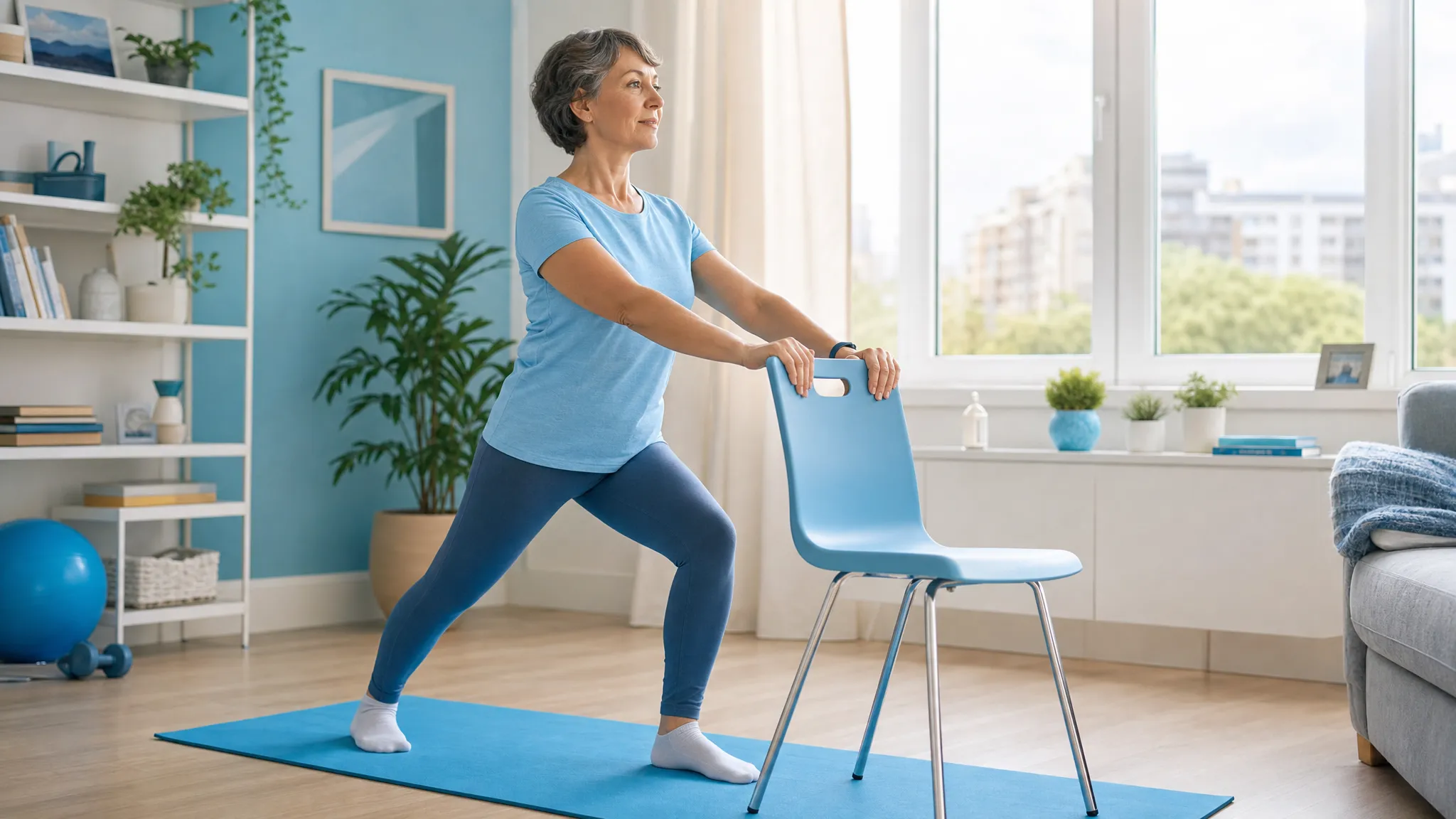
Strengthen the muscles that protect your joints
Pain relief is not only about loosening tight areas. In many cases, long-term improvement depends on building strength around the joints that hurt. Stronger muscles can help absorb force, improve control, and reduce irritation from everyday activities.
The CDC physical activity guidelines recommend that adults get at least 150 minutes of moderate-intensity aerobic activity each week, plus muscle-strengthening activity on 2 or more days per week. You do not need to become an athlete to benefit. You need a plan you can repeat.
For many people with back, hip, knee, or shoulder pain, useful strengthening areas include the glutes, core, upper back, hips, calves, and rotator cuff. Start with basic movements like sit-to-stands, wall pushups, step-ups, bridges, rows with a resistance band, and controlled carries.
The key is gradual progression. If you go from no training to intense workouts, you may flare symptoms. If you start too easy and build slowly, your body has time to adapt.
Walk more, but make it realistic
Walking is one of the most underrated pain management habits. It supports circulation, gently moves the hips and spine, improves general conditioning, and can reduce the fear of movement that often develops after pain.
You do not need to hit a specific step count right away. In fact, if you are dealing with knee pain, sciatica, plantar fasciitis, or a recent injury, suddenly doubling your steps may make things worse.
Start with a walk you can recover from. That may be 5 minutes, 10 minutes, or a few blocks. If your symptoms stay stable, add a little more over time. A helpful guideline is to increase gradually and avoid big spikes in distance, speed, hills, or stairs all at once.
For busy New Yorkers, habit stacking can help. Walk after lunch, get off the subway one stop earlier when possible, take a short evening loop, or use part of a phone call as a walking break.
Use sleep as a pain recovery tool
Sleep is when your body does much of its repair work. Poor sleep can also make the nervous system more sensitive, which may intensify pain. The National Heart, Lung, and Blood Institute notes that most adults need 7 to 9 hours of sleep per day.
Sleep position can also influence pain. If you wake up with neck pain, make sure your pillow supports your head without pushing it too far forward or letting it drop to one side. If your lower back feels stiff, sleeping on your back with a pillow under your knees, or on your side with a pillow between your knees, may help some people maintain a more comfortable position.
Your evening habits matter too. Try to reduce intense work, heavy meals, alcohol, and bright screens close to bedtime when possible. Even small improvements in sleep consistency can make pain easier to manage.
Calm the nervous system to reduce muscle guarding
Pain is not just a tissue issue. Stress, poor sleep, anxiety, and constant urgency can make muscles guard and keep the nervous system on high alert. This does not mean pain is “in your head.” It means your body and nervous system are connected.
A simple breathing practice can help you downshift. Try inhaling through your nose for 4 seconds and exhaling slowly for 6 seconds. Repeat for 2 minutes. Longer exhales can encourage a calmer state and may reduce the tension that builds in the neck, shoulders, jaw, and back.
You can also pair breathing with movement. For example, take a slow breath while reaching your arms overhead, then exhale as you lower them. Gentle movement plus slow breathing can be especially helpful during work breaks or before sleep.
Acupuncture may also support stress and pain relief for some people as part of an integrated plan. If you are curious about that approach, Move Well MD has more information on how acupuncture can support stress and pain relief.
Use heat, cold, and self-care with a purpose
Heat and cold can be useful, but they work best when matched to the situation. Cold may help calm a new flare-up, especially when an area feels irritated after activity. Heat may help with chronic stiffness, tight muscles, and the feeling that an area needs to loosen before movement.
Use a comfortable temperature and protect your skin. Avoid falling asleep on a heating pad or applying ice directly to bare skin. If you have reduced sensation, circulation problems, or certain medical conditions, ask a healthcare professional before using temperature therapy.
Self-massage with a ball, foam roller, or your hands may also help reduce muscle tension. Keep pressure moderate. More pain does not mean more benefit. If you bruise easily, have a recent injury, or symptoms that travel down an arm or leg, get guidance before pressing deeply into painful areas.
Track your pain patterns for one week
Pain can feel random until you start noticing patterns. A simple one-week log can help you identify what improves symptoms, what worsens them, and when professional care may be needed.
You do not need a complicated app. Use a note on your phone and track a few basics: pain location, pain intensity from 0 to 10, sleep quality, stress level, activity, workouts, sitting time, and anything that triggered symptoms.
Look for patterns rather than single events. Does your neck pain spike after long laptop sessions? Does knee pain worsen after stairs but not flat walking? Does back pain improve with movement but worsen after sitting? These details can make a clinical evaluation more productive and help guide a personalized plan.
If you want broader self-care ideas, this guide to natural pain solutions that may help you move better offers additional strategies.
Know when daily habits are not enough
Daily habits can make a major difference, but they are not meant to replace evaluation when pain is persistent, severe, or changing. You should consider professional care if pain lasts more than a week or two without improvement, keeps returning, limits work or exercise, disrupts sleep, or travels into an arm or leg.
Seek urgent medical attention first if you have red-flag symptoms such as new weakness, loss of bowel or bladder control, numbness in the groin or saddle area, chest pain, fever with severe back pain, unexplained weight loss, major trauma, or the worst headache of your life.
For non-emergency pain, an integrated approach can be helpful because pain often has more than one contributor. Joint stiffness, muscle weakness, nerve irritation, inflammation, posture habits, training errors, and stress can overlap. Move Well MD offers chiropractic care, acupuncture treatments, comprehensive pain management, physical therapy, sports medicine services, trigger point injections, physical rehabilitation, and care for concerns such as joint pain, knee and shoulder pain, migraines, and sciatica.
If you are deciding which hands-on option fits your symptoms, this explanation of manual therapy vs chiropractic care may help you understand the differences.
How to make these habits stick
The best pain relief habit is the one you can actually repeat. Start with one or two changes instead of trying to fix everything at once. For example, commit to a 3-minute morning reset and two movement breaks during work. Once those feel normal, add walking or strength training.
Make the habit visible. Put a resistance band near your desk, keep walking shoes by the door, set a calendar reminder, or pair mobility work with something you already do, like making coffee.
Also, measure progress in more than pain scores. Notice whether you can sit longer without stiffness, climb stairs more comfortably, sleep better, walk farther, or recover faster after activity. Those are meaningful signs that your body is adapting.
Frequently Asked Questions
Can daily habits really reduce pain? Yes, daily habits can help many people reduce stiffness, improve mobility, and manage recurring aches. They work best when practiced consistently and matched to your condition. Persistent or worsening pain should be evaluated by a qualified healthcare professional.
How often should I take movement breaks during the workday? A good starting point is every 30 to 60 minutes. Even 1 to 2 minutes of standing, walking, or gentle mobility can reduce the strain of prolonged sitting.
Is stretching or strengthening better for pain relief? It depends on the cause of your pain. Stretching may help stiffness, while strengthening improves support and load tolerance. Many people need both, along with better recovery and movement variety.
When should I see a chiropractor, physical therapist, or pain specialist? Consider evaluation if pain lasts more than 1 to 2 weeks, keeps returning, limits daily activity, radiates into an arm or leg, or does not respond to basic self-care. Seek urgent care for red-flag symptoms such as new weakness, loss of bowel or bladder control, severe trauma, fever, or chest pain.
Can acupuncture be combined with chiropractic care or physical therapy? In many cases, yes. An integrated plan may combine acupuncture, chiropractic care, physical therapy, rehabilitation, and pain management depending on your symptoms, goals, and medical history.
Ready to move well and live well?
If pain is making work, commuting, exercise, or sleep harder than it should be, you do not have to guess your way through recovery. Daily habits are powerful, but the right evaluation can help identify what your body needs most.
Move Well MD provides integrated care in Manhattan, combining Western and Eastern approaches to help patients reduce pain, improve mobility, and return to the activities that matter. To learn more or request an appointment, visit Move Well MD.
