If you searched for “neck and back chiropractor near me,” you may wonder whether your first appointment will include X-rays or an MRI. Imaging is not automatically necessary before chiropractic care. It becomes useful when the history and examination suggest a problem that a scan could clarify, especially if the result would change treatment or prompt referral.
Knowing why a test is being recommended can help you avoid unnecessary expense without overlooking symptoms that need medical attention.
The examination should guide the imaging decision
A chiropractor should begin by asking how your pain started, where it travels and whether you have numbness, weakness or other symptoms. Previous injuries, cancer history, osteoporosis, medications and earlier scans can all affect the decision.
The examination may include movement testing, muscle strength, sensation and reflexes. These findings help distinguish uncomplicated mechanical pain from possible nerve involvement, fracture or another condition requiring medical evaluation.
The central question is not simply whether an image might show something. It is whether the finding would change what happens next. For example, suspected fracture could mean avoiding manipulation and arranging urgent medical assessment. Stable muscle soreness after an unfamiliar workout may not require imaging at all.
When comparing results for “neck and back chiropractor near me,” look for a clinician who can explain that reasoning rather than treating scans as a standard purchase. You can also review what a medical chiropractor visit may include to understand how history-taking and examination fit together.
Symptoms that need urgent medical assessment
Some symptoms should take you to emergency or medical care rather than a routine chiropractic appointment. Depending on the suspected problem, the appropriate investigation might involve spinal imaging, blood tests or other testing.
- New urinary retention, loss of bladder or bowel control, saddle-area numbness or rapidly worsening leg weakness: Seek emergency care because these can indicate serious compression of the lower spinal nerves.
- Sudden unusual neck pain or severe headache with vision changes, trouble speaking, imbalance or one-sided weakness: Call 911. These symptoms can indicate a stroke or another vascular emergency.
- Neck or back pain after major trauma: Seek urgent medical assessment, particularly after a significant fall or vehicle collision. Even less dramatic trauma can matter when osteoporosis or long-term steroid use increases fracture risk.
- Pain with fever, serious infection risk, a cancer history or unexplained weight loss: Arrange prompt medical evaluation. The combination of symptoms and medical history determines the urgency and testing needed.
Not every warning sign means a dangerous diagnosis, but it deserves appropriate evaluation. Routine spinal X-rays do not rule out a stroke, spinal infection or every other serious cause of pain.
A search for “neck and back chiropractor near me” should never delay emergency assessment when these symptoms are present. Move Well MD’s guide to lower back pain warning signs provides additional context for deciding where to seek care.
What X-rays, MRI and CT can show
Different tests answer different questions. One scan is not automatically better than another, and ordering several tests does not necessarily produce a clearer diagnosis.
| Imaging test | When it may help | Important limitation |
|---|---|---|
| X-ray | Evaluating certain fractures, bony changes or alignment questions | Does not clearly show discs, nerve roots or the spinal cord; uses ionizing radiation |
| MRI | Evaluating nerve roots, the spinal cord, discs or suspected infection or tumor | Findings may be unrelated to symptoms; requires screening for implants and other safety considerations |
| CT | Examining detailed bone anatomy, particularly in selected trauma or fracture evaluations | Uses ionizing radiation and is not a routine test for uncomplicated neck or back pain |
An MRI does not use ionizing radiation. Contrast is not necessary for every spine MRI, though it can be useful for specific clinical questions. Tell the ordering team about implanted devices, possible pregnancy and previous contrast reactions when relevant.
If you found a provider through “neck and back chiropractor near me,” ask which suspected condition makes the proposed test appropriate. “We need to investigate possible nerve compression” is a more meaningful explanation than “everyone needs pictures before treatment.”
When waiting and reassessing may be appropriate
New lower back pain without warning signs
For uncomplicated new lower back pain, immediate imaging often does not improve the initial treatment decision. The American College of Radiology’s low back pain criteria generally rate initial imaging as inappropriate for acute low back pain without red flags.
Symptoms, function and neurological findings should still be monitored. Imaging may become appropriate when symptoms persist despite suitable care, particularly if the result would guide a procedure, surgical consultation or another change in management. Around six weeks is a common reassessment point in some pathways, not a mandatory waiting period when concerning symptoms develop.
Neck pain requires its own assessment
Neck imaging decisions depend on trauma, symptom duration, neurological findings and the suspected condition. Recommendations for uncomplicated lower back pain should not simply be applied to every neck complaint.
A stiff neck after spreadsheet work or browsing online poker rakeback comparisons does not automatically require a scan. The activity provides context, but the examination and associated symptoms determine whether testing is useful.
For someone searching “neck and back chiropractor near me,” a reasonable plan should explain both why imaging can wait and which changes would trigger earlier reassessment. Waiting should mean monitored care, not ignoring persistent or worsening symptoms.
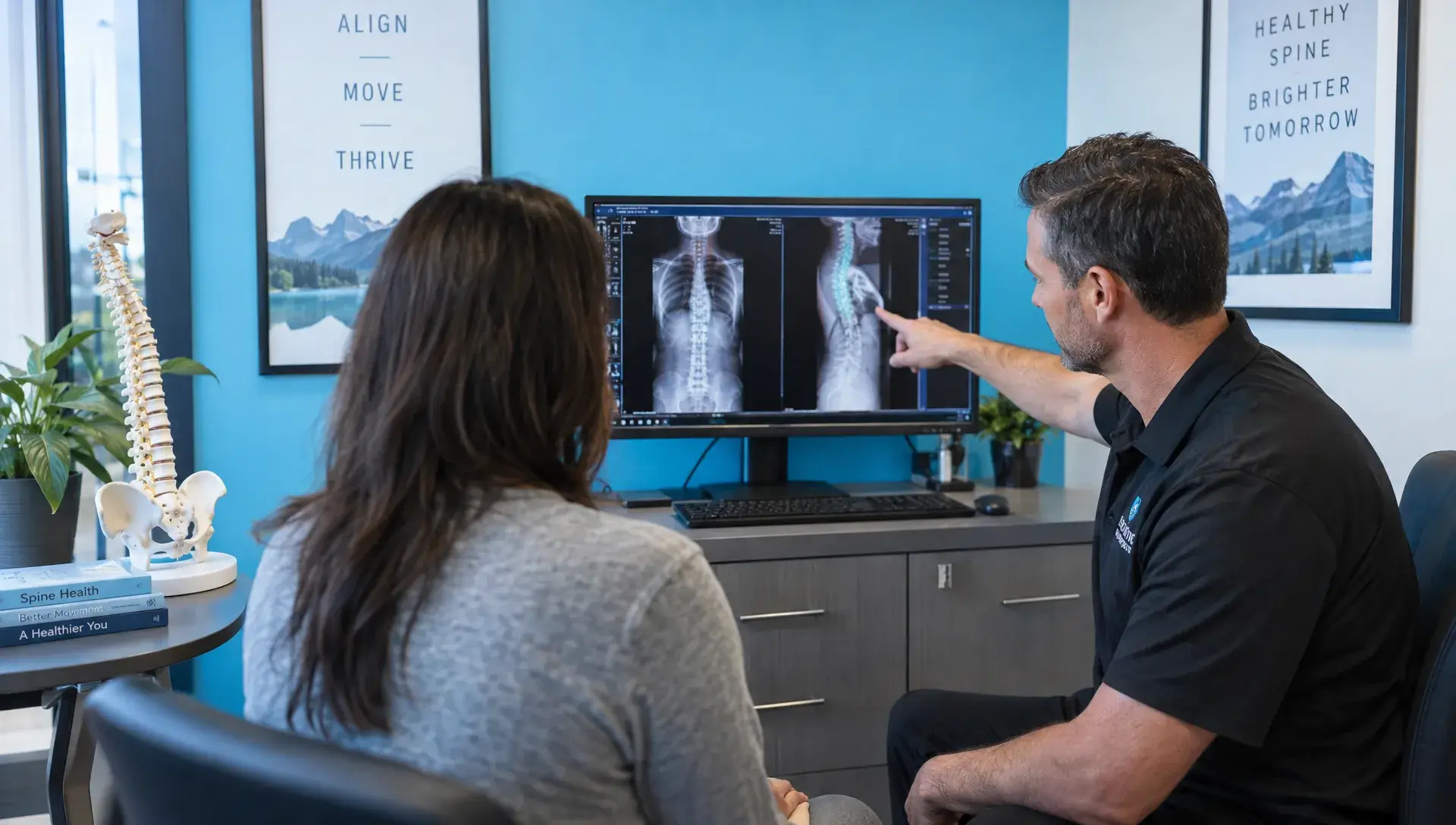
An abnormal scan does not always identify the pain source
Disc bulges, disc degeneration and arthritic changes can appear in people who have no pain. A systematic review of imaging in asymptomatic people found that degenerative spinal findings become more common with age.
That does not make every finding irrelevant. It means the report needs to match your symptoms and examination. A disc abnormality is more informative when its location fits the pattern of radiating pain, sensory changes or weakness.
Likewise, a normal scan does not mean your pain is imaginary. Muscle-related pain and some movement-related problems may not produce an obvious imaging abnormality.
Ask the clinician to distinguish a likely explanation for your symptoms from an incidental finding. A report containing words such as “degeneration” should not, by itself, determine how many appointments you need or establish that a particular adjustment is safe.
Questions after searching “neck and back chiropractor near me”
Before agreeing to imaging, ask for an explanation that connects the test to a specific decision. Useful questions include:
- What are you looking for? Ask which suspected condition the test is intended to confirm or exclude.
- How would the result change my care? Clarify what would happen with a normal result and with a concerning finding.
- Can previous images answer the question? Bring earlier reports and ask whether the actual images are needed.
- Who will interpret and explain the results? Confirm how you will receive the report and what follow-up is expected.
These questions are especially valuable if a clinic recommends full-spine X-rays for every new patient or repeat films solely to demonstrate routine treatment progress. Repeat imaging should have a clinical reason, such as a meaningful change in symptoms or a specific condition requiring monitoring.
Imaging also does not replace informed consent. Before cervical manipulation, discuss expected benefits, material risks and alternatives. A reassuring X-ray is not a blanket safety clearance for every technique.
Checking imaging costs and insurance in Manhattan
The cost of an evaluation and the cost of imaging may be separate. Depending on where testing occurs, you may receive charges from an imaging facility and an interpreting radiologist. Insurance coverage can also depend on the test, location, network status and authorization requirements.
Before scheduling, request an estimate and ask whether the ordering clinician and imaging facility are in network. Confirm any deductible or coinsurance with your insurer. Prior authorization, when required, is not a guarantee of payment.
Cost comparisons matter when choosing a “neck and back chiropractor near me,” but a discounted imaging package is not a clinical reason to undergo testing. Ask whether you can use an appropriate in-network facility and how results will reach the treating clinician.
If ongoing treatment is proposed, separate that decision from the scan purchase. A care plan should include functional goals, a reassessment point and an explanation of what would lead to a change in treatment or referral.
Frequently asked questions
Do I need X-rays before my first chiropractic adjustment? Not automatically. The decision depends on your history, examination, symptoms and the proposed treatment. When a serious condition is suspected, medical assessment or different imaging may be needed before treatment proceeds.
Does sciatica always require an MRI? No. Stable sciatica without warning signs may initially be managed without MRI. Progressive weakness, emergency symptoms or persistent symptoms that could lead to a procedure can change that decision.
Can a chiropractor diagnose a herniated disc without imaging? A clinician can form a working diagnosis from symptoms and examination. MRI can show disc anatomy when confirmation would affect management, but a visible disc abnormality does not automatically prove it causes the pain.
Should I bring scans from another provider? Yes, bring the reports and ask how to share the images themselves. If “neck and back chiropractor near me” led you to a new clinic, sharing previous testing can help the clinician assess whether another scan would add useful information.
Discuss the right next step at Move Well MD
Move Well MD offers chiropractic care, acupuncture, pain management and physical rehabilitation in Manhattan. An evaluation should help clarify whether conservative care is appropriate, whether imaging could change the plan or whether another medical service should come first.
Discuss your symptoms and previous test results with Move Well MD’s Manhattan care team. Before agreeing to a scan, ask what question it will answer and how the result will guide your care.
