A “chiropractor near me cost” search can show you an advertised visit price without revealing the full bill. For preliminary NYC budgeting, allow roughly $100 to $300 for a first appointment and $75 to $200 for a follow-up. These are broad planning estimates, not a verified citywide average or Move Well MD’s published fees. Your actual quote may fall outside these ranges.
The more useful number is your expected out-of-pocket cost from the initial evaluation through the first progress review. That depends on what each appointment includes, your insurance benefits and whether additional services are recommended.
Why the first visit and follow-ups cost different amounts
An initial appointment generally involves reviewing your medical history, discussing symptoms and performing an examination. Treatment may happen that day, but you should confirm that rather than assume it is included.
Follow-up appointments can have a different scope. One quote might cover spinal manipulation alone, while another includes an assessment, hands-on treatment and supervised exercises. A longer appointment is not automatically better, but different services make headline prices difficult to compare.
Location, appointment length and the complexity of your condition can also affect fees. A promotional consultation may be inexpensive because it does not include a full examination or treatment.
Before booking, ask for separate prices for the initial evaluation, any same-day treatment and a typical return visit.
What should a “chiropractor near me cost” quote include?
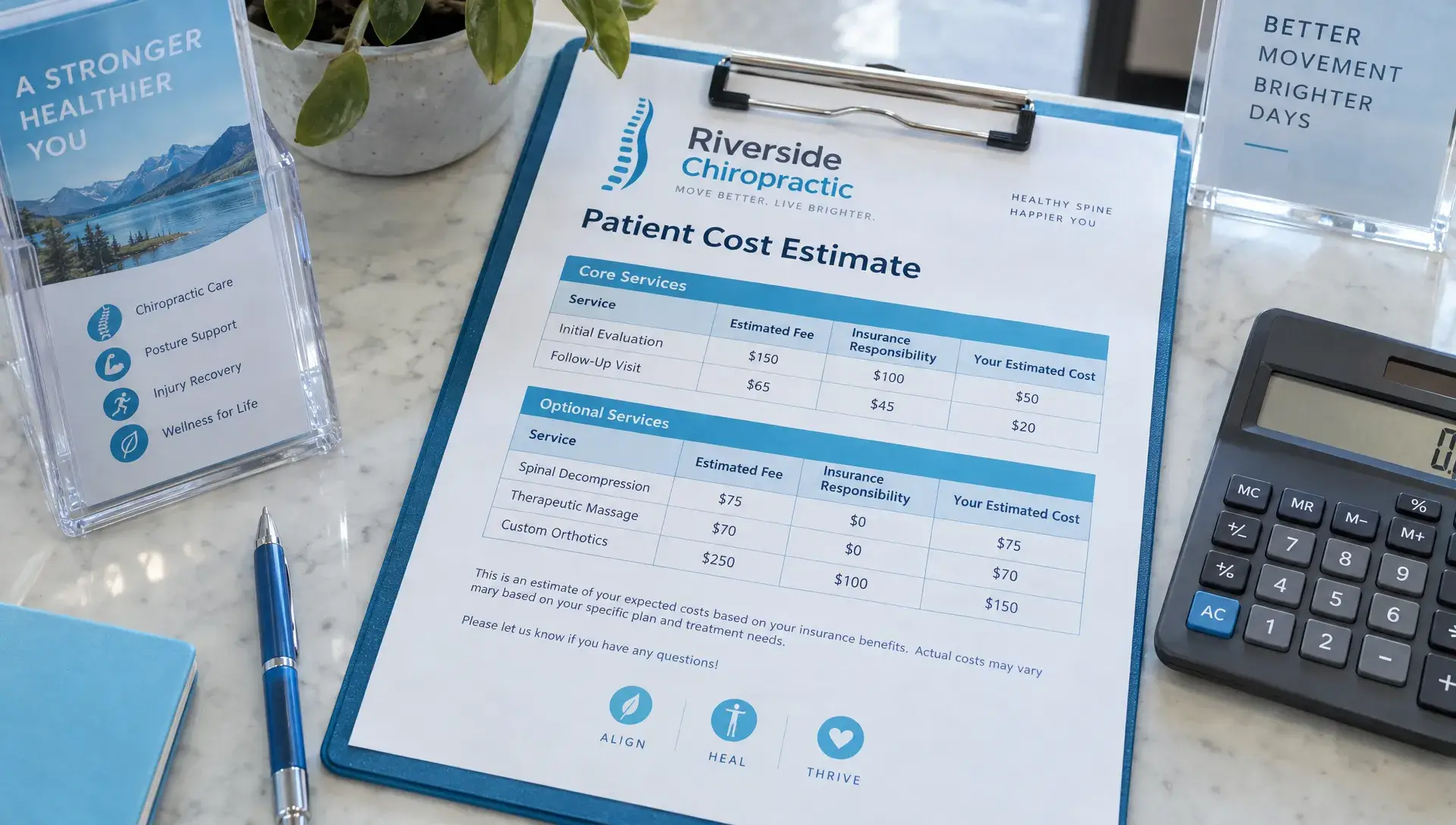
Request an itemized estimate instead of asking only, “How much is an adjustment?” You want to know what is included, what is optional and when additional charges require your approval.
A useful quote should distinguish the examination from treatment, identify any separately billed therapies and explain whether a later re-evaluation has its own fee. Imaging should appear only if recommended for a clinical reason, not as an assumed expense for every patient.
Calculate a short episode of care
The following example uses hypothetical prices, not a recommended treatment schedule or a Move Well MD quote:
| Item | Sample price | Number of appointments | Subtotal |
|---|---|---|---|
| Initial evaluation and included treatment | $180 | 1 | $180 |
| Follow-up treatment | $90 | 4 | $360 |
| Separately billed therapy, if recommended and accepted | $40 | 2 | $80 |
| Illustrative total | $620 |
Without the additional therapy, the same example totals $540. That $80 difference shows why the included services matter more than a single advertised rate.
Ask the clinician when your response to treatment will be reviewed. You need an estimate with a decision point, not an open-ended commitment to appointments.
How insurance changes your out-of-pocket cost
Insurance can change a “chiropractor near me cost” estimate substantially, but having coverage does not necessarily mean paying only a copay.
First, verify that the specific clinician participates in your particular plan. A clinic saying it “accepts insurance” may mean it submits out-of-network claims, not that it has an in-network contract with your insurer.
Then check your remaining deductible, copay or coinsurance, authorization requirements and any visit limits. Ask whether the examination and additional therapies have different coverage rules from spinal manipulation.
A simple deductible example
Suppose a covered in-network service has a $100 allowed amount and your plan requires 20% coinsurance after the deductible. Once the deductible is met, your share would be $20 for that service. Before meeting the deductible, you may owe the full $100 allowed amount.
That example does not account for other services, benefit exclusions or plan-specific rules. Ask your insurer to explain your benefits using the provider’s billing information and proposed services.
For Original Medicare, Medicare’s chiropractic coverage guidance describes a narrow benefit for medically necessary manual manipulation of the spine to correct a subluxation. It does not cover other services or tests ordered by a chiropractor, including X-rays. Medicare Advantage coverage can differ, so check your plan directly.
Which additional charges should you clarify?
An advertised adjustment fee may not include every service discussed during the appointment. Ask about exercise-based rehabilitation, acupuncture, additional examinations and any recommended imaging. You can request an explanation of the purpose, alternatives and price before agreeing.
For a useful “chiropractor near me cost” comparison, keep clinical charges separate from administrative charges. Missed-appointment fees, late-cancellation fees and charges for certain records or forms can affect your budget even though they are not treatment expenses.
If you independently need an online drug and alcohol assessment for a work or legal requirement, budget for that separately and confirm the requesting agency’s acceptance requirements. It is a different service, not part of chiropractic treatment or a routine prerequisite for receiving it.
Also consider transportation, parking and time away from work. A slightly lower appointment fee may not save money if reaching the office adds substantial travel expense each week.
When packages and memberships actually save money
A package can reduce the price per visit, but only if you use the appointments and the arrangement remains appropriate for your care.
If your “chiropractor near me cost” search leads to a prepaid offer, calculate the cost based on visits you realistically expect to attend, not just the maximum included.
For example, a hypothetical $800 package covering 10 follow-ups works out to $80 per visit if you use all 10. If you attend six and the remaining balance is nonrefundable, your effective cost becomes about $133 per completed visit. Paying $90 individually would have cost $540 for those six appointments.
Before paying, check expiration dates, cancellation terms, refund rules and whether unused visits can be transferred or rolled over. Also ask what happens if the clinician recommends stopping treatment or referring you elsewhere.
Our guide to chiropractic membership pricing and fine print explains the contract details worth reviewing. A lower advertised rate is useful only when the terms fit your likely needs.
Judge value by progress, not appointment count
A reasonable treatment budget needs a clinical purpose. Ask what improvement the clinician expects, how it will be measured and when you will reassess the plan together.
Useful goals relate to your daily life: sitting through a work meeting, walking to the subway, sleeping with fewer interruptions or returning to exercise. Pain scores can help, but function matters too.
The best “chiropractor near me cost” comparison includes both the expected expense and a plan for reviewing whether treatment is helping. No single visit schedule is appropriate for every condition, and a financial package should not determine your clinical needs.
If symptoms are not improving, the next step may involve changing the approach, reconsidering the diagnosis or referring you for another evaluation. Ask how those decisions will be made before committing to a lengthy course of care.
You can use our questions to ask before booking an affordable chiropractor to connect the pricing discussion with the quality and suitability of care.
A short script for getting a usable quote
When calling an office, explain whether you plan to use insurance or pay directly. Then ask:
- “What is the total first-visit price, and does it include treatment?”
- “What does a typical follow-up include, and which services cost extra?”
- “Can you verify network participation and give me an estimated patient responsibility?”
- “When would we review progress, and is that re-evaluation billed separately?”
- “What are your cancellation, package and refund policies?”
Request the estimate in writing if possible. Insurance estimates are not guarantees of payment, but a written breakdown makes it easier to identify assumptions and compare offices fairly.
Once your “chiropractor near me cost” search produces a shortlist, use the same questions with each office. Comparing the same services and payment method is more useful than comparing unrelated promotional prices.
Frequently asked questions
How much is the cheapest chiropractor in NYC? There is no dependable single lowest price across the city. Promotions may cover only a consultation or a limited service. Compare the full first appointment and expected follow-ups, then check eligibility restrictions and additional charges before choosing an offer.
Do I need an X-ray before an adjustment? Not everyone needs imaging. Whether it is appropriate depends on your history, examination and any concerning findings. Ask what clinical question the image would answer, whether it would change treatment and what it would cost before proceeding.
Is chiropractic treatment safe? Spinal manipulation can cause temporary soreness or stiffness. Serious complications have also been reported, including strokes associated with neck manipulation. The National Center for Complementary and Integrative Health explains the evidence and safety considerations. Discuss your medical history, personal risks and alternatives before treatment. Sudden severe headache, new weakness or loss of bladder or bowel control calls for urgent medical evaluation rather than a routine chiropractic appointment.
Can I pay directly instead of using insurance? Ask the office whether self-pay is available and how it compares with your estimated insurance responsibility. Do not assume a cash payment will count toward your deductible. Confirm reimbursement and claim-submission rules with your insurer before deciding.
Ask Move Well MD for your actual costs
Move Well MD provides chiropractic care, acupuncture, physical therapy and pain management in Manhattan. Which services are appropriate, and how they are billed, should be discussed individually.
To turn your “chiropractor near me cost” search into a practical budget, contact Move Well MD for current first-visit pricing, follow-up fees and payment information. Ask for an itemized estimate and a clear explanation of when your progress will be reviewed before committing to ongoing care.
