Back pain can stop your life fast, whether it shows up after lifting a suitcase, a long day at a desk, or seemingly out of nowhere. The confusing part is deciding who to see first. Should you call an MD (medical doctor), or book with a chiropractor?
This guide breaks down what chiro doctors (chiropractors) and MDs each do for back pain, when one is the better first step, and when you should see both as part of a coordinated plan.
Quick definitions: chiro doctors vs MDs
A lot of the decision comes down to what kind of back pain you have and what you need immediately.
- Chiro doctors (Doctors of Chiropractic, DCs) focus on the neuromusculoskeletal system (spine, joints, nerves, muscles). They commonly use hands-on care such as spinal manipulation or mobilization, soft tissue work, and corrective exercise strategies.
- MDs (Medical Doctors) diagnose and manage medical conditions broadly. For back pain, that can range from primary care evaluation to medication management, imaging orders, specialist referrals, and (when needed) procedures or surgery.
Both can be appropriate. The key is matching the provider to your symptoms, risk level, and goals.
What chiro doctors can do for back pain
For many people with non-specific low back pain (pain not caused by a fracture, cancer, infection, or serious neurological issue), chiro doctors often start with a functional exam and a conservative plan.
Common chiropractic back pain care may include:
- Spinal manipulation or mobilization to improve joint motion and reduce pain sensitivity.
- Soft tissue techniques for muscle spasm, trigger points, and movement restrictions.
- Rehab-style exercises to build capacity and reduce recurrence, especially for people who sit a lot or have repeated flare-ups.
- Ergonomics and activity guidance to keep you moving safely instead of defaulting to rest.
From an evidence standpoint, major guidelines for acute and subacute low back pain have recommended trying non-drug approaches first. The American College of Physicians (ACP) clinical practice guideline (2017) recommends initial nonpharmacologic options such as spinal manipulation among several choices for appropriate patients.
When chiropractic is often a strong first step
Chiro doctors are commonly a good first call when:
- Your back pain started after a strain, awkward movement, workout, or long sitting.
- Symptoms are annoying or limiting, but you can still walk and function.
- You want to avoid or minimize medication when it is safe to do so.
- You suspect a mechanical driver (posture, lifting habits, stiffness, muscle guarding).
What MDs can do for back pain
An MD is essential when back pain might involve a medical emergency, systemic illness, or significant nerve compromise. Depending on the setting, your “MD route” could include:
- Primary care or urgent care for evaluation, medication decisions, and triage.
- Emergency medicine when symptoms suggest a serious cause.
- Orthopedics or neurosurgery when there is concern for structural problems that might require surgical input.
- Neurology when symptoms point to nerve disease not explained by typical musculoskeletal patterns.
- Physical Medicine and Rehabilitation (PM&R/physiatry) and pain management for comprehensive non-surgical care, functional rehab planning, and interventional options when appropriate.
MDs can also order tests when clinically indicated, such as:
- Imaging (X-ray, MRI, CT) when red flags are present or when symptoms persist and results would change management.
- Lab work when infection, inflammatory conditions, or other systemic problems are suspected.
It is also worth knowing that many guidelines discourage routine early imaging for uncomplicated low back pain, because findings on MRI often do not correlate neatly with pain and can lead to unnecessary worry or procedures. The decision to image is best based on your specific risk factors and exam.
Training and scope: a practical comparison
Here is a high-level view of how roles tend to differ for back pain care.
| Topic | Chiro doctors (DCs) | MDs (medical doctors) |
|---|---|---|
| Primary focus | Spine, joints, nerves, movement function | Whole-body medical evaluation and disease management |
| Common tools | Manual therapy, spinal manipulation/mobilization, exercise-based rehab, lifestyle guidance | Diagnosis, medications, imaging, referrals, procedures, surgery when needed |
| Best fit | Mechanical back pain, mobility restrictions, recurring flare-ups, return-to-activity plans | Red flags, major neurological deficits, systemic symptoms, complex medical history |
| Typical goal | Reduce pain, restore motion, improve function, prevent recurrence | Rule out serious causes, manage pain safely, coordinate specialty care |
This is not a competition, it is a division of labor. Many patients do best when care is coordinated.
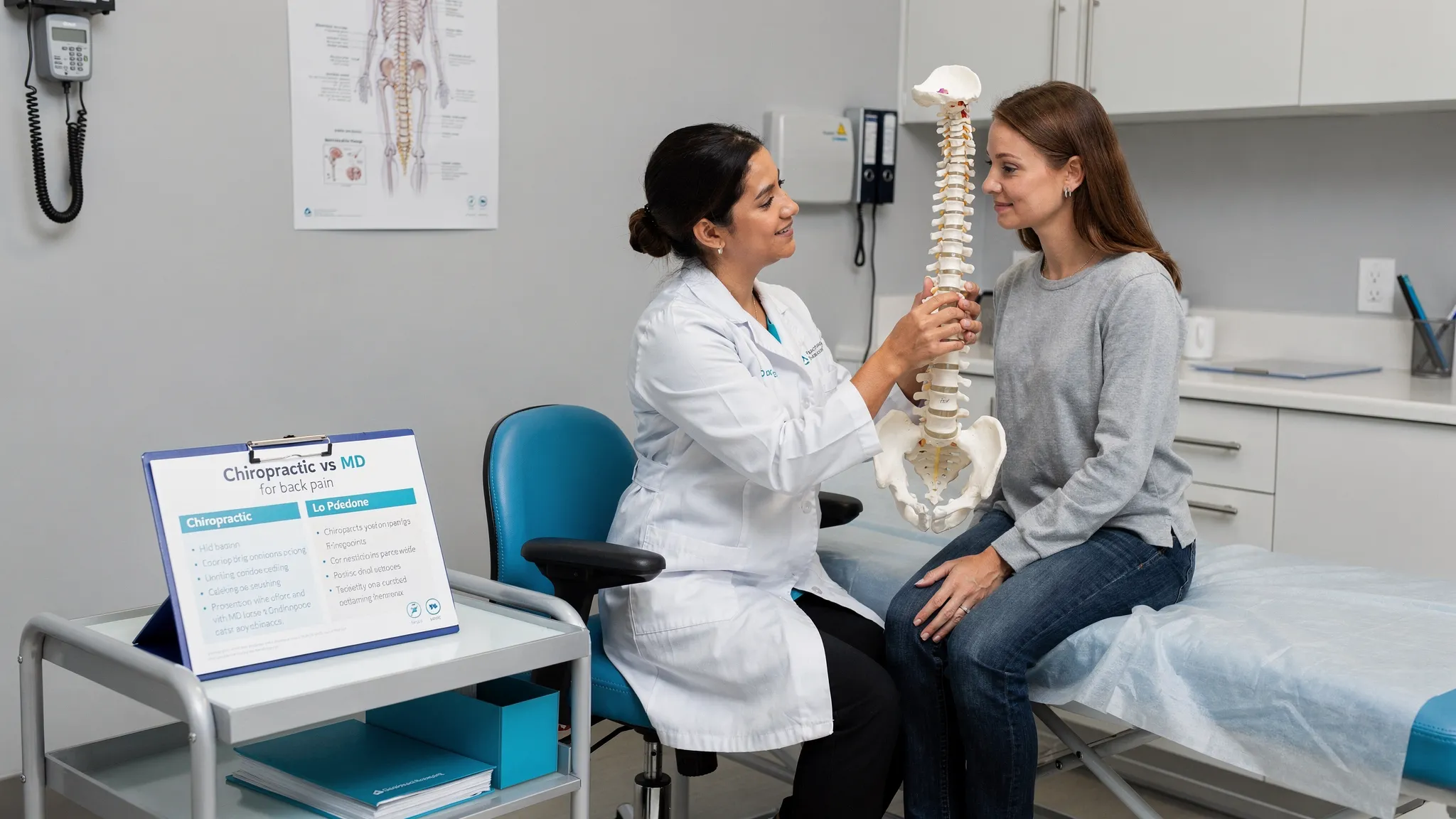
A decision guide: who to see based on your symptoms
If you are deciding today, use this framework.
Consider seeing an MD first (or going to the ER) if you have red flags
Back pain is common, but certain symptoms raise the urgency. Seek medical evaluation urgently if you have back pain with any of the following:
- New bowel or bladder control problems
- Numbness in the groin/saddle area
- Progressive leg weakness or trouble lifting the foot
- Fever, chills, or unexplained illness symptoms
- Back pain after major trauma (fall, car accident)
- History of cancer, unexplained weight loss, or night sweats
- Pain that is constant and severe at rest, especially if it is worsening
These do not automatically mean something dangerous is happening, but they are reasons to rule out conditions where delayed care matters.
Consider seeing chiro doctors first if the pattern is mechanical
A chiropractor is often a good first stop if:
- Pain began with lifting, twisting, prolonged sitting, or a minor strain.
- You feel stiffness, limited motion, “locked up” back, or muscle spasm.
- Symptoms improve with movement and worsen with inactivity.
- You want a conservative plan focused on function and prevention.
Consider seeing both if you want the safest, fastest path forward
Many people benefit from a combined approach when:
- Pain is moderate to severe and you want both conservative care and medical oversight.
- You have recurring episodes and need a long-term plan (strength, mobility, workload management).
- You have sciatica-type symptoms (pain, tingling, numbness into the leg) that need close monitoring.
If you want to understand how conservative, non-surgical care can help with nerve-related symptoms, you may find this helpful: Can a Chiropractor Help With a Pinched Nerve?
What to expect at your first appointment
Knowing what the first visit looks like reduces anxiety and helps you choose the right clinic.
First visit with a chiropractor
A typical chiropractic evaluation for back pain may include:
- A history focused on onset, triggers, and what makes symptoms better or worse
- Orthopedic and neurological screening (strength, reflexes, sensation)
- Movement and posture assessment
- A treatment plan that may include hands-on care plus exercises
A good chiro doctor will also tell you when your case looks outside their scope and should be co-managed or referred.
First visit with an MD
A medical evaluation often includes:
- Screening for red flags and systemic causes
- Neurological exam and assessment of functional limitations
- A discussion of short-term pain control options (when appropriate)
- Decisions about imaging or referrals based on your exam and timeline
Cost and insurance: practical tips before you book
In NYC, cost is a real part of the decision. A few ways to avoid surprises:
- Ask what is included in the first visit (exam, treatment, re-eval) before you go.
- Confirm whether your plan requires a referral, especially for specialist visits.
- Use HSA/FSA funds when eligible.
- If you split time internationally or have UAE-based coverage, it can help to compare health insurance plans in the UAE before starting ongoing care, so you know what outpatient benefits and provider networks you actually have.
Why integrated care can be the best of both worlds
Some clinics bring disciplines together so you do not have to bounce between offices. For example, Move Well MD in Manhattan offers integrated care that can include chiropractic, acupuncture, physical therapy and rehabilitation, and pain management services, depending on what your evaluation supports.
The main advantage of an integrated approach is that your plan can evolve. If you start with conservative hands-on care but need additional options, you can discuss them within the same clinical team rather than starting over.
If you are specifically exploring spinal manipulation, this guide on what a session can involve may help: How Back Adjustment in NYC Can Help Alleviate Pain
Frequently Asked Questions
Should I see a chiropractor or an MD for sciatica? Sciatica symptoms (pain, tingling, numbness down the leg) can improve with conservative care, but you should see an MD promptly if weakness is progressive, pain is severe and constant, or you have red-flag symptoms. Many people do well with coordinated care.
Do I need an MRI before seeing chiro doctors? Not usually. Many cases of uncomplicated low back pain do not require immediate imaging. A chiropractor or MD can screen you first and recommend imaging if your exam suggests it would change treatment.
Can chiro doctors prescribe medication for back pain? In general, chiropractors do not prescribe medications. MDs can prescribe when appropriate. If you want a non-drug plan, chiropractic and rehab-focused care can be a good starting point when it is safe.
How do I know if my back pain is serious? Red flags include new bowel or bladder issues, numbness in the saddle area, progressive leg weakness, fever, unexplained weight loss, major trauma, or severe worsening pain at rest. Seek urgent medical evaluation if any are present.
Is it okay to see both a chiropractor and an MD? Yes. For many patients, combining conservative manual care and rehab with medical evaluation (when needed) leads to faster answers and a clearer plan, especially if symptoms are persistent or recurring.
Ready for a clearer plan for your back pain?
If your back pain is limiting work, sleep, exercise, or commuting, the next best step is an exam that identifies whether your symptoms look mechanical, nerve-related, or medically urgent.
Move Well MD is a Manhattan-based clinic offering integrated conservative care for pain relief, including chiropractic and acupuncture, with additional pain management and rehabilitation options when appropriate. Learn more or request an appointment at MoveWellMD.com.
