If the idea of a loud “crack” makes you tense up, you are not alone. Many New Yorkers want pain relief and better mobility, but prefer a more measured, low-force approach than the high-velocity adjustments they associate with traditional chiropractic.
That is exactly where alternative chiropractic comes in: gentler techniques designed to improve joint motion, reduce muscle guarding, and calm irritated tissues without aggressive twisting or forceful movements.
What “alternative chiropractic” actually means
In most clinics, “alternative” does not mean unproven or mysterious. It usually means low-force, joint-friendly methods that may be used instead of, or before, high-velocity spinal manipulation.
Two points matter for patients:
- The goal is function, not noise. A pop can happen with any joint technique, but it is not the objective and it is not required for results.
- Technique choice is part of clinical decision-making. Your age, medical history, comfort level, tissue irritability, and the suspected pain generator (joint, disc, nerve, muscle) all influence what a clinician should do.
From an evidence-based perspective, spinal manipulation and mobilization are commonly included among non-drug options for back pain. For example, the American College of Physicians (ACP) guideline for noninvasive treatment of acute, subacute, and chronic low back pain includes spinal manipulation as one of several options clinicians may consider, alongside exercise and other conservative measures.
Source: American College of Physicians guideline (Annals of Internal Medicine, 2017)
Who gentle techniques are often best for
Low-force approaches can be a fit for many people, but they are especially appealing if you:
- Feel anxious about manual “cracking,” or tend to guard and tighten during care
- Are very sore or flared up and cannot tolerate thrust techniques that day
- Have age-related stiffness and want a gradual approach
- Are managing recurring neck or back pain and want to pair hands-on care with rehab
- Prefer a more conservative start before escalating to more forceful methods
Important: there are also situations where a chiropractor should slow down, modify care, or refer you out. Red flags can include significant trauma, suspected fracture, unexplained weight loss, fever, history of cancer with new severe spinal pain, progressive neurological symptoms, or bowel and bladder changes. A reputable provider will screen for these.
Gentle chiropractic techniques that still work (and what they feel like)
Below are several commonly used approaches in alternative chiropractic care. Many patients do best with a blend rather than a single technique.
Joint mobilization (low-velocity manual work)
Mobilization is a controlled, rhythmic movement applied to a stiff or painful joint, often described as “pressure and movement” rather than a quick thrust.
Why it can help: Mobilization may improve joint mechanics, reduce protective muscle tone, and help restore motion when stiffness is driving pain.
What it feels like: Gentle rocking, stretching, or oscillations, usually well-tolerated even when you are sensitive.
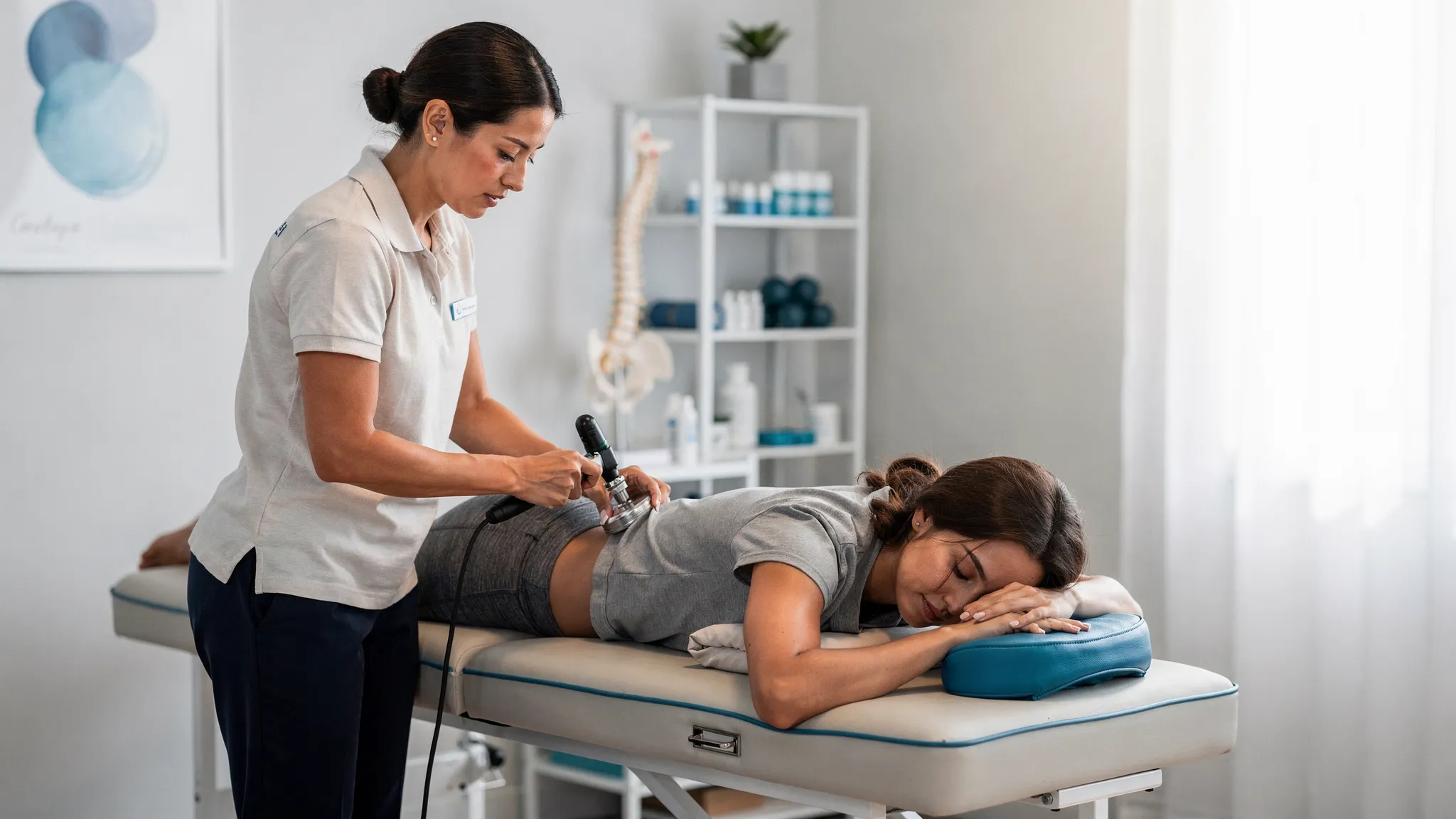
Instrument-assisted adjusting (for example, Activator-style tools)
Instrument-assisted methods use a small handheld device to deliver a quick, low-amplitude impulse.
Why it can help: It offers a consistent, low-force input that may be useful when manual thrusts are not appropriate or not desired.
What it feels like: A light tap, typically without twisting positions.
Flexion-distraction (often used for irritated low backs)
Flexion-distraction is performed on a specialized table that allows gentle, guided motion through the lower back. It is frequently used when symptoms suggest disc sensitivity, facet irritation, or spinal stenosis patterns, though appropriateness depends on your exam.
Why it can help: It can reduce compressive loading and introduce movement in a controlled way when the back feels “jammed.”
What it feels like: Slow, comfortable stretching and gliding, no sudden movements.

Drop-table technique (Thompson-style, low-force)
Drop tables have sections that lift slightly and then drop a small distance as the clinician applies pressure. The drop reduces the amount of force needed.
Why it can help: It can deliver an adjustment with less strain on the patient’s body and less rotation.
What it feels like: A quick, small “drop” sensation of the table, usually perceived as mild.
Soft tissue therapy (muscles, tendons, and trigger points)
A lot of pain that people call “spine pain” is heavily influenced by soft tissue. Many alternative chiropractic plans include hands-on work to calm tender points and restore tissue glide.
Why it can help: When muscles are guarding, even a perfectly chosen joint technique may not hold. Soft tissue work can reduce sensitivity and make movement retraining easier.
What it feels like: Pressure on tight bands or tender points, ideally tolerable and not overly aggressive.
Muscle Energy Technique (MET) and assisted stretching
MET uses gentle isometric muscle contractions against resistance, followed by a stretch.
Why it can help: It can improve range of motion and decrease tone without high-force adjustments.
What it feels like: You lightly push, then relax, then the clinician takes up slack into a stretch.
Rehab-forward chiropractic (corrective exercise and movement re-education)
For many cases, the “gentle technique that still works” is not only hands-on care, it is hands-on care plus a plan.
A rehab-forward approach often focuses on:
- Core, hip, and upper back strength
- Mobility where you are truly stiff (often thoracic spine, hips, ankles)
- Motor control, breathing mechanics, and posture strategies for your daily life
This is especially relevant in NYC, where desk work, long commutes, and stress can keep your nervous system in a protective state.
Quick comparison: which gentle technique fits which preference?
| Technique | Force level | Best for patients who want | Common body areas |
|---|---|---|---|
| Mobilization | Low | Gradual, hands-on movement without thrusts | Neck, mid-back, low back, ribs |
| Instrument-assisted | Low | Minimal twisting and a very controlled input | Neck, back, extremity joints |
| Flexion-distraction | Low | A calm approach for sensitive low backs | Low back, pelvis |
| Drop-table | Low to moderate | Lower-force adjusting that still feels “specific” | Low back, pelvis, mid-back |
| Soft tissue therapy | Variable | Less joint focus, more muscle relief and mobility | Neck/shoulders, back, hips |
| Rehab-forward care | N/A | Long-term resilience and fewer flare-ups | Whole body |
Does gentle chiropractic work as well as “cracking”?
It can, depending on the person and the problem.
High-velocity manipulation is one tool. For some patients, it is effective and well tolerated. For others, it is simply not the best match on day one, or at all.
Gentle techniques can be highly effective when:
- The main driver is stiffness and guarded movement
- Symptoms are irritable and need calming before stronger inputs
- The plan includes exercises and workload management, not just passive treatment
A good clinician will not treat technique like a personality trait. They will treat it like a dial that can be turned up or down.
What to expect at your first visit (a patient-centered, low-force approach)
If a clinic offers alternative chiropractic care responsibly, you should expect:
A real history and safety screen
You should be asked about:
- Symptom behavior (what worsens it, what eases it)
- Neurological symptoms (numbness, tingling, weakness)
- Prior imaging, injuries, surgeries, osteoporosis risk, and other medical factors
- Work, training, sleep, and stress load
An exam that matches your complaint
This may include posture and movement testing, joint motion assessment, soft tissue palpation, orthopedic tests, and neurological screening.
Imaging is not automatically required for most uncomplicated back or neck pain, but it may be appropriate when the history suggests trauma, progressive neurological issues, or other red flags.
Informed consent and options
A clinician should explain:
- What they think is going on (in plain language)
- Which techniques they recommend, and why
- What alternatives exist (including doing nothing today if appropriate)
- What normal post-visit soreness might feel like
Safety: what patients should know
Most people who receive conservative musculoskeletal care experience mild, short-lived effects such as temporary soreness or fatigue.
However, safety is not a buzzword. It is a process. Choose a provider who:
- Screens for red flags
- Modifies care based on your comfort and response
- Coordinates with other healthcare professionals when appropriate
If you have complex medical history (for example, anticoagulant use, known osteoporosis, inflammatory arthritis, prior spinal surgery, or neurological disease), bring it up early so technique selection can be tailored.
A practical NYC note: your environment can be part of treatment
In New York, pain triggers are often not only “bad posture,” they are repeat exposures: laptop-on-couch hours, heavy bags, long standing commutes, and workouts stacked on top of poor recovery.
If you are building a more ergonomic workspace in a nontraditional setting, for example a converted studio, a garage, or even a modular space, your setup decisions matter. Some businesses create pop-up offices, fitness spaces, or job-site wellness rooms using shipping containers, and sourcing the right unit is step one. If you are exploring that route, here is a resource to buy shipping containers online and review size options before you plan your layout.
The clinical takeaway is simple: the best hands-on technique is stronger when your daily environment stops re-irritating the same tissues.
How Move Well MD approaches gentle, effective care
Move Well MD is a Manhattan-based clinic integrating Western and Eastern approaches, including chiropractic care, acupuncture, physical therapy, and comprehensive pain management.
For patients specifically seeking alternative chiropractic care, an integrated clinic can be a strong fit because:
- Gentle joint work can be paired with soft tissue therapy and rehab
- Acupuncture may be added when pain sensitivity, stress load, or muscle guarding is high
- Plans can be personalized around your sport, commute, and work demands
You can learn more about the clinic at Move Well MD.
Frequently Asked Questions
Is alternative chiropractic safer than traditional adjustments? Alternative chiropractic is typically lower-force and can be more comfortable for many people. Safety depends on proper screening, diagnosis, technique selection, and your individual health history.
Will I still get results if nothing “cracks”? Yes. A popping sound is not required for improvement. Many gentle techniques focus on restoring motion and reducing irritation without audible cavitation.
How many visits will I need? It depends on the condition, how long you have had it, your activity level, and whether the plan includes home exercises and workload changes. A good provider should re-evaluate progress and adjust the plan rather than prescribing an open-ended schedule.
Can gentle chiropractic help sciatica-like symptoms? Some sciatica-like symptoms respond well to conservative care, especially when combined with rehab. Because leg symptoms can have different causes, an exam is important to determine the right approach and to rule out red flags.
Should I do chiropractic or physical therapy? Many patients do best with both. Chiropractic can address joint and soft tissue restrictions, while physical therapy and rehab build the strength and control to keep improvements.
Ready for a gentler approach that still addresses the root cause?
If you want pain relief without feeling forced into aggressive techniques, consider booking an evaluation with Move Well MD. The goal is to match the right level of care to your body, your comfort level, and your daily demands so you can move freely again.
Explore care options or schedule a visit at movewellmd.com.
