Searching for an “in home chiropractor near me” can make sense when back pain, limited mobility or a demanding schedule makes traveling difficult. But a house call should meet the same standards for assessment, consent and professional accountability as an office visit. Before booking, confirm who is coming, whether your symptoms are appropriate for home care and what the visit will actually include.
The details that matter most are often missing from a search listing: apartment access, equipment, travel charges and what happens if you need care that cannot be provided at home.
What an In Home Chiropractic Visit Can Offer
Mobile chiropractic care brings a clinician to your residence rather than requiring you to visit an office. Depending on the practitioner, the appointment may include a health history, physical examination, hands-on treatment and guidance on movement or exercises.
That convenience can help someone who finds a commute painful, needs assistance leaving home or has caregiving responsibilities. It does not automatically make home treatment the safest or most suitable option.
Some people seek chiropractic care for back pain, neck discomfort or certain joint complaints. Whether treatment is appropriate depends on the cause of the symptoms, medical history and examination findings, not simply where the pain occurs.
A house call describes the location, not the full scope of care. Do not assume that an office’s acupuncture, physical therapy, imaging or other services travel with its chiropractor. Ask exactly what is available at your address and what would require an office appointment or another clinician.
Check Whether Your Symptoms Need Medical Evaluation First
Before choosing an “in home chiropractor near me” result, describe your symptoms to the practice and ask whether a home assessment is appropriate. A booking form alone should not substitute for screening when symptoms are new, severe or changing.
Certain symptoms need emergency evaluation rather than a routine chiropractic appointment:
- New difficulty urinating, loss of bladder or bowel control, or numbness around the groin or buttocks, particularly with back pain.
- Sudden facial drooping, trouble speaking, severe dizziness or weakness on one side of the body.
- Chest pain, shortness of breath or a sudden severe headache.
- Significant injury accompanied by severe spinal pain, weakness or inability to move safely.
Call 911 for possible stroke, heart attack or another immediate emergency. New bladder or bowel changes with saddle-area numbness also warrant emergency assessment.
Other concerns, including fever with back pain, unexplained weight loss, a history of cancer or progressively worsening weakness, require prompt medical evaluation. Mention these before scheduling. Being unable to travel comfortably is different from being medically safe to treat at home.
Verify the Chiropractor Who Will Actually Arrive
An “in home chiropractor near me” listing may represent an individual practitioner, a clinic or a booking platform. Request the treating chiropractor’s full name and license number, not just the business name.
For a New York appointment, use the New York State Education Department’s professional verification search to check the clinician’s record. Match the name and profession, then review the license and registration information. A license number alone is not enough; confirm that the person is currently authorized to practice. Review any available disciplinary information and ask about anything you do not understand.
A Doctor of Chiropractic credential does not make someone a medical physician, and additional certificates do not replace state licensure. If another professional will provide acupuncture, physical therapy or another service, verify that person’s relevant credentials separately.
Ask whether the chiropractor regularly makes residential visits and has experience assessing people with your mobility limitations or health conditions. You can also ask whether professional liability coverage includes house calls.
Before the appointment, obtain the clinician’s name, the practice’s contact information and written confirmation of the visit. When someone arrives, their identity should match the booking.
Confirm Your Exact Address and Building Access
Local search results do not guarantee that a provider serves your apartment. A business may appear for Manhattan searches but restrict house calls to certain neighborhoods, days or travel distances.
When comparing an “in home chiropractor near me” option, give the practice your ZIP code, street location, floor and elevator status. In New York City, a walk-up, a lengthy trip from the curb or building access restrictions can affect whether the clinician can bring equipment safely.
Explain any relevant access details before paying a deposit: a broken elevator, narrow stairs, security registration or a requirement to reserve a service elevator. Ask whether these circumstances change the fee or appointment availability.
Also distinguish between a scheduled start time and an arrival window. Find out how the practice communicates traffic delays and what happens if the clinician cannot reach you.
If you need help standing, transferring onto a table or getting into position, describe that need explicitly. Do not assume the chiropractor can lift you or that one person can safely provide the assistance you require.
Ask What Equipment and Space You Need
The practice should explain what the clinician brings and what you need to prepare. A portable treatment table may be supplied, but confirm this rather than assuming your bed, sofa or dining table will be suitable.
A useful question for any “in home chiropractor near me” provider is: “What clear floor area and access route do you need for the equipment you use?” Ask for dimensions specific to that setup, including room for the clinician to move around you.
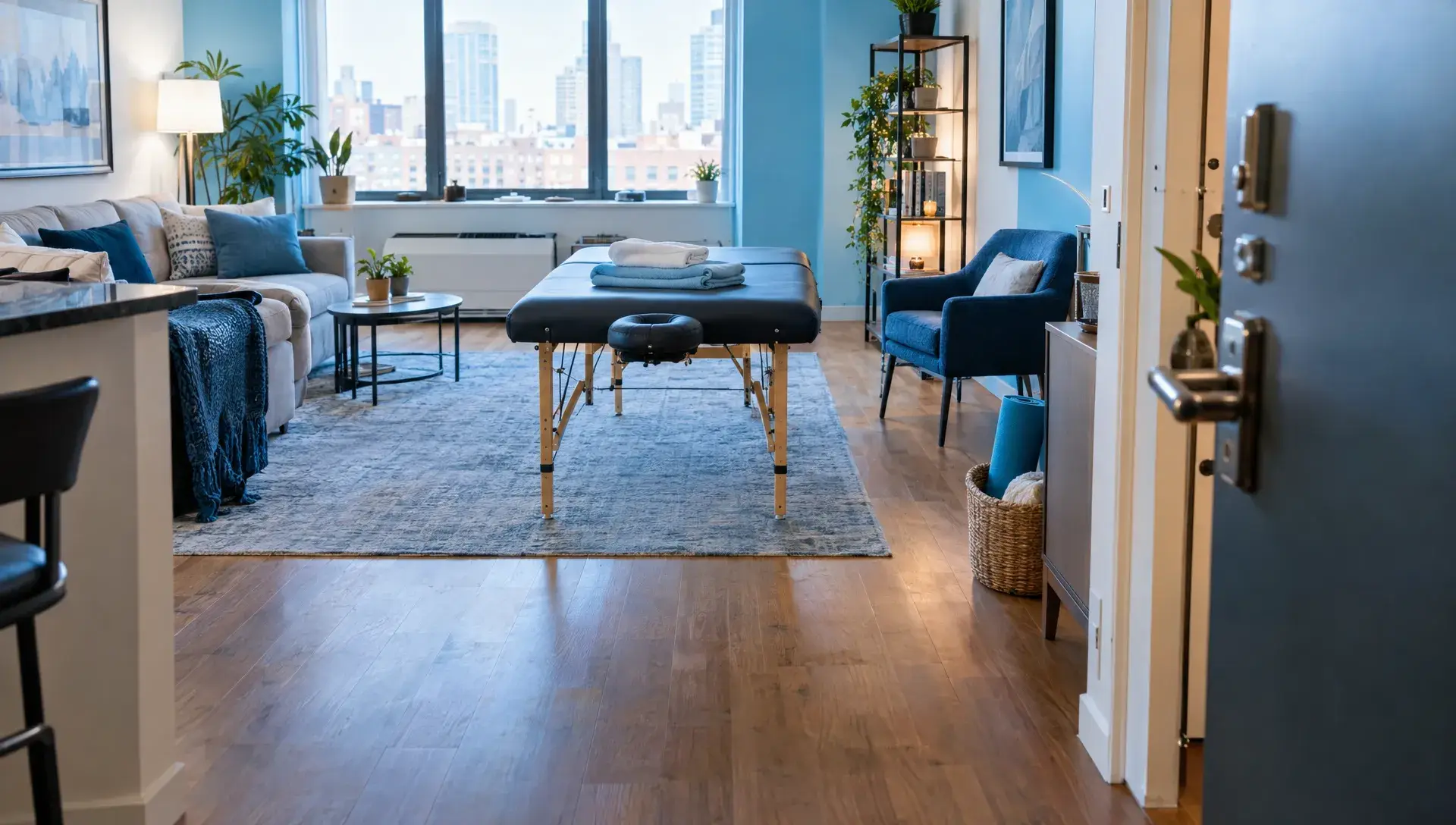
Choose a level, uncluttered area with adequate lighting and privacy. Clear loose rugs, cords and obstacles from the route between the entrance and treatment area. Keep pets away from equipment and arrange supervision for children if needed.
Ask how equipment is cleaned between households, whether fresh linens are supplied and what hand-hygiene arrangements are needed. These are reasonable questions for care delivered in a shared living space.
You should also know whether a caregiver or support person may remain present, what clothing to wear and how your privacy will be protected. If the available space cannot support a safe examination, the appointment may need to move to an office.
Get the Total Cost and Insurance Terms in Writing
The advertised treatment price may not be the final house-call price. An “in home chiropractor near me” search can surface providers with very different billing arrangements, so request an itemized estimate for your address and appointment type.
| Cost or policy | What to confirm before booking |
|---|---|
| Initial evaluation | Whether assessment is charged separately from treatment |
| Travel and access | Any distance, parking, toll, stair or building-access charges |
| Additional services | Which treatments are included and which require separate consent and payment |
| Insurance billing | Whether the clinician bills your plan or provides documents for you to submit |
| Cancellation | The deadline, late-cancellation charge and policy for access problems or clinician delays |
An insurer covering chiropractic care does not necessarily mean it covers a home visit, a particular practitioner or every service offered. Network participation, benefit limits and billing rules can affect your responsibility.
Ask the practice for the information your insurer needs, including the treating provider, anticipated services and home setting. Then confirm benefits directly with your plan. A superbill supports a reimbursement request; it does not guarantee payment.
Keep the written estimate and cancellation terms. Avoid committing to a large prepaid package before an examination establishes whether care is appropriate. If the practice recommends ongoing visits, ask how unused appointments and refunds are handled.
Know What Should Happen During the First Visit
Choosing an “in home chiropractor near me” should not mean skipping a proper examination. The clinician should review your symptoms, relevant medical history, medications, previous injuries and goals before proposing treatment.
Disclose osteoporosis, blood-thinning medication, recent surgery, pregnancy and any neurological symptoms. These details can affect the examination, technique selection or need for referral. Bring relevant reports if you have them, but do not assume everyone needs new imaging before treatment.
The chiropractor should explain their working assessment, what they recommend and why. If the examination suggests a problem requiring imaging or medical evaluation, arranging that next step may be more appropriate than performing an adjustment.
Before hands-on care, discuss expected benefits, risks and alternatives. The National Center for Complementary and Integrative Health’s overview of spinal manipulation describes common temporary effects, such as soreness, as well as reported serious complications. Neck manipulation has been associated with rare but serious tears in neck arteries; ask about individual risks and alternatives if it is proposed.
You may decline a technique or stop treatment. For a fuller explanation of the consent discussion, review what a chiropractic doctor should explain before you consent.
Agree on Follow-Up Before the Clinician Leaves
A useful home visit ends with a clear next step, not simply another appointment. Ask what changes to expect, what activity advice to follow and which symptoms should trigger a call or medical evaluation.
Before booking repeated visits through an “in home chiropractor near me” listing, agree on a functional goal. That might be tolerating a short walk, sitting through a meal or getting dressed with less discomfort. The goal should reflect your condition and daily life, rather than a promise to eliminate all pain.
Ask when progress will be reassessed and what would lead to changing or stopping treatment. Worsening symptoms or a lack of meaningful improvement should prompt reconsideration, not automatic continuation.
Confirm how to contact the practice between visits, where records are kept and how information can be shared with your other clinicians. A mobile provider should also have a plan for referrals when you need services or equipment unavailable at home.
Frequently Asked Questions
Can I book a chiropractor without a referral? You can generally contact a New York chiropractor directly for an assessment. Your insurance plan may impose separate referral, authorization or coverage requirements, so check those before booking.
Can a home chiropractor treat sciatica? A chiropractor may assess symptoms described as sciatica and determine whether conservative care is appropriate. Leg pain has several possible causes, and no provider should guarantee a cure without evaluating you. Progressive weakness or bladder and bowel changes require urgent medical attention.
Is chiropractic care at home as safe as care in an office? Safety depends on appropriate screening, clinician qualifications, technique and the treatment environment. A home visit is not suitable if your condition or mobility needs require resources the provider cannot bring.
Are same-day home visits available? Availability varies by practitioner, location and the screening required. Confirm a specific appointment and arrival window rather than assuming that an online request guarantees a visit.
Confirm the Care Setting Before You Book
If you are considering Move Well MD, contact the Manhattan practice to discuss your symptoms, available appointment settings and costs. Confirm directly whether home visits are offered for your address; do not infer mobile availability from a search result.
Move Well MD offers chiropractic, acupuncture and other pain-management and rehabilitation services. Ask which services fit your needs and where they are delivered. The right booking is one that matches your symptoms, provides a safe treatment environment and leaves you clear about the total cost.
