Searching for a “chiropractic doctor near me” can help you find a convenient office, but proximity tells you little about the conversation that should happen before treatment. Before you agree to an adjustment or another procedure, you should understand what the clinician thinks is wrong, what they recommend, what could go wrong and what other choices you have.
Informed consent is a discussion, not simply a signature. Here is what that discussion should cover, especially when you are considering care for back pain, neck pain or another musculoskeletal concern.
Consent Should Happen Before Treatment Begins
A consent form can document your decision, but it cannot replace an explanation you understand. You should have time to ask questions without feeling rushed, embarrassed or pressured into treatment that day.
Your chiropractor should explain the proposed procedure in plain language, including the body area involved and what you will experience. Agreeing to an examination does not automatically mean agreeing to every treatment that might follow.
Consent is also ongoing. If the clinician proposes a different technique or starts treating a new area, the conversation may need to be revisited. You can decline a particular procedure or ask to stop an ongoing treatment safely.
A useful question is: “What exactly am I agreeing to today, and what decisions can wait?” The answer should distinguish the examination, any imaging and the treatments being proposed.
Understand the Diagnosis and the Provider’s Role
When comparing “chiropractic doctor near me” results, check who will actually examine and treat you. A Doctor of Chiropractic, or DC, is not the same credential as a medical doctor, or MD.
In New York, chiropractors have a defined professional scope and cannot prescribe medications such as prednisone. The New York State Education Department’s chiropractic information explains licensing and professional practice. An integrated clinic may include several types of clinicians, so ask which professional is responsible for each recommendation.
The provider should also describe their working diagnosis and what remains uncertain. “Your back is out” is not enough. Ask which findings support the explanation, whether symptoms could have another cause and what would prompt a referral.
Our guide to evaluating a chiropractor’s qualifications and clinical approach offers additional checks, but the immediate issue is whether this clinician can explain your situation clearly.
Your History Should Change the Recommendation
Before discussing consent, the clinician needs relevant information about previous surgery, osteoporosis, blood-thinning medication, cancer history, recent injuries and neurological symptoms. These factors may affect whether treatment is appropriate or needs modification.
Daily demands matter too. Someone unloading a vehicle with a custom refrigerated van conversion should describe cargo access and repeated lifting; an office worker should describe prolonged sitting and desk tasks. These details help connect treatment goals to actual activities rather than a generic posture ideal.
Tell the clinician what you want to do more comfortably, such as walking to the subway, sleeping or carrying groceries. The proposed care should have a reasonable connection to those goals.
Know the Technique and Its Expected Benefit
A “chiropractic doctor near me” listing cannot tell you which technique a clinician will recommend. Ask whether the plan involves a quick thrust, slower joint mobilization, soft-tissue work, exercise or another intervention. If the explanation relies on unfamiliar terms, this plain-English chiropractic terminology guide can help you prepare follow-up questions.
You should know the intended benefit, how likely it is to help your particular problem and how improvement will be assessed. A popping sound is not proof that treatment worked.
The National Center for Complementary and Integrative Health’s overview of spinal manipulation describes potential benefits for some musculoskeletal conditions, along with limitations and safety concerns. For low-back pain, manipulation may provide modest improvements in pain and function for some people. That does not mean it is necessary for everyone or that it will correct every underlying cause.
Be cautious about guarantees, claims that routine adjustments cure unrelated diseases or explanations that depend entirely on permanently “realigning” your spine.
Discuss Risks, Especially Before Neck Manipulation
The risks discussion should be specific to the procedure and your health history. Temporary soreness, stiffness or increased discomfort can follow spinal manipulation. Ask what is expected, how long it might last and what symptoms require a call or medical evaluation.
When assessing “chiropractic doctor near me” options, look for a clinician who can discuss serious risks without dismissing them or making them sound inevitable.
Serious complications have been reported after spinal manipulation. Cervical manipulation deserves particular discussion because of the reported association with cervical artery dissection, a tear in a neck artery that can lead to stroke. The precise frequency and causal relationship are difficult to establish. That uncertainty should be acknowledged rather than replaced with a promise of zero risk.
Ask whether a neck thrust is necessary, what alternatives are available and how your individual risk factors affect the recommendation. Screening cannot guarantee that every complication will be prevented. If you do not want neck manipulation, say so explicitly before treatment begins.
Know When Treatment Should Wait
Some symptoms call for medical evaluation rather than proceeding with an adjustment. New bladder or bowel dysfunction with saddle-area numbness, rapidly worsening weakness or possible stroke symptoms require emergency assessment.
Sudden, severe, unusual head or neck pain can also warrant urgent medical evaluation, particularly with dizziness, double vision, difficulty speaking or trouble walking. Call 911 for suspected stroke symptoms.
Tell the clinician about fever, significant recent trauma or unexplained symptoms before any treatment. The appropriate next step may be further investigation, a different clinician or emergency care, not a modified adjustment.
Hear the Alternatives, Including Declining Manipulation
A meaningful consent conversation includes reasonable alternatives and the likely consequences of delaying or declining the proposed treatment. Those consequences depend on the diagnosis, not on a blanket claim that everyone needs regular adjustments.
Sometimes a “chiropractic doctor near me” search should lead to a referral rather than immediate chiropractic treatment. Depending on the findings, options may include an exercise-based physical therapy program, activity changes, medical evaluation or a different approach to symptom management.
Other choices might include mobilization without a thrust, appropriately selected soft-tissue treatment or acupuncture. Each option has its own benefits, limitations and risks; a gentler-sounding name does not automatically make a procedure risk-free.
You can ask directly: “What would you recommend if I decline this adjustment?” A useful answer explains the trade-offs and preserves your ability to choose. Taking time to decide or seeking a second opinion should not be treated as a failure to cooperate.
Agree on a Trial Plan, Reassessment and Costs
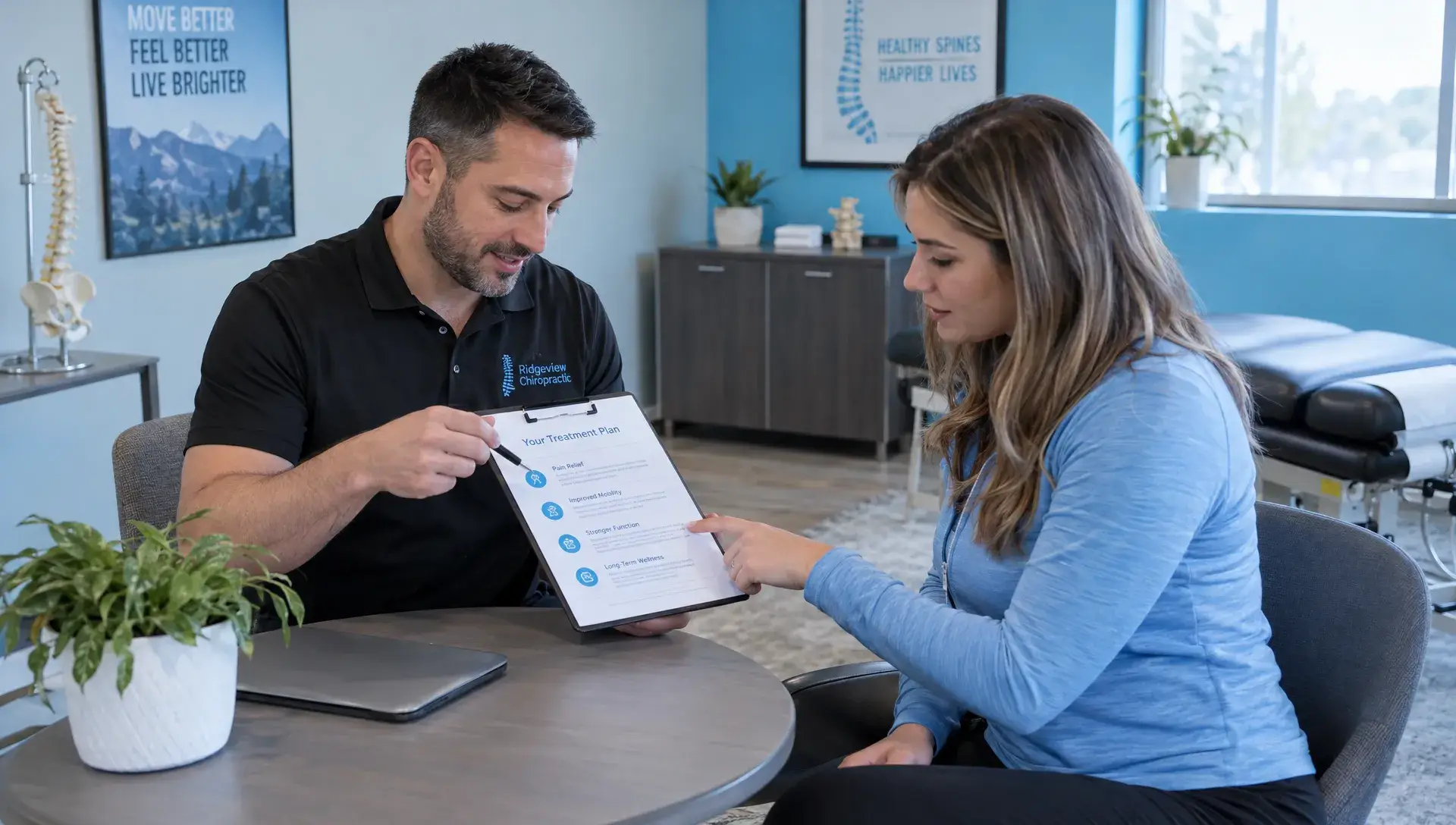
Consent should connect to a plan with a purpose, not an indefinite schedule. Ask what the initial course of care is intended to accomplish and when the clinician will reassess whether it is helping.
Useful measures can include walking tolerance, sleep disruption, comfortable neck movement or the ability to perform a specific work task. Pain scores can help, but they should not be the only measure. Ask what happens if you improve, plateau or get worse.
Clinical consent and financial agreement are separate decisions. Before accepting a treatment package, request an explanation of visit charges, additional procedures, insurance assumptions and cancellation or refund terms. Ask whether you can choose a shorter trial before making a larger commitment.
A convenient “chiropractic doctor near me” result is not necessarily an affordable plan once repeated visits and additional services are included. Find out who will confirm coverage and what you may owe if insurance does not pay. A benefit estimate is not a guarantee of payment.
You should be able to consider the proposed schedule and costs without being pushed to purchase a long course of care immediately.
Frequently Asked Questions
Do I need X-rays before consenting to an adjustment? Not automatically. Imaging should have a clinical reason, such as findings that raise concern for a fracture or another condition requiring investigation. Ask what the image is expected to clarify and how the result would change treatment.
Can a chiropractor permanently fix a misaligned spine? That phrase is often too vague to guide a decision. Some structural conditions are real diagnoses, but ordinary back pain does not prove that vertebrae need to be put back into place. Ask for the specific diagnosis and realistic treatment goal.
Can I agree to an examination but decline treatment that day? Yes. Tell the office that you want an assessment and discussion before deciding about treatment. Ask about examination charges separately so the clinical decision and financial expectations are clear.
Bring Your Questions to the Consultation
If your “chiropractic doctor near me” search has brought you to Manhattan, Move Well MD offers chiropractic care, acupuncture, physical therapy and pain management services. Ask which approach is being recommended for you, who will provide it and how progress will be reviewed.
Before saying yes, you should be able to explain the proposed treatment, its main risks, your alternatives and the expected costs in your own words. If you cannot, ask for clarification before proceeding.
