Lower back pain can feel urgent, especially when it hits suddenly or starts shooting into your leg. It is also one of the most common reasons people search for a lower back pain chiropractor near me, because they want relief fast without jumping straight to pills or surgery.
The key is knowing when chiropractic care is a good first step, and when your symptoms are a signal to skip the chiropractor and get urgent medical evaluation. This guide breaks down both, in plain English.
First, what kind of lower back pain are you dealing with?
Most back pain is “mechanical,” meaning it comes from joints, discs, muscles, ligaments, or movement patterns. Mechanical pain often responds well to conservative care like chiropractic, physical therapy, and guided exercise.
Other back pain is driven by nerve irritation (like sciatica) or is a sign of a broader medical issue (infection, fracture, cancer, inflammatory disease). Those cases need medical workup first.
Common patterns that often point to mechanical low back pain
Mechanical pain commonly looks like this:
- Pain started after lifting, sitting too long, travel, exercise, or a “wrong move”
- Stiffness in the morning that eases as you start moving
- Pain that changes with posture (worse with bending or prolonged sitting, better with walking)
- Local ache across the beltline or one-sided low back pain
- No major numbness, weakness, fever, or unexplained weight loss
If this sounds like you and there are no red flags (next section), a chiropractor is often an appropriate place to start.
When it makes sense to see a chiropractor for lower back pain
A chiropractor visit is typically reasonable when:
Your pain is new (or flared up) and you can still function
If your back is painful but you can still walk, stand, and change positions (even if it is uncomfortable), a conservative exam and treatment plan can help reduce pain, restore motion, and keep you active.
Your symptoms fit a musculoskeletal pattern
Chiropractors commonly evaluate and treat problems like:
- Lumbar joint irritation (facet-related pain)
- Sacroiliac (SI) joint dysfunction
- Muscle strain and protective spasm
- Movement coordination problems (for example, pain that reliably shows up with certain bends or twists)
- Some cases of sciatica-like pain, after a proper neurologic screen
Spinal manipulation is included in several clinical guidelines as an option for low back pain, especially when combined with exercise and education. For example, the American College of Physicians guideline recommends non-drug treatments such as spinal manipulation for acute and subacute low back pain.
You want a plan that is not “just rest and wait”
For many people, the biggest value of a good chiropractor is not a single adjustment. It is the combination of:
- A hands-on exam to identify pain drivers
- A short-term pain relief plan
- A longer-term plan to reduce recurrence (mobility, strength, ergonomics, and activity progression)
Red flags: when NOT to start with a chiropractor
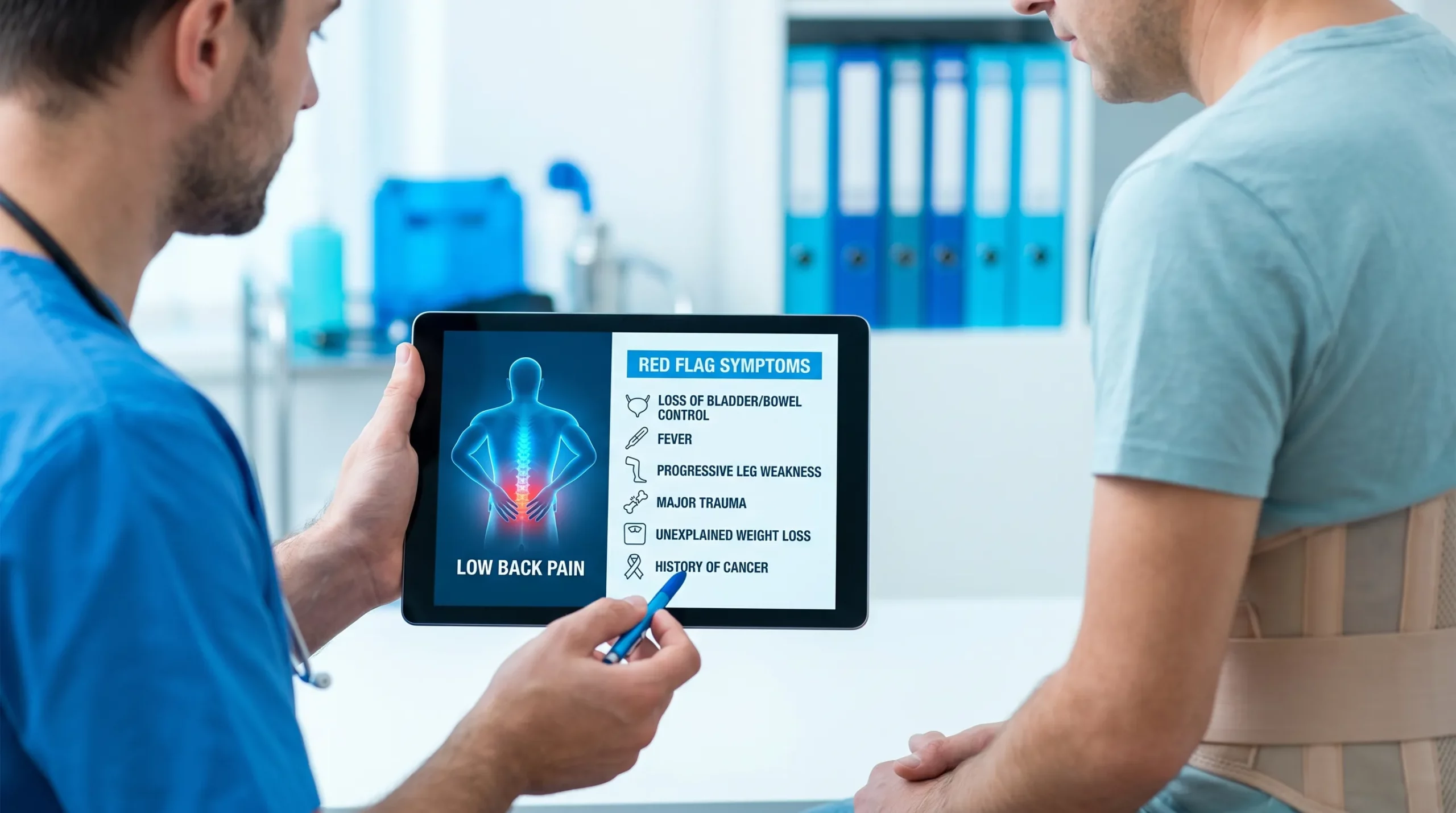
Some symptoms suggest a potentially serious condition where you should seek urgent medical care (ER or urgent care) or prompt evaluation by a physician before any manual treatment.
Here is a practical red-flag checklist.
Lower back pain red flags (and what to do)
| Red flag symptom | Why it matters | What to do now |
|---|---|---|
| New trouble controlling bladder or bowels, or numbness in the groin/saddle area | Can indicate cauda equina syndrome (a surgical emergency) | Go to the ER immediately |
| Progressive leg weakness, foot drop, or rapidly worsening numbness | Possible significant nerve compression | Same-day urgent evaluation |
| Fever, chills, feeling ill with back pain | Could be infection | Urgent evaluation (same day) |
| Recent major trauma (car accident, fall), or minor trauma with osteoporosis | Possible fracture | Urgent evaluation and imaging |
| History of cancer, unexplained weight loss, night sweats | Needs medical rule-out for serious causes | Prompt medical evaluation |
| Constant pain that does not change with position, especially severe night pain | Possible non-mechanical cause | Prompt medical evaluation |
| IV drug use, immunosuppression, recent serious infection, or recent spinal procedure | Higher infection risk | Urgent evaluation |
| New back pain during pregnancy with neurologic symptoms, severe pain, or fever | Needs careful medical assessment | Call your OB or seek urgent care |
If you are unsure, treat “red flag” as a reason to get checked medically first. A reputable chiropractor should also screen for these issues and refer out when appropriate.
What about sciatica: is it a red flag?
Sciatica symptoms (pain, tingling, or numbness traveling from the low back into the buttock and down the leg) are common and are not automatically dangerous.
However, sciatica becomes urgent when it comes with:
- Progressive weakness
- Loss of reflexes with worsening function
- Saddle numbness
- Bladder or bowel changes
If your leg pain is significant but you have no weakness and no bladder or bowel symptoms, many people start with conservative care. The goal is to calm irritation, improve mechanics, and guide a safe return to activity.
When to go right away vs when you can book an appointment
A simple way to decide:
| Situation | Best next step |
|---|---|
| Red flag symptoms (table above) | ER or urgent medical evaluation |
| Severe pain after trauma | Urgent evaluation and imaging |
| Pain with mild leg symptoms, no weakness, no red flags | Conservative care (chiropractic and/or physical therapy) |
| Pain that is improving week to week | Continue conservative plan |
| Pain not improving after 2 to 4 weeks, or worsening despite care | Re-evaluation, consider imaging or referral |
What to expect at a good chiropractor visit for low back pain
A quality first visit should feel more like a clinical evaluation than a “quick crack and done.” Expect some combination of:
A focused history
They should ask about:
- When it started and what triggers it
- Leg symptoms (numbness, tingling, weakness)
- Red flags (fever, trauma, cancer history, bladder or bowel changes)
- Prior episodes, surgeries, and current activity level
An orthopedic and neurologic exam
This often includes range of motion, strength testing, sensation, reflexes, and special tests for nerve tension.
A clear plan, with re-check points
You should leave knowing:
- The most likely working diagnosis (in everyday terms)
- What treatment is being recommended (and why)
- What you should do at home
- What symptoms would require stopping and getting medical evaluation
- When progress should be noticeable
Imaging is not automatic
Many episodes of acute low back pain do not need immediate imaging. Most guidelines recommend imaging when there are red flags or when symptoms persist without improvement. A good chiropractor should explain when an X-ray or MRI is (and is not) helpful.
Safety: is chiropractic care safe for lower back pain?
For many patients with non-red-flag, mechanical low back pain, chiropractic care is generally considered a conservative option. You might feel temporary soreness after manual therapy, similar to post-workout soreness.
The most important safety point is not the adjustment itself, it is proper screening. If you have red flags, severe neurologic deficits, or a suspected fracture or infection, you need medical evaluation before any manual treatment.
Choosing the right “lower back pain chiropractor” (especially in NYC)
If you are searching quickly, it is easy to book with the closest provider, even if they are not the best fit for back pain. A few practical ways to vet a clinic:
Look for scope and collaboration
Lower back pain often improves fastest when care is coordinated across disciplines, especially if you need both pain relief and rehab.
For example, Move Well MD is a Manhattan-based clinic that integrates chiropractic care with services such as acupuncture, physical rehabilitation, sports medicine, and pain management, which can be helpful if your case needs more than one approach.
Make sure you are booking the right kind of clinic
When you click a website, check what the clinic primarily treats. Some clinics are outstanding, but focus on aesthetics rather than musculoskeletal care. For instance, Laprin Clinic is centered on cosmetic and wellness procedures, not evaluating spine-related lower back pain.
Ask a few direct questions
You can ask (by phone or during intake):
- Will you do a neurologic exam (strength, reflexes, sensation) for leg symptoms?
- What red flags would make you refer out?
- Do you provide rehab or coordinate with physical therapy?
- What is the plan if I am not improving in 2 to 4 weeks?
What you can do today (while you wait for your appointment)
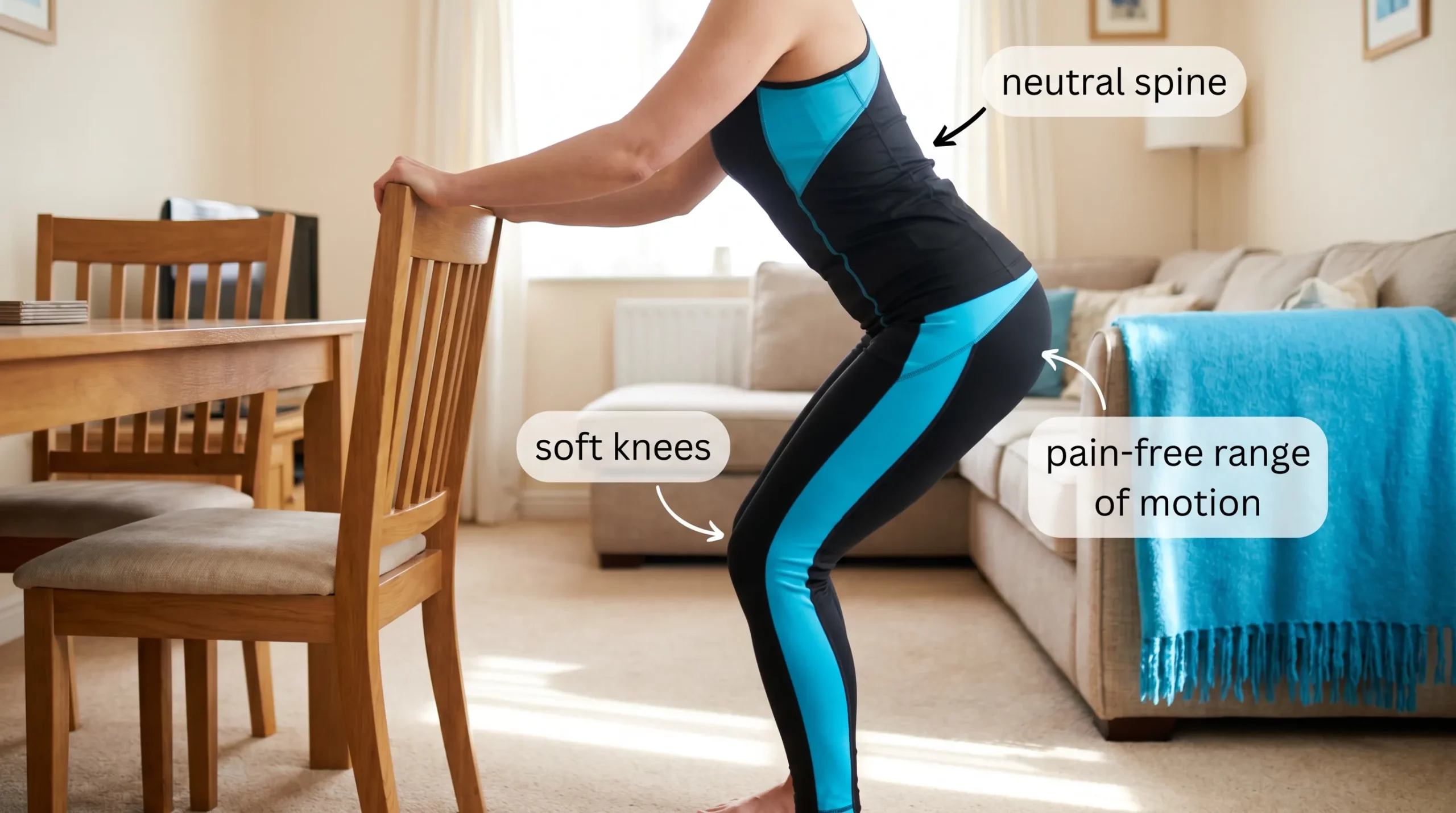
Most mechanical back pain responds better to “relative activity” than bed rest. A few evidence-aligned basics:
- Keep walking if you can (short, frequent walks often help more than one long walk)
- Use heat for muscle spasm (15 to 20 minutes at a time)
- Avoid repeated painful bending and twisting for a few days, but keep changing positions
- If sitting aggravates symptoms, try a small lumbar support and stand up every 20 to 30 minutes
- Consider over-the-counter anti-inflammatories only if they are safe for you (check with a clinician if you have kidney disease, ulcers, are on blood thinners, or are pregnant)
If pain spikes with coughing or sneezing, or if leg symptoms intensify, treat that as a reason to get assessed sooner.
How long should it take to improve?
Many acute episodes improve meaningfully within a couple of weeks, especially with activity modification and a structured plan. If you are not seeing any trend toward improvement, consider that a signal to re-check the diagnosis.
Re-evaluate sooner if:
- Pain is worsening week to week
- You are relying on more medication just to function
- Symptoms are moving further down the leg
- You notice weakness or increasing numbness
In those cases, a chiropractor may coordinate with a physician for additional workup, and you may benefit from integrated options like physical therapy, acupuncture, or pain-management procedures when appropriate.
Frequently Asked Questions
Should I get an MRI before seeing a chiropractor for lower back pain? Many people do not need an MRI right away. Imaging is usually recommended when there are red flags (fever, trauma, cancer history, bladder or bowel changes) or when symptoms persist without improving. A clinician can help decide.
Can a chiropractor help with a herniated disc? Some people with disc-related pain improve with conservative care, including manual therapy and rehab-based exercise. The key is a proper neurologic exam and monitoring for red flags like progressive weakness or bladder or bowel changes.
How do I know if my back pain is “muscle” vs “nerve”? Muscle and joint pain is often localized and changes with movement or position. Nerve-related pain more often travels into the buttock or leg and may include tingling, numbness, or weakness. A clinical exam is the best way to distinguish.
Is it normal to feel sore after an adjustment? Mild soreness for 24 to 48 hours can happen, similar to post-exercise soreness. Severe pain, new neurologic symptoms, or rapidly worsening symptoms are not normal and should be reported promptly.
Can acupuncture help lower back pain too? For many people, acupuncture can be a helpful complement to chiropractic and rehab, especially when muscle tension, stress, or persistent pain is part of the picture.
Ready for a lower back pain evaluation in Manhattan?
If your symptoms look mechanical (and you are not experiencing red flags), a targeted exam can help you understand what is driving your pain and what to do next.
Move Well MD provides integrated care in Manhattan, including chiropractic care, acupuncture, physical rehabilitation, and pain management. To explore your options or book a visit, see Move Well MD.
