An accessible chiropractic office should be usable from the moment you book until you leave the treatment room. A step-free entrance helps, but it does not tell you whether you can transfer onto the treatment table, understand consent information or complete intake forms without assistance.
Before scheduling, describe the specific support you need and ask staff to walk you through the visit. Concrete answers are more useful than a general statement that a practice is “accessible.” This guide focuses on physical access, communication, sensory comfort and the practical barriers that can make repeated appointments difficult.
Check the route from the sidewalk to reception
In Manhattan, access can change at several points: the subway station, curb, building entrance, lobby and elevator. An elevator building may still have steps before the elevator or a heavy entrance door that is difficult to open independently.
If you use public transportation, check the MTA’s accessibility information when planning your route. Station accessibility and elevator availability are separate considerations from the building itself.
Use specific questions to uncover obstacles before traveling:
| Area | What to ask |
|---|---|
| Building entrance | Is there a step-free entrance, and is it available during my appointment time? |
| Doors | Can I open them independently, or is reliable assistance available? |
| Elevator | Will it accommodate my mobility device, and what happens if it is out of service? |
| Interior route | Are hallways and treatment-room entrances clear enough for my device? |
| Restroom | Is there an accessible restroom on the route I can use? |
Ask the chiropractic office for entrance photos or practical measurements if the description remains unclear. Mention your device’s dimensions when relevant, rather than relying on “wheelchair friendly” as a complete answer. Also confirm whether an alternative entrance requires advance notice or a staff member to unlock it.
Look beyond the waiting room to the treatment table
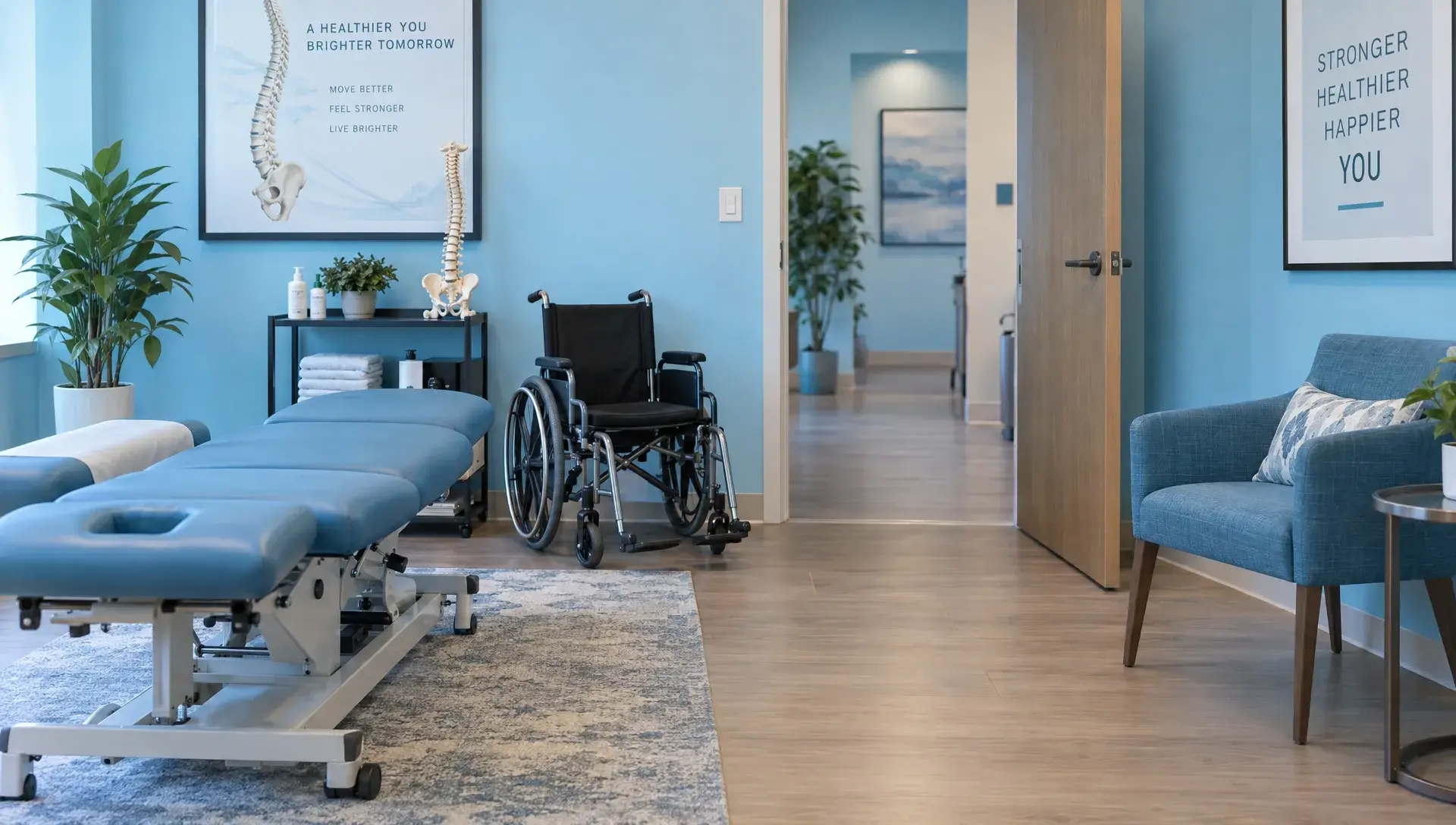
A spacious lobby does not guarantee an accessible examination. The treatment room needs enough room for your mobility device, any support person you choose to bring and the movements required for a safe assessment.
Ask whether the examination or treatment table lowers to a suitable transfer height. If you need transfer assistance, explain what normally works for you and ask about trained staff, available equipment and the practice’s procedures. A promise that “someone can lift you” is not a detailed transfer plan.
The U.S. Department of Justice’s guidance on accessible medical care explains the importance of accessible equipment and assistance for patients with mobility disabilities. It is a useful starting point, not a substitute for checking the actual room and equipment.
A chiropractic office should explain how it would accommodate your examination before asking you to commit to treatment. Some assessment components may be possible while you remain seated, but whether that provides an adequate examination depends on your condition. Accessibility should not mean accepting a less thorough evaluation.
Check the small tasks that affect independence
Clipboards, door handles, coat hooks and storage can create barriers when grip strength or reach is limited. Ask whether staff can help with forms, move belongings within reach or provide a stable chair with arms.
Personal-item handling deserves attention too. Everyday jewelry, including engagement rings and wedding bands, can be difficult to remove when hand movement is limited. Ask whether removal is necessary for the planned assessment and whether secure storage is available. Do not force a tight ring off or assume jewelry must be removed for every visit.
Confirm communication support before discussing treatment
Access includes being able to explain symptoms, ask questions and understand the proposed care. Tell staff your preferred communication method when booking, especially if arranging support takes time.
For a Deaf or hard-of-hearing patient, appropriate support might include a qualified interpreter, assistive listening technology or written communication, depending on the interaction. Written notes that work for scheduling may not be enough for a detailed discussion of risks and alternatives.
Before your visit, ask the chiropractic office how it will make both the examination and informed-consent conversation accessible. The ADA’s effective communication guidance explains that covered businesses must provide appropriate auxiliary aids and services when needed, without charging the person with a disability for them.
Patients with low vision may need accessible electronic documents, large print or information read aloud. Someone with a speech disability may need additional response time or an alternative communication method. Staff should address the patient directly rather than automatically directing questions to a companion.
Describe what works for you. You do not need to rely on staff guessing from a diagnosis or a general accommodation request.
Can the chiropractic office accommodate sensory and booking needs?
Online scheduling can be convenient, but a booking form becomes a barrier if it cannot be used with a keyboard or screen reader. Check whether you can request an appointment through another channel if the website does not work for you.
Ask whether intake paperwork can be completed ahead of time in an accessible format. A scanned document is not necessarily usable with assistive technology, and a touchscreen at reception may not solve the problem.
Sensory needs also deserve specific discussion. Bright lighting, background music, crowded waiting areas or unexpected touch can make a visit difficult. You might request a quieter appointment time, an explanation before each examination step or a pause signal that the clinician will respect.
Confirm what staff can actually arrange. “We will try” is less useful than knowing which changes are available, who will coordinate them and whether the plan will be noted for future visits.
These requests do not determine whether a particular treatment is appropriate. They help create conditions in which you can participate in the assessment and make an informed decision.
Include cost, timing and appointment flexibility
Physical access and effective communication have legal protections. Affordability and scheduling are additional practical considerations, but they are not identical legal obligations.
A chiropractic office may be physically accessible yet difficult to use if appointments require repeated unpaid time off, inaccessible transportation or costs you cannot predict. Ask about the expected length of the first visit, typical waiting time and whether appointments can be scheduled around transportation arrangements.
Before booking, request an explanation of the examination fee, possible additional charges and insurance verification process. Confirm whether the practice participates in your specific plan rather than asking only whether it “takes insurance.” Coverage, deductibles and visit limits can still affect what you owe.
For more detailed financial preparation, these questions to ask before booking affordable chiropractic care can help you clarify the costs without confusing price with quality.
Also ask how cancellation policies apply if accessible transportation fails or a building elevator stops working. Do not assume an exception exists. Understanding the policy ahead of time lets you decide whether the arrangements are workable.
Use a short call script to get specific answers
You do not need to share your full medical history with reception to discuss access. Describe your functional needs and ask who can confirm the arrangements.
For example: “I use a power wheelchair and need a step-free route to the treatment room. I also need a low table and assistance with transfers. Can someone confirm the equipment and transfer procedures before I book?”
Adapt the conversation using these questions:
- “Is the accessible entrance open throughout my appointment time?”
- “Can you confirm the table’s lowest height and the space beside it?”
- “Who will arrange the communication support I need?”
- “Can I complete forms in an accessible format before arriving?”
- “What is the backup plan if the elevator or other necessary equipment is unavailable?”
Ask the chiropractic office to summarize agreed arrangements in writing, using a format you can access. Include the appointment date, entrance instructions and the name or role of your contact person.
Written confirmation is useful for coordination, but it is not proof that every barrier has been addressed. If staff cannot answer a technical question immediately, a clear follow-up from the right person is more reassuring than an unsupported promise.
Evaluate what happens during the first visit
Compare the actual experience with what was agreed. Was the entrance usable? Was the route clear? Did the clinician explain positioning and obtain permission before assisting you?
Access should support choice. You should be able to ask for a pause, decline a technique or discuss an alternative without being pressured to continue. Bringing a companion does not remove the need for staff to communicate directly with you.
Our guide to what patients can expect during a first chiropractic visit explains the usual intake and assessment process. Use it to identify which steps may require accommodations in your case.
Before committing to further appointments, assess whether the chiropractic office delivered the support it confirmed. A minor problem that staff promptly correct is different from an unresolved barrier, unsafe transfer attempt or repeated dismissal of your needs.
If the visit cannot proceed safely, ask to stop and discuss next steps. Accessibility arrangements should make appropriate care possible, not require you to accept avoidable risk.
Frequently asked questions
Does an elevator mean the whole practice is accessible? No. Steps before the elevator, narrow entrances, inaccessible restrooms or an unsuitable treatment table can still create barriers. Check the full route and the examination setup.
Should I bring someone to help me transfer? You may bring a support person if you wish, but discuss transfer needs with the practice beforehand. Do not assume a companion can safely perform a transfer or replace appropriate equipment and staff procedures.
Can a practice charge extra for a required interpreter? Under the ADA, covered providers cannot charge patients for auxiliary aids and services required for effective communication. The appropriate support depends on the communication involved and the individual’s needs.
What if staff cannot confirm an accommodation? Ask who can verify it and when you should expect an answer. If a chiropractic office cannot establish a safe, workable plan for an essential need, consider another provider rather than arriving without arrangements.
Discuss your access needs before booking
Move Well MD offers chiropractic care, acupuncture and physical rehabilitation in Manhattan. If you are considering a visit, contact Move Well MD to discuss your access requirements and confirm what can be arranged. Ask for specific details about the entrance, treatment equipment, communication support and costs before scheduling.
