Searching for “chiropractor near me no insurance” usually means you need two things: relief from pain and a bill you can manage. Paying out of pocket can simplify some billing questions, but a low advertised adjustment price does not necessarily tell you what your first appointment or full course of care will cost.
The most useful comparison is the total cost of a clearly defined treatment plan, including the evaluation, follow-up visits and any separately billed services. Before booking in Manhattan, ask for written pricing, understand your rights as a self-pay patient and avoid committing to more care than you have agreed to.
What Does Chiropractic Care Cost Without Insurance?
There is no single self-pay price that applies to every NYC practice. Fees depend on the appointment type, the clinician and the services provided. An initial appointment may include a health history and examination, while a follow-up may involve a shorter treatment session.
Ask whether the quoted first-visit fee includes treatment or only the evaluation. Also confirm whether rehabilitation, acupuncture, imaging or other services would be billed separately. A clinic offering several treatments does not mean every patient needs all of them.
For more context on how appointment types affect pricing, review this guide to chiropractic costs in NYC, then get a current quote directly from the practice.
Compare the Total, Not Just the Adjustment Price
A “chiropractor near me no insurance” search may highlight promotional prices, but your budget should reflect the care you actually expect to receive.
Use this calculation:
Initial appointment + follow-up fees + agreed additional services = estimated treatment cost.
The following example illustrates the math only. These are hypothetical fees, not NYC market averages or Move Well MD prices.
| Expense | Illustrative fee | Budget calculation |
|---|---|---|
| Initial evaluation with treatment | $150 | One appointment costs $150 |
| Follow-up appointment | $75 | Three follow-ups cost $225 |
| Initial appointment plus three follow-ups | Not a separate package price | Estimated total: $375 |
| Initial appointment plus six follow-ups | Not a separate package price | Estimated total: $600 |
| Additional services | Obtain a separate quote | Add only services you agree to receive |
The difference between those two visit schedules is $225, even though the appointment fees remain unchanged. That is why visit frequency and the timing of reassessment matter as much as the advertised rate.
Travel expenses and time away from work can also affect affordability. A slightly lower visit fee may not save money if reaching the office requires a much longer trip.
Request a Written Self-Pay Estimate
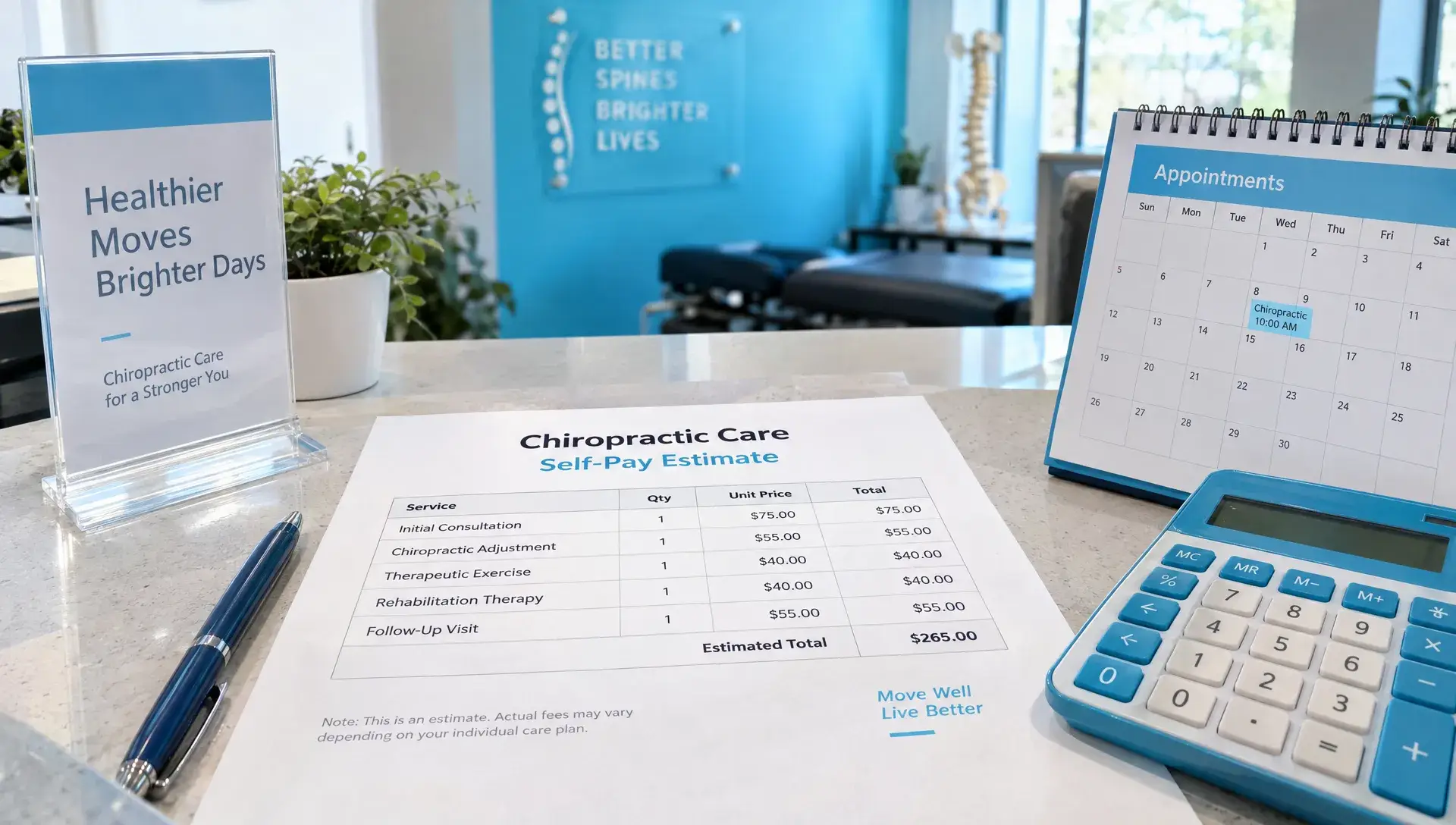
When calling a clinic, explain that you are uninsured or do not intend to use insurance for the visit. Ask for the complete initial appointment price and the expected follow-up charge before scheduling.
Your “chiropractor near me no insurance” search should end with a written estimate, not just a verbal promise that care is affordable.
A practical message is:
I will be paying out of pocket. Please send the estimated cost of my initial appointment, explain what it includes and identify any services that could be charged separately. If follow-up care is recommended, I would also like the visit fee and expected schedule.
The clinician may need to examine you before recommending a treatment plan. That does not prevent the office from explaining its evaluation fee and how additional charges work.
In many situations, uninsured patients and people choosing not to use insurance have a right to a Good Faith Estimate. CMS explains the federal Good Faith Estimate protections, including when providers must supply an estimate after scheduling or upon request. Timing depends on how far in advance care is scheduled, so ask early rather than waiting until check-in.
Know What to Do if the Bill Is Higher
Keep the estimate, appointment confirmation and final bill together. If a charge is unexpected, first ask the billing office for an itemized explanation and compare it with the services you authorized.
Under the federal patient-provider dispute process, you may qualify to dispute a bill from a provider that is at least $400 higher than that provider’s Good Faith Estimate. CMS generally requires starting the process within 120 calendar days of the date on the initial bill.
Eligibility and deadlines matter, so consult the CMS guidance rather than assuming every billing disagreement qualifies. A written estimate is useful even when a dispute does not meet the federal threshold because it gives both you and the office a clear record of the expected charges.
Ways to Save Without Sacrificing Appropriate Care
Start With a Defined Trial and Reassessment
Ask the clinician what an initial trial of care would involve and when progress will be reviewed. The schedule should reflect your symptoms, examination findings and response to treatment, not simply a standard package offered to everyone.
After searching for “chiropractor near me no insurance,” it is reasonable to tell the office your budget before agreeing to follow-up appointments. A useful discussion covers both clinical needs and what you can realistically afford.
Set a practical goal, such as walking more comfortably, sitting through a workday or returning to a particular activity. At reassessment, discuss whether pain and function are improving and whether the plan should continue, change or stop.
Ask for suitable home exercises or activity guidance as well. These can support recovery between visits, although they should be tailored to your condition rather than copied from a generic routine.
Be Careful With Prepaid Packages
A package may reduce the per-visit price, but it does not automatically reduce your total spending. Paying for appointments you do not use can erase the apparent savings.
Before prepaying, obtain the refund policy in writing. Clarify expiration dates, cancellation rules and how unused visits are valued if you stop treatment. Also ask whether the package includes all recommended services or only adjustments.
Compare the package total with paying individually for the visits currently recommended. Avoid making a large commitment before you understand the diagnosis, treatment options and reassessment plan.
A discount should not require you to accept an unclear clinical plan. You can ask for time to review the terms before deciding.
Separate Necessary Care From Optional Add-Ons
If imaging or another service is proposed, ask what clinical question it would answer and how the results could change treatment. Imaging should be based on clinical need rather than assumed to be part of every chiropractic visit.
The same approach applies to acupuncture, rehabilitation and other therapies. These may be appropriate for some patients, but each service should have a stated purpose and a disclosed price.
Ask whether services happen during the same appointment, whether different clinicians bill separately and whether an outside facility would send its own bill. Finding those details in advance is easier than sorting them out after treatment.
Ask About Payment Options Without Assuming Discounts
Some practices may offer self-pay rates, payment arrangements or limited promotions. Availability varies, so ask directly rather than assuming a clinic has a particular program.
Clarify the full amount owed, payment dates and any interest or administrative fees. A lower monthly payment is not necessarily a lower total cost. If financing is offered, review its terms separately from the treatment recommendation.
Someone using “chiropractor near me no insurance” may still have funds in an existing Health Savings Account. Chiropractic care is generally an eligible medical expense for HSA or health FSA purposes, subject to applicable rules. Existing HSA funds may remain usable even when you are no longer eligible to make new contributions.
Check your account requirements and keep receipts. These accounts can provide a tax advantage, but they do not reduce the clinic’s stated fee.
How to Choose a Chiropractor Without Insurance
Price matters, but it should not be your only screening criterion. Verify the clinician’s New York license and ask whether the practice regularly evaluates the type of problem you have.
Before booking, get clear answers to these questions:
- What does the initial appointment include, and what is its complete self-pay price?
- Who will evaluate and treat me?
- Which services could create additional charges?
- When will we reassess whether treatment is helping?
- What are the cancellation and refund policies?
This guide to questions to ask before booking an affordable chiropractor can help you evaluate more than the advertised fee.
When comparing “chiropractor near me no insurance” results, verify information from search listings and AI answers directly with the office. Platforms such as CapstonAI’s AI search visibility platform help businesses understand how they appear in AI-generated recommendations. That visibility is not proof of a clinician’s qualifications, current prices or suitability for your condition.
A direct conversation and written estimate provide stronger evidence for your decision than a recommendation that does not explain where its pricing came from.
When Medical Evaluation Should Come First
Chiropractic treatment can help some people with musculoskeletal pain, but it is not appropriate for every symptom or diagnosis. The National Center for Complementary and Integrative Health’s overview of spinal manipulation describes potential benefits, limitations and safety considerations.
Seek emergency medical care for new loss of bladder or bowel control, numbness around the groin or rapidly worsening weakness. Severe pain after significant trauma or back pain accompanied by fever also warrants prompt medical assessment rather than routine chiropractic booking.
Tell the clinician about osteoporosis, previous surgery, medications and any neurological symptoms before treatment. You should receive an explanation of the proposed approach, its risks and reasonable alternatives.
Cost concerns are legitimate, but delaying evaluation of a potentially serious problem is not a safe savings strategy.
Frequently Asked Questions
Can I see a chiropractor if I have no health insurance? Many practices accept self-pay patients. Confirm this with the office and ask for the initial appointment price, follow-up fees and possible additional charges before booking.
Will the price shown in search results be my final bill? Not necessarily. A “chiropractor near me no insurance” result may show an adjustment-only fee or a limited promotion. Ask whether the price includes the examination and any treatment provided at the first visit.
Are X-rays required before chiropractic treatment? Not for every patient. The decision should depend on your history, examination and clinical findings. Ask why imaging is recommended, how it would affect care and what it would cost.
Is a prepaid package the cheapest option? Only if the included care is appropriate, you use the visits and the terms make financial sense. Compare the total with individual appointments and review the refund policy before paying.
Can a clinic give me an exact total before examining me? It can usually explain its appointment fees, but the full treatment cost may depend on the evaluation. Ask for an initial estimate and an updated estimate if the recommended services change.
Discuss Your Self-Pay Options With Move Well MD
Move Well MD provides chiropractic care, acupuncture, physical rehabilitation and pain management in Manhattan. Which services are appropriate depends on your individual evaluation.
Before scheduling, contact Move Well MD to ask about current self-pay pricing, what the first appointment includes and how recommended follow-up care would be estimated. Bring your budget questions to that conversation so you can make an informed decision without assuming a particular discount, package or treatment schedule.
