If you are searching for electroacupuncture in NYC, you are probably looking for more than a relaxing treatment. Many patients consider it because they are dealing with back pain, neck stiffness, sciatica, headaches, joint pain or sports-related soreness that keeps returning despite stretching, rest or medication.
Electroacupuncture is a modern variation of acupuncture that adds gentle electrical stimulation to selected needles. The goal is not to “zap” pain away. It is to stimulate nerves, muscles and connective tissue in a controlled way so the body can shift out of a pain pattern, reduce tension and support better movement.
Like any treatment, it is not right for everyone. The value depends on the diagnosis, the clinician’s training and whether it is part of a thoughtful care plan rather than a one-size-fits-all session. Here is what NYC patients should know before booking.
What is electroacupuncture?
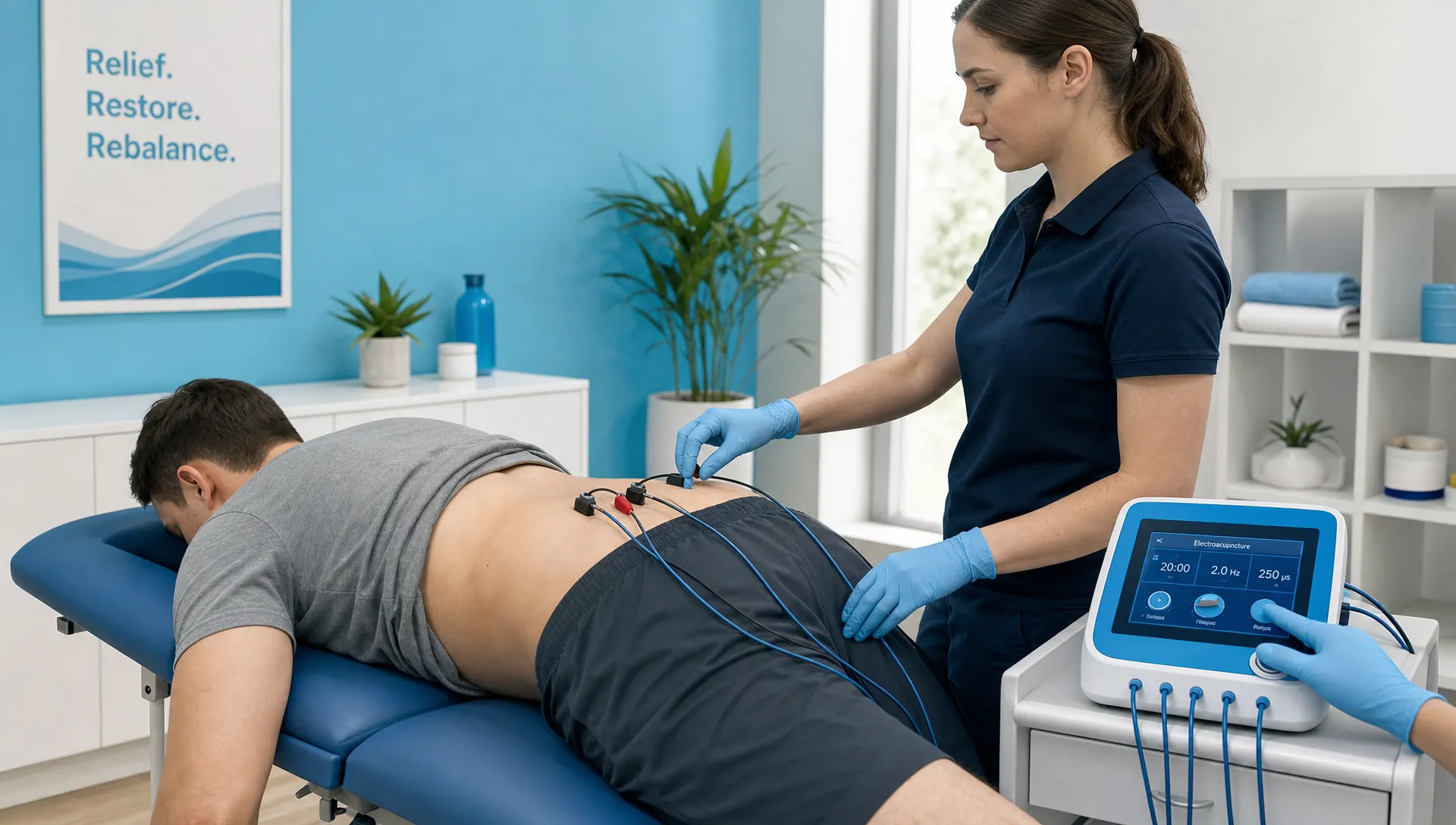
Electroacupuncture starts like traditional acupuncture. A trained clinician places thin, sterile needles at specific points based on your symptoms, exam findings and treatment goals. Then small clips are attached to some of the needles and connected to a device that delivers mild electrical pulses.
Most people describe the sensation as tapping, buzzing, pulsing or a gentle muscle twitch. The intensity should be adjustable, and it should never feel sharp, burning or overwhelming. If it does, the clinician should reduce the intensity or change the setup.
The electrical stimulation can be continuous or intermittent. It may be applied to points around a painful area, along a muscle group or in a pattern chosen to influence nerve pathways. Sessions often last 10 to 30 minutes once the needles are placed, although the total visit may be longer because a proper evaluation comes first.
Electroacupuncture is different from TENS, which uses sticky pads on the skin. With electroacupuncture, the stimulation travels through acupuncture needles, which allows more targeted input into deeper tissue. That does not automatically make it better for every condition, but it can be useful when the treatment goal includes muscle relaxation, nerve modulation or pain control.
How electroacupuncture may help pain and movement
Pain is rarely just a local tissue problem. It can involve irritated joints, sensitized nerves, muscle guarding, inflammation, stress and changes in how the brain processes signals from the body. Electroacupuncture may help by influencing several of those systems at once.
Research on acupuncture is broader than research on electroacupuncture alone, so it is worth keeping claims realistic. The National Center for Complementary and Integrative Health notes that acupuncture has been studied for several pain conditions, including back and neck pain, osteoarthritis, knee pain and headaches. A patient-level meta-analysis published in The Journal of Pain found that acupuncture was more effective than sham acupuncture and no-acupuncture controls for several chronic pain conditions, with benefits that persisted over time in many patients.
Electroacupuncture may support pain relief through a few plausible mechanisms. Electrical stimulation can activate sensory nerves, which may reduce pain signaling through the spinal cord and brain. It may also influence the release of endorphins and other neurotransmitters involved in pain control. Locally, it can encourage muscle relaxation and improve circulation in tight or irritated tissue.
That does not mean it cures structural problems. A herniated disc, advanced arthritis, ligament tear or nerve compression may need additional evaluation and a broader plan. Electroacupuncture is best understood as a tool that may reduce symptoms and improve function, especially when paired with movement, rehabilitation and appropriate medical care.
Common uses for electroacupuncture in NYC clinics
In a busy city, many patients come in with a familiar mix of desk posture, commuting strain, workouts, old injuries and stress. Electroacupuncture is most often used as part of conservative care for pain and muscle-related complaints.
| Concern | How electroacupuncture may be used | What to keep in mind |
|---|---|---|
| Low back pain | To calm muscle guarding, reduce pain sensitivity and support mobility | Severe weakness, numbness or bowel and bladder changes need urgent medical evaluation |
| Neck and shoulder tension | To address tight muscles, trigger points and restricted movement | Ergonomics, posture and strengthening often matter just as much |
| Sciatica-like symptoms | To reduce pain signaling and muscle tension around the hip, low back and leg | True nerve compression may require imaging or specialist care |
| Knee pain | To support pain control in osteoarthritis or overuse patterns | Treatment works best with strength, mobility and load management |
| Sports soreness | To help irritated muscles settle and improve recovery between training sessions | It should not be used to mask an injury that needs rest or diagnosis |
| Headaches and migraines | To reduce tension patterns and support nervous system regulation | Migraine care may also require medical management and trigger planning |
The strongest practical use case is usually pain that has a neuromuscular component, meaning the nervous system and muscles are contributing to the symptoms. If your pain changes with posture, stress, activity, sleep or muscle tension, a clinician may consider electroacupuncture as one part of your plan.
If you are new to acupuncture altogether, it can help to start with the basics before deciding on electrical stimulation. Move Well MD’s guide to common first-time acupuncture questions in New York explains what patients often want to know about the first visit, comfort and safety.
What to expect during a session
A good electroacupuncture visit should not begin with needles. It should begin with a conversation and evaluation. Your clinician should ask about the location of your pain, when it started, what makes it better or worse, your medical history, medications, prior injuries and any symptoms that could point to a more serious issue.
For musculoskeletal pain, the exam may include posture, range of motion, orthopedic tests, palpation of muscles and joints or a neurologic screen if you have radiating symptoms. This step matters because the same symptom can have different causes. “Shoulder pain” could come from the rotator cuff, neck, joint capsule, nerve irritation or muscle referral.
Once electroacupuncture is chosen, you will usually lie comfortably on a treatment table. The clinician inserts thin needles, attaches clips to selected points and gradually increases the electrical stimulation until you feel a tolerable pulsing sensation. You should be able to relax and breathe normally during the treatment.
After the session, mild soreness, heaviness or fatigue can happen, especially if tight muscles were stimulated. Many patients feel looser right away, but lasting progress usually depends on repeated care, better movement habits and addressing the underlying driver of pain.
Is electroacupuncture safe?
Electroacupuncture is generally considered safe when performed by a properly trained clinician using sterile, single-use needles and appropriate screening. According to NCCIH, relatively few complications from acupuncture have been reported when it is delivered by experienced, well-trained practitioners.
Still, “natural” does not mean risk-free. Common minor side effects can include temporary soreness, pinpoint bleeding, bruising, lightheadedness or fatigue. Rare but more serious risks include infection, nerve irritation or injury if needling is performed improperly. Electrical stimulation adds another layer of screening because it may not be suitable for certain medical devices or health conditions.
In New York, patients can verify professional licensure through the New York State Office of the Professions. A qualified provider should also be willing to explain their training, hygiene practices and why electroacupuncture is appropriate for your condition.
| Tell your clinician if you have… | Why it matters |
|---|---|
| Pacemaker, implanted defibrillator or neurostimulator | Electrical stimulation may interfere with implanted electrical devices |
| Pregnancy | Certain points and stimulation patterns may be avoided, depending on the case |
| Seizure disorder | Electrical stimulation may require extra caution or medical clearance |
| Bleeding disorder or blood thinner use | Needling can increase bruising or bleeding risk |
| Active infection, open wounds or skin irritation | Needles should not be placed through compromised skin |
| Reduced sensation or neuropathy | You may not accurately feel whether the stimulation is too strong |
| Cancer history or complex medical condition | Treatment should be coordinated with your medical team when needed |
If you have a pacemaker or implanted defibrillator, do not assume electroacupuncture is safe without explicit clearance. Many clinicians will avoid electrical stimulation in that situation and may choose manual acupuncture or another treatment instead.
How to choose an electroacupuncture provider in NYC
The provider matters as much as the technique. In a city with many acupuncture options, look beyond convenience and ask whether the clinic evaluates your condition carefully, follows clean needle practices and communicates clearly about treatment goals.
A strong clinic should be able to answer these questions without being defensive:
- Are you licensed in New York to perform acupuncture?
- Do you use sterile, single-use needles?
- Why are you recommending electroacupuncture instead of manual acupuncture?
- How will we measure progress?
- How many visits should we try before reassessing?
- What symptoms mean I should stop treatment or seek medical care?
It is also a good sign when a provider tells you what electroacupuncture cannot do. Be cautious with anyone who promises a cure, discourages appropriate medical evaluation or recommends a long treatment plan before understanding your diagnosis.
For location-specific guidance, Move Well MD’s article on how to choose acupuncture in Manhattan covers licensure, safety, evaluation and treatment planning in more detail.
When electroacupuncture works best as part of a broader plan
Electroacupuncture can be helpful, but it rarely solves every factor behind pain by itself. If your lower back pain is driven by prolonged sitting, weak hip stabilizers and poor lifting mechanics, symptom relief is only one part of the solution. If your neck pain is tied to workstation position and stress-related jaw tension, treatment should address those patterns too.
That is why many patients benefit from an integrated approach. Depending on the condition, care may include chiropractic evaluation, physical rehabilitation, mobility work, strengthening, soft tissue therapy, medical pain management or sports medicine guidance.
The American College of Physicians guideline for low back pain recommends non-drug options such as exercise, spinal manipulation and acupuncture for many patients before medication is considered. That does not mean every person needs all of those treatments. It means conservative care can be useful when it is selected thoughtfully.
If you are comparing treatment options for spine-related pain, Move Well MD’s guide to chiropractic adjustment in NYC explains how chiropractic care may fit into a pain relief and mobility plan.
How many sessions do you need?
There is no universal number. Acute muscle tightness after a workout may respond faster than long-standing nerve pain or arthritis. A reasonable care plan should include a trial period and a reassessment point rather than an open-ended schedule.
Many clinicians look for early signs of progress within the first few visits. Progress may mean less pain, better sleep, improved range of motion, fewer flare-ups, reduced medication use or the ability to return to normal activities. If nothing changes after a fair trial, your provider should reconsider the diagnosis, modify the plan or refer you for additional evaluation.
It is also worth asking about cost before you begin. Pricing and insurance coverage vary widely in NYC depending on the clinic, provider credentials, appointment length and whether the visit includes other services. Ask whether the clinic accepts your insurance, provides superbills, offers transparent self-pay pricing or recommends a specific visit frequency.
When to seek medical care before acupuncture
Some symptoms should not be treated with electroacupuncture as a first step. Get medical evaluation promptly if you have sudden severe pain after trauma, fever with back pain, unexplained weight loss, history of cancer with new severe pain, progressive weakness, loss of bowel or bladder control or numbness in the saddle area.
For headaches, seek urgent care if you have the worst headache of your life, a sudden thunderclap headache, new neurologic symptoms, confusion, fainting, fever with stiff neck or a new headache after head injury.
A responsible acupuncture or pain care provider should recognize red flags and refer you when needed. Safe care includes knowing when not to treat.
Frequently Asked Questions
Is electroacupuncture painful? It should not be painful. You may feel pulsing, tapping, warmth or mild muscle twitching. Tell your clinician right away if the sensation feels sharp, burning or too intense.
Is electroacupuncture better than regular acupuncture? Not always. Electroacupuncture may be useful for certain pain patterns, muscle guarding or nerve-related symptoms, but manual acupuncture may be more appropriate for sensitive patients or some wellness goals.
Can electroacupuncture help sciatica? It may help reduce pain sensitivity and muscle tension related to sciatica-like symptoms. If you have progressive weakness, severe numbness or bowel and bladder changes, you need medical evaluation urgently.
Can I get electroacupuncture if I have a pacemaker? You should avoid electroacupuncture unless your physician and treating clinician specifically clear it. Electrical stimulation may interfere with implanted devices, so manual acupuncture or another option may be safer.
How soon will I feel results? Some people feel looser or less painful after one session, while chronic conditions usually take longer. Your clinician should set a reassessment point so you can judge whether the plan is working.
Does insurance cover electroacupuncture in NYC? Coverage varies by plan, diagnosis and provider. Ask the clinic to explain costs before treatment and check with your insurer about acupuncture benefits, visit limits and out-of-network reimbursement.
Considering acupuncture-based care in Manhattan?
Electroacupuncture can be a useful option for pain relief when it is chosen for the right reason, performed by a qualified clinician and integrated into a broader plan for movement and recovery.
Move Well MD is a Manhattan-based clinic offering personalized chiropractic care, acupuncture treatments, pain management, physical rehabilitation and sports medicine services. If you are dealing with back pain, neck pain, joint pain, headaches, sciatica or a stubborn sports injury, the team can help evaluate your symptoms and discuss which conservative treatment options make sense for you.
Visit Move Well MD to learn more or schedule an appointment.
