People often ask whether they should choose alternative medicine or chiropractic care. For many pain concerns, the better question is not “either or,” but “how can the right therapies work together safely?”
When coordinated well, chiropractic care can complement other non-surgical approaches such as acupuncture, rehabilitation, massage therapy, and medical pain management. The key is that each therapy should have a clear purpose, a qualified provider, and a plan that changes based on how your body responds.
That is especially important for people dealing with back pain, neck pain, joint stiffness, migraines, sciatica symptoms, sports injuries, or recurring muscle tension. Pain is rarely caused by one factor alone. Joints, muscles, nerves, posture, stress, sleep, and activity habits can all contribute. A combined approach may address more of the problem than a single treatment can.
What “alternative medicine and chiropractic” really means
The phrase “alternative medicine” is used often, but it can be misleading. The National Center for Complementary and Integrative Health defines complementary care as a non-mainstream approach used together with conventional medicine. Alternative care means using a non-mainstream approach in place of conventional medicine. Integrative care combines conventional and complementary approaches in a coordinated way.
In practical terms, chiropractic is often best understood as part of complementary or integrative care, not as a replacement for every type of medical treatment. Chiropractors focus on the musculoskeletal system, especially how the spine, joints, muscles, and nervous system affect movement and pain. That makes chiropractic care highly relevant for many mechanical pain problems, but it does not mean every symptom should be treated with an adjustment.
This distinction matters. A good integrated plan does not reject conventional medicine. It uses the right tool at the right time. For example, a person with routine mechanical low back pain may benefit from spinal manipulation, exercise, and acupuncture. A person with progressive leg weakness, fever, unexplained weight loss, or loss of bladder control needs prompt medical evaluation.
If you want a deeper look at where chiropractic fits in the healthcare system, Move Well MD has a helpful guide on whether chiropractic is complementary medicine or primary care.
Why these approaches can work better together
Pain is both structural and physiological. A stiff joint may change how you move. Tight muscles may guard around that joint. Nerve irritation may amplify sensitivity. Stress and poor sleep may lower your pain threshold. A single treatment can help, but it may not address every layer.
That is where integrated care can make sense. Chiropractic adjustments or mobilization may help improve joint motion and reduce mechanical restriction. Acupuncture may help calm pain signaling and muscle tension for some patients. Physical therapy and rehabilitation can build strength, coordination, and confidence. Massage or soft-tissue therapy can reduce guarding that limits movement. Medical pain management may be appropriate when pain is severe, persistent, or limiting function.
This is not just a wellness trend. The American College of Physicians guideline for low back pain recommends starting with non-drug treatments for many cases of acute, subacute, and chronic low back pain. Depending on the situation, those options can include spinal manipulation, acupuncture, exercise, massage, heat, mindfulness-based approaches, and other conservative therapies.
| Pain care goal | Chiropractic may help with | Complementary therapy may add | Why the combination can help |
|---|---|---|---|
| Improve mobility | Joint motion, spinal mechanics, movement restrictions | Stretching, rehab, soft-tissue work | Helps the body move better and maintain gains |
| Reduce pain sensitivity | Mechanical contributors to pain | Acupuncture, relaxation strategies, gentle exercise | Addresses both local pain and nervous system sensitivity |
| Return to activity | Functional movement and load tolerance | Physical therapy, sports medicine, strengthening | Builds capacity instead of only treating symptoms |
| Manage recurring flare-ups | Identification of movement patterns and triggers | Lifestyle support, ergonomic coaching, recovery planning | Reduces repeated irritation over time |
The best results usually come from matching the plan to the person, not adding every treatment at once. More care is not automatically better care. The goal is coordinated care.
Common combinations in integrative pain relief
Chiropractic plus acupuncture
Chiropractic and acupuncture approach pain from different angles. Chiropractic care often focuses on joint mechanics, spinal movement, and neuromuscular function. Acupuncture uses thin needles at specific points to influence pain, muscle tension, and nervous system activity. The NCCIH overview of acupuncture notes that acupuncture has been studied for several pain conditions, including low back pain, neck pain, osteoarthritis pain, and headaches.
This pairing may be useful when pain includes both stiffness and sensitivity. For example, someone with neck pain may have limited cervical mobility, trigger points in the upper back, and stress-related muscle guarding. Chiropractic care may focus on restoring movement, while acupuncture may help reduce the protective tension that keeps the area irritated.
Chiropractic plus physical rehabilitation
Adjustments can help create a window of improved motion, but the body needs to learn how to use that motion. That is where rehabilitation matters. Strengthening, mobility drills, balance work, and corrective movement can help make improvements last.
This combination is often important for sports injuries, chronic low back pain, shoulder pain, knee pain, and recurring flare-ups. If the same pain returns every few weeks, the issue may not be only joint restriction. It may involve weakness, poor load tolerance, limited endurance, or movement habits that need retraining.
Chiropractic plus massage or soft-tissue therapy
Soft tissue and joints often influence each other. A restricted joint can make nearby muscles work harder. Tight muscles can limit joint motion and make adjustments less comfortable. In those cases, massage therapy or soft-tissue work may support the chiropractic plan.
The order can vary. Some patients do better with soft-tissue therapy before an adjustment because it helps reduce guarding. Others need a chiropractic evaluation first to identify what should and should not be treated. For more detail, see Move Well MD’s article on when massage therapy and chiropractic work best together.
Chiropractic plus medical pain management
Some pain conditions need more than hands-on care. If pain is severe, persistent, or interfering with sleep and daily function, medical pain management may be part of the plan. Depending on the diagnosis and clinician’s judgment, this can include medication guidance, trigger point treatment, injections, or referral for imaging and specialist care.
The benefit of an integrated setting is not that every patient receives every service. It is that the care team can consider multiple options and choose what fits the diagnosis, safety profile, and goals.
When integration is most useful
Alternative medicine and chiropractic care tend to work best together when the problem has multiple contributing factors. That does not mean the pain is “all in your head.” It means the body is interconnected.
A person with sciatica-like symptoms may have irritated nerve tissue, limited hip mobility, tight muscles, and poor sitting tolerance. A runner with knee pain may have ankle stiffness, hip weakness, training errors, and local joint irritation. A desk worker with headaches may have neck stiffness, jaw tension, eye strain, and stress-related muscle guarding.
| Situation | Why a combined plan may help | What should be checked first |
|---|---|---|
| Low back pain with stiffness | Adjustments, acupuncture, and exercise may address mobility, pain sensitivity, and strength | Nerve symptoms, trauma history, serious red flags |
| Neck pain with headaches | Joint motion, muscle tension, and posture habits may all contribute | Sudden severe headache, neurological symptoms, vascular risk factors |
| Sciatica symptoms | Conservative care may support mobility and function when appropriate | Progressive weakness, numbness, bowel or bladder changes |
| Sports injuries | Rehab and chiropractic may help restore mechanics and load tolerance | Fracture risk, swelling, instability, inability to bear weight |
| Shoulder or knee pain | Joint mechanics, soft tissue, and strengthening often overlap | Acute injury, major loss of motion, significant swelling |
The common thread is assessment. Integrated care should begin with understanding what is causing the pain, what makes it better or worse, and whether the condition is appropriate for conservative treatment.
Safety comes first, especially with “alternative” care
The word “natural” does not automatically mean risk-free. Chiropractic care, acupuncture, massage therapy, exercise, and injections all have situations where they may be helpful and situations where they may not be appropriate.
Before combining therapies, your provider should review your health history, medications, previous injuries, surgeries, imaging if relevant, and current symptoms. This is especially important if you are pregnant, taking blood thinners, have osteoporosis, have a history of cancer, have an immune system condition, or have unexplained neurological symptoms.
Seek urgent medical evaluation if you have severe trauma, new or worsening weakness, numbness in the groin or saddle area, loss of bowel or bladder control, fever with spinal pain, chest pain, sudden severe headache, unexplained weight loss, or pain that is rapidly worsening without a clear cause.
A responsible chiropractic or integrative provider will not treat every symptom as a spine problem. They will screen for warning signs, explain the risks and benefits, modify techniques when needed, and refer out when another type of care is more appropriate.
How to choose the right combination of care
The right plan depends on your diagnosis, goals, comfort level, and response to treatment. Some people need gentle mobilization and rehab. Others may respond well to a chiropractic adjustment combined with acupuncture. Some need more medical oversight before hands-on treatment begins.
A strong integrative plan should include a few core elements:
- A clear working diagnosis or explanation of the likely pain source
- Measurable goals, such as walking farther, sleeping better, lifting safely, or reducing flare-ups
- A treatment plan that explains why each therapy is included
- Reassessment if symptoms do not improve within a reasonable timeframe
- Referral for imaging, medical evaluation, or specialist care when warning signs appear
You should also feel comfortable asking why a treatment is recommended. “Because we always do it this way” is not a strong answer. The plan should be individualized.
If you are deciding between adjustment styles, mobilization, rehab-focused visits, and other options, Move Well MD’s guide to choosing a chiropractic method based on your pain and mobility goals can help you think through the decision.
Better together does not mean everything at once
One common mistake in alternative medicine is stacking therapies without a strategy. A patient may try chiropractic, acupuncture, supplements, massage, stretching, heat, ice, and new exercises all in the same week. If they improve, it is hard to know what helped. If they flare up, it is hard to know what caused it.
A better approach is targeted and progressive. Start with the most relevant therapies for your presentation. Track your response. Adjust based on outcomes. The plan should become simpler over time, not more complicated.
Useful progress markers include pain intensity, range of motion, sleep quality, medication use, walking or exercise tolerance, work comfort, and confidence with daily activities. If the only thing being tracked is whether you “feel looser” after each session, the plan may not be specific enough.
What integrated care can look like at Move Well MD
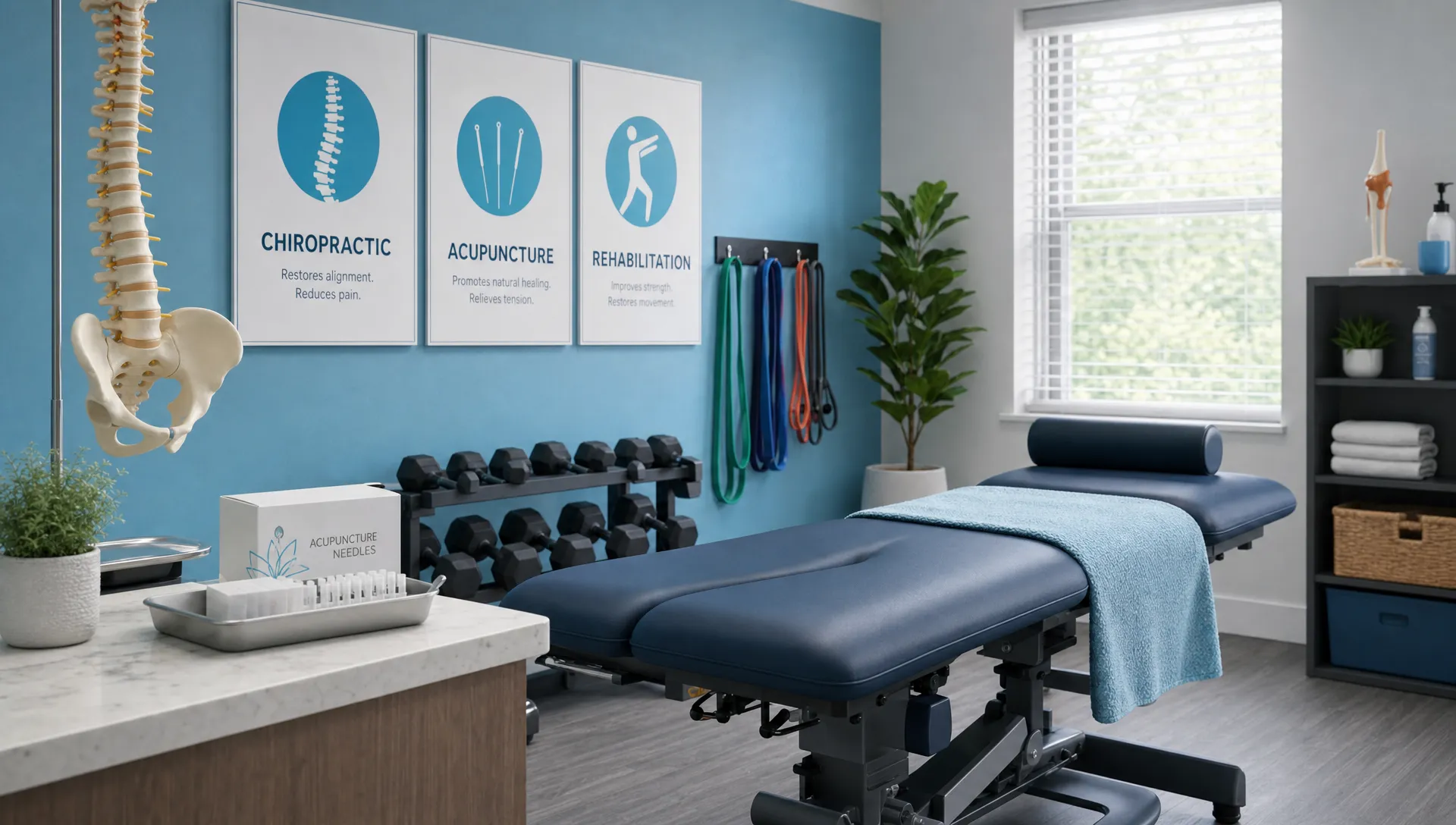
Move Well MD is a Manhattan-based clinic that combines chiropractic care, acupuncture, pain management, physical therapy, sports medicine services, and rehabilitation options for people dealing with pain and movement limitations. The goal is not to force every patient into the same treatment path. It is to identify what is driving the pain and build a plan that supports better movement and function.
For one person, that may mean chiropractic care and rehab exercises. For another, it may mean acupuncture for pain sensitivity combined with movement retraining. For someone with persistent muscle pain, medical pain management or trigger point treatment may be considered when appropriate.
That coordinated model is where alternative medicine and chiropractic can be better together. Not because one approach is magic, but because pain relief often requires more than one lens.
Frequently Asked Questions
Is chiropractic considered alternative medicine? Chiropractic is often grouped under complementary or integrative health, especially when used alongside conventional medical care. It is better described as an evidence-informed musculoskeletal approach than as a replacement for all medical treatment.
Can chiropractic and acupuncture be done on the same day? Often, yes, but it depends on your condition, sensitivity, treatment goals, and medical history. Some patients benefit from combining them, while others do better when therapies are spaced out.
What conditions may benefit from combining chiropractic with other therapies? Musculoskeletal problems such as low back pain, neck pain, headaches, sciatica-like symptoms, shoulder pain, knee pain, and sports-related pain may benefit from an integrated plan when properly evaluated.
When should I avoid alternative medicine or chiropractic care? You should avoid delaying medical evaluation for serious symptoms such as new weakness, loss of bowel or bladder control, severe trauma, fever with spinal pain, sudden severe headache, chest pain, or unexplained weight loss.
How do I know if an integrated plan is working? You should see measurable changes in function, not just temporary relief. Better sleep, improved mobility, fewer flare-ups, reduced pain intensity, and greater confidence with activity are all useful signs.
Ready for a coordinated approach to pain relief?
If you are looking for care that combines chiropractic, acupuncture, rehabilitation, and pain management in one Manhattan setting, Move Well MD can help you explore a personalized plan. The right combination of therapies can help you move more comfortably, recover with confidence, and get back to the activities that matter most.
