Pain rarely comes from only one structure. A stiff joint can make nearby muscles tighten, and irritated muscles can limit how well a joint moves. That is why massage therapy and chiropractic care often make the most sense when they are planned together, rather than treated as separate, unrelated appointments.
Many New Yorkers search for massage therapy chiropractor near me because they want relief that addresses both tight soft tissue and restricted movement. The key is knowing when the combination is useful, when one approach should come first, and when symptoms need a medical evaluation before any hands-on care.
Why massage therapy and chiropractic can complement each other
Massage therapy generally focuses on soft tissue, including muscles, fascia, tendons, and areas of tension or guarding. It may help reduce muscle tightness, improve comfort, and make movement feel easier.
Chiropractic care focuses on the relationship between joints, the spine, the nervous system, and movement mechanics. Depending on the patient, a chiropractor may use spinal or extremity adjustments, mobilization, rehabilitation exercises, posture education, and broader pain management strategies.
The overlap matters because the body does not separate pain into neat categories. A person with neck pain may have restricted upper-back movement, tight shoulder muscles, irritated trigger points, and habits from desk work that keep the pattern returning. Combining care can help address more of the pattern.
Clinical guidelines also support a non-drug-first approach for many common musculoskeletal problems. The American College of Physicians recommends options such as spinal manipulation, massage, exercise, and acupuncture for certain types of low back pain, depending on whether pain is acute, subacute, or chronic. You can review the guideline in the Annals of Internal Medicine.
When the combination works best
Massage therapy and chiropractic tend to work best together when pain has both a soft-tissue component and a joint-mobility component. In everyday terms, that means you feel tight, stiff, and limited, not just sore.
1. Muscle guarding is protecting a stiff joint
When an area hurts, muscles often tighten as a protective response. This is called guarding. It can be helpful immediately after an injury, but if it persists, it may keep the area stiff and sensitive.
Massage may help calm the guarding response, while chiropractic care may help restore more comfortable joint motion. Together, they can make it easier to move without the body bracing against every motion.
For example, a person with low back stiffness may feel that the muscles on one side are always locked up. Massage alone may loosen the area temporarily, but the tension returns if the spine, hips, or pelvis are not moving well. Chiropractic alone may help mobility, but the adjustment may feel less comfortable if the surrounding muscles are highly reactive. A combined plan can address both sides of the problem.
2. Neck and upper-back tension keeps coming back
Desk work, long commutes, phone use, and stress can create a familiar pattern: tight traps, sore neck, headaches, and stiffness between the shoulder blades. Massage therapy may reduce soft-tissue tension, while chiropractic care can evaluate whether the cervical spine, thoracic spine, ribs, or shoulders are contributing to the recurring strain.
This is especially relevant in Manhattan, where many people spend hours at a computer and then move quickly through crowded streets and transit. The issue is not always one dramatic injury. Often, it is repeated low-grade stress that accumulates over time.
A good plan should also include home strategies. Hands-on care can help symptoms, but lasting improvement often requires movement breaks, ergonomic changes, strengthening, and mobility work.
3. You have pain plus reduced range of motion
If pain is paired with a clear movement limitation, combining massage and chiropractic may be useful. Examples include difficulty turning your head, reaching overhead, bending forward, rotating through the mid-back, or moving a hip comfortably.
Massage can help reduce local tightness that limits motion. Chiropractic assessment can help determine whether joint restriction, movement compensation, or nerve irritation is part of the picture.
The goal is not simply to feel looser for a few hours. The goal is to regain useful movement, then reinforce it with better mechanics and exercises.
4. Sports, training, or repetitive work keeps irritating the same area
Runners, lifters, cyclists, dancers, and recreational athletes often develop patterns where one area repeatedly absorbs more stress than it should. The same is true for people who perform repetitive work with their hands, shoulders, back, or hips.
Massage therapy may help with overworked muscles, while chiropractic care can look at the movement chain. For example, recurring knee discomfort may involve the foot, hip, pelvis, or training load. Shoulder pain may involve the neck, ribs, upper back, rotator cuff, or scapular control.
In these cases, the best results usually come from combining symptom relief with a plan to change the movement pattern that keeps feeding the symptoms.
How to tell whether you need both
Not every ache requires both massage therapy and chiropractic care. The combination is most useful when the problem is layered. Use the table below as a practical starting point.
| What you notice | Why combining care may help | What to ask a provider |
|---|---|---|
| Tight muscles return soon after massage | Joint restriction or movement habits may be driving the tension | Can you evaluate what keeps this area tightening? |
| Adjustments help, but soreness remains | Soft-tissue guarding or trigger points may need attention | Would soft-tissue work make treatment more comfortable? |
| Pain limits movement in a specific direction | Both muscle tone and joint mobility may be involved | What movement is restricted, and why? |
| Symptoms flare with work, training, or posture | Repetitive stress may require rehab and behavior changes | What can I do between visits to prevent recurrence? |
| You feel stiff, guarded, and anxious about movement | Gentle soft-tissue care plus guided mobility may build confidence | How will we progress without aggravating symptoms? |
If you are unsure whether your symptoms are primarily soft tissue, joint related, or nerve related, it is reasonable to start with an evaluation. Move Well MD has additional guidance on how hands-on approaches differ in this comparison of manual therapy vs chiropractic care.
Does massage or chiropractic come first?
The best order depends on your symptoms, your irritability level, and your treatment goals. There is no universal rule that applies to every patient.
If you are new to care, recently injured, or experiencing radiating pain, numbness, tingling, or weakness, a chiropractic or medical evaluation should usually come before massage. The priority is to understand what is causing the symptoms and whether hands-on treatment is appropriate.
If your main issue is muscle tightness without red flags, massage before chiropractic may help the body relax and make joint work more comfortable. If your main issue is joint restriction and movement limitation, chiropractic care may come first, followed by massage to reduce post-treatment soreness or lingering muscle tension.
For a deeper discussion of sequencing, Move Well MD explains the best order for massage and chiropractic adjustment based on different pain patterns and goals.
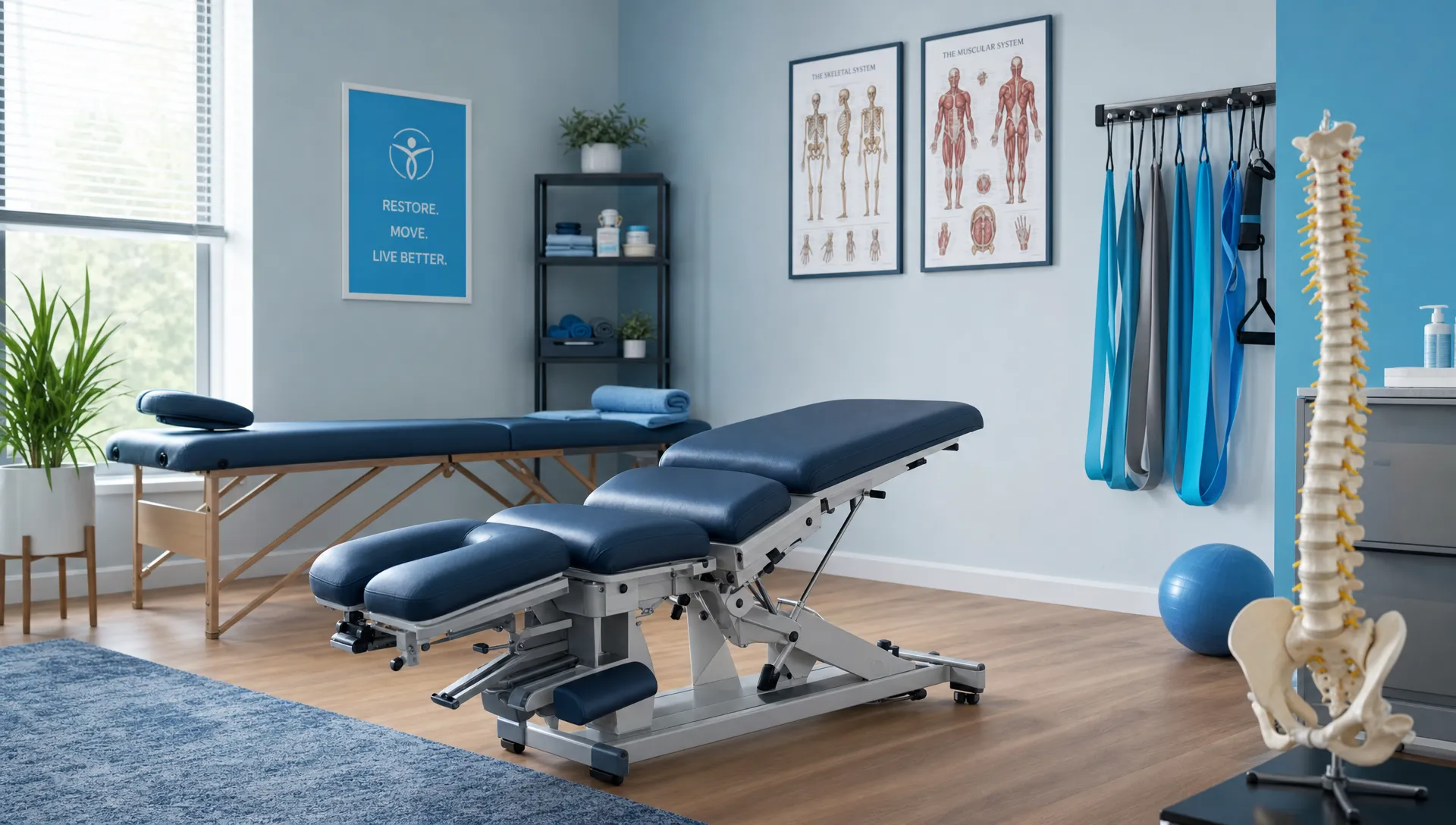
What a smart combined care plan looks like
The strongest plans are specific. They do not rely on the idea that more treatment is automatically better. A combined plan should start with a clear assessment and progress only when your body responds well.
A good provider should clarify the location of pain, how long it has been present, what movements aggravate it, what relieves it, whether symptoms travel into the arms or legs, and whether there are medical factors that change the treatment plan.
From there, care may include hands-on treatment, movement coaching, rehabilitation exercises, posture or workstation suggestions, and a schedule that changes as symptoms improve. At Move Well MD, the broader goal is integrated pain relief that may include chiropractic care, acupuncture, physical rehabilitation, sports medicine, and pain management when appropriate.
The plan should also include a way to measure progress. Useful markers include pain intensity, range of motion, sleep quality, walking tolerance, sitting tolerance, exercise tolerance, and how often symptoms return.
When massage and chiropractic should be used carefully
Hands-on care is not automatically appropriate for every symptom. You should seek urgent medical attention if you have severe trauma, unexplained fever, sudden weakness, loss of bowel or bladder control, numbness in the saddle area, unexplained weight loss, a history of cancer with new severe pain, or a sudden severe headache unlike anything you have felt before.
You should also tell your provider if you are pregnant, have osteoporosis, take blood thinners, recently had surgery, have a known disc herniation, have inflammatory arthritis, or have a history of fractures. These factors do not always rule out care, but they may change the technique, pressure, positioning, or order of treatment.
The safest approach is individualized. Massage pressure can be too aggressive for some conditions, and spinal manipulation may not be the right choice for every patient. The right provider will modify care rather than force a standard routine.
How often should you combine them?
Frequency depends on the condition, severity, and response to treatment. Some people benefit from short-term combined care during a flare-up, then transition to exercise and occasional maintenance. Others may need a more structured plan if pain has been present for months or is interfering with work, sleep, or training.
A practical plan often has three phases. First, reduce pain and calm irritated tissues. Second, restore mobility and improve movement control. Third, build strength and habits that reduce recurrence.
If you need frequent massage just to feel normal, or frequent adjustments because stiffness returns within days, that is a sign to reassess the plan. The question should shift from, “What gives me temporary relief?” to, “Why does this keep coming back?”
For tight muscles specifically, Move Well MD covers how therapeutic chiropractic massage can support tight muscle relief when it is used as part of a broader movement strategy.
Questions to ask before starting combined care
Before booking separate appointments or committing to a treatment plan, ask direct questions. This helps you avoid disconnected care and makes sure each treatment has a purpose.
- What do you think is driving my pain: muscle tension, joint restriction, nerve irritation, training load, posture, or something else?
- Should massage happen before or after chiropractic care in my case?
- Are there any symptoms that mean I should avoid deep pressure or spinal manipulation?
- What should improve after two or three visits if the plan is working?
- What exercises or habit changes should I do between visits?
The answers should be specific to your body and symptoms. If every patient gets the same sequence, same pressure, and same adjustment, the care may not be personalized enough.
Frequently Asked Questions
Can massage therapy and chiropractic care be done on the same day? Yes, many people can receive both on the same day, but the order and intensity should depend on symptoms, medical history, and how reactive the area is. If you are new to care or have radiating symptoms, start with an evaluation.
Is massage better before or after a chiropractic adjustment? It depends. Massage before an adjustment may help reduce guarding and make treatment more comfortable. Massage after an adjustment may help calm residual muscle tension. The best order should match your pain pattern.
Can combined care help sciatica? It may help some people with sciatica-like symptoms, especially when muscle tension, spinal mobility, or hip mechanics contribute. However, true nerve symptoms should be evaluated carefully, especially if you have weakness, numbness, or worsening leg pain.
How do I know if my pain is muscle or joint related? Muscle pain often feels tight, sore, or tender to pressure. Joint-related pain may feel stiff, restricted, sharp with certain movements, or localized around a joint. Many people have both, which is why assessment matters.
Should I keep getting massage if pain returns quickly? If relief only lasts a day or two, the underlying driver may not be addressed. A chiropractor or pain-focused clinician can evaluate whether joint motion, posture, nerve irritation, weakness, or repetitive stress is causing the tension to return.
Ready for a more complete pain relief plan?
If you are dealing with recurring back pain, neck tension, joint stiffness, headaches, shoulder pain, knee pain, or sciatica-like symptoms, you do not have to guess which treatment belongs first. A careful evaluation can help determine whether chiropractic care, acupuncture, rehabilitation, or another pain management option is the right fit.
Move Well MD provides integrated care in Manhattan with a focus on helping patients move better and live with less pain. To learn whether a combined approach makes sense for your symptoms, visit Move Well MD and take the next step toward a personalized plan.
