If you are dealing with tight muscles, back pain, neck stiffness, headaches, or sports-related soreness, it is natural to wonder whether you should book massage first or see a chiropractor first. The short answer: for many muscle-and-joint pain problems, the best order is an evaluation, then massage or soft-tissue work, then chiropractic adjustment, followed by corrective movement or rehab exercises.
That sequence is not a rule for every person. If your pain is new, sharp, radiating, related to an injury, or accompanied by numbness or weakness, you should be evaluated before anyone applies deep pressure or performs an adjustment. But when massage and chiropractor care are used strategically, they can complement each other very well.
Below is a practical guide to choosing the safest and most effective order for pain relief, especially if you live or work in Manhattan and your body is feeling the effects of long desk hours, commuting, workouts, or stress.
Why the order of massage and chiropractic care matters
Pain rarely comes from one structure alone. A stiff lower back may involve irritated joints, tight hip flexors, guarded spinal muscles, weak glutes, and poor sitting posture. Neck pain may involve restricted spinal motion, tight upper traps, jaw tension, and a desk setup that keeps your head forward for hours.
Massage primarily addresses soft tissue: muscles, fascia, trigger points, and circulation. Chiropractic care primarily addresses joint motion, spinal mechanics, nerve irritation, and musculoskeletal alignment. When both are appropriate, the order can influence how your body responds.
Think of it this way: if muscles are guarding around a painful joint, jumping straight into an adjustment may feel more uncomfortable or may not hold as well. If the joint restriction is the main driver of muscle guarding, an adjustment first may allow the muscles to relax afterward. The best plan depends on what is driving your pain.
The American College of Physicians includes non-drug options such as massage, spinal manipulation, exercise, acupuncture, and other conservative therapies in its guideline for low back pain care, depending on whether pain is acute or chronic. You can review the guideline in the Annals of Internal Medicine. The key takeaway is that non-invasive care often works best when it is matched to the patient, not applied as a one-size-fits-all routine.
The best general order: assess, release, adjust, retrain
For many patients with non-emergency musculoskeletal pain, this sequence is a smart starting point.
| Step | What happens | Why it helps |
|---|---|---|
| 1. Clinical evaluation | A chiropractor, physical medicine provider, or pain specialist assesses symptoms, range of motion, posture, strength, and medical history | Helps rule out red flags and identify whether massage, adjustment, rehab, acupuncture, or another treatment is appropriate |
| 2. Massage or soft-tissue therapy | Tight muscles, trigger points, and fascia are treated with manual techniques | Reduces guarding, improves comfort, and may make joint work easier |
| 3. Chiropractic adjustment or mobilization | Restricted spinal or joint motion is addressed with appropriate hands-on techniques | May improve mobility, reduce mechanical irritation, and support better movement patterns |
| 4. Rehab or corrective exercise | You learn targeted exercises, mobility drills, or posture changes | Helps the results last by building strength, control, and healthier daily habits |
This order is especially helpful when pain is driven by stiffness, stress, repetitive posture, or chronic muscle tension. It is also a common approach for people who feel like their muscles are “too tight” for an adjustment to feel comfortable.
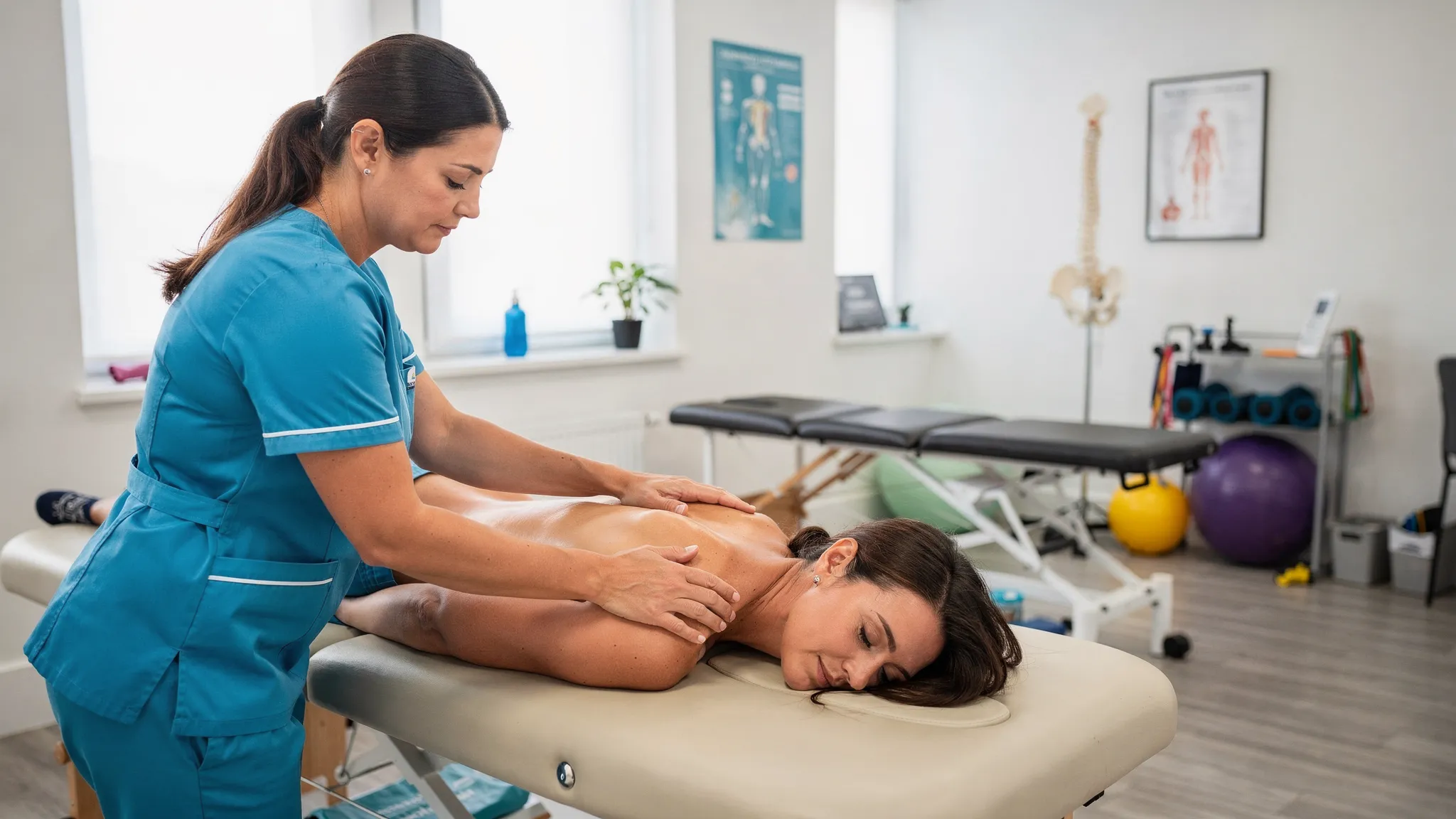
When massage should come before a chiropractor adjustment
Massage before chiropractic care often makes sense when muscle tension is the dominant problem. This can include upper back tightness after computer work, tension headaches linked to neck and shoulder tightness, mild low back stiffness, or post-workout soreness.
Soft-tissue work can help by calming the nervous system and reducing protective muscle guarding. When the surrounding tissues relax, your chiropractor may be able to assess motion more accurately and use a gentler approach.
Massage first may be useful if you notice:
- You feel stiff but not acutely injured
- Your pain improves with heat, stretching, or movement
- Your muscles feel guarded around the painful area
- You have recurring desk-related neck, shoulder, or low back tension
- You are preparing for a mobility-focused chiropractic visit
The National Center for Complementary and Integrative Health notes that massage therapy has been studied for pain-related conditions and may help some people with short-term pain relief and function. Results vary, but when massage is part of a broader plan, it can be a valuable tool.
When you should see the chiropractor first
There are times when massage should not be your first stop. If pain is new, severe, unusual, or linked to an accident, an evaluation should come first. Deep massage over an undiagnosed injury can sometimes irritate tissue, worsen inflammation, or delay the right diagnosis.
A chiropractor or pain-focused clinician should evaluate you first if you have pain after a fall, car accident, lifting injury, sports collision, or sudden twisting movement. The same applies if you have radiating pain down the arm or leg, numbness, tingling, weakness, or symptoms that are getting worse.
See a medical professional urgently if you have loss of bowel or bladder control, saddle numbness, fever with spine pain, unexplained weight loss, history of cancer, suspected fracture, progressive weakness, or severe pain that does not change with position. These are not routine massage or chiropractic situations.
Chiropractic evaluation first is also wise if you are unsure whether your pain is muscular, joint-related, disc-related, nerve-related, or inflammatory. The goal is not simply to “crack” the spine. The goal is to understand what is safe and what is likely to help.
When adjustment before massage may work better
Some people feel better when chiropractic adjustment comes before massage. This may be the right order when a joint restriction is the main issue and the muscles are tightening in response to poor mechanics.
For example, someone with a restricted mid-back may feel constant tightness between the shoulder blades. Massage may provide temporary relief, but the tightness returns because the joint motion problem remains. In that case, chiropractic mobilization or adjustment first may improve movement, and massage afterward can help the surrounding muscles settle.
Adjustment first may also be considered when:
- Your pain feels more like a joint “catch” than a muscle knot
- You have restricted range of motion that does not improve with massage
- You repeatedly get short-term relief from massage but symptoms return quickly
- Your provider determines that joint mechanics are driving muscle tension
- Your body responds better to gentle mobilization before deeper soft-tissue work
According to the NCCIH overview on spinal manipulation, spinal manipulation is commonly used for low back pain and other musculoskeletal conditions, though it is not right for every patient. Proper screening matters.
Best order by pain type
The table below can help you think through common scenarios. It is not a substitute for diagnosis, but it can guide your conversation with a provider.
| Pain situation | Often best order | Why |
|---|---|---|
| Desk-related neck and shoulder tension | Evaluation, massage, chiropractic, posture exercises | Soft-tissue tension and joint stiffness often overlap |
| Chronic low back tightness | Evaluation, massage, chiropractic, core and hip rehab | Releasing guarded muscles may improve adjustment comfort |
| Sciatica-like symptoms | Evaluation first, then targeted care | Nerve symptoms need assessment before deep tissue or adjustment |
| Sports soreness without injury | Massage, mobility work, chiropractic if motion is restricted | Recovery may start with soft-tissue and mobility support |
| Sudden sharp back pain after lifting | Clinical evaluation first | The cause must be identified before treatment intensity increases |
| Headaches with neck stiffness | Evaluation, soft-tissue work, gentle chiropractic if appropriate | Neck muscle tension and upper cervical mechanics can both contribute |
| Pain after a fall or accident | Medical or chiropractic evaluation before massage | Injury, fracture, or nerve involvement must be ruled out |
Can you get massage and chiropractic care on the same day?
Yes, many people can receive both on the same day, as long as the care is appropriate for the diagnosis and your body tolerates it. In an integrated clinic setting, this can be especially helpful because providers can coordinate the order and intensity of care.
A same-day session might include brief soft-tissue work to reduce guarding, a chiropractic adjustment or joint mobilization, then a few corrective exercises. For more sensitive patients, the care may be split across different days to avoid soreness.
If you are seeing separate providers, communication matters. Tell your chiropractor what type of massage you received, how deep it was, and how your body responded. Tell your massage therapist if you had an adjustment and whether there are areas your chiropractor wants treated gently or avoided.
A good rule: do not stack multiple aggressive treatments on the same area just because you want faster relief. More intensity is not always better. Pain relief usually comes from the right dose at the right time.
What to do after combining massage and chiropractic care
The hours after treatment matter. Massage and chiropractic care can create a window where your body moves better, but your daily habits determine whether the change lasts.
After treatment, keep movement gentle. Walk, hydrate, avoid heavy lifting for the rest of the day if you feel sore, and follow any home exercises your provider recommends. Mild soreness can happen, especially after deep tissue work or a first adjustment, but it should not feel like a major flare.
For New Yorkers, one of the biggest challenges is reducing the repetitive strain that caused the pain in the first place. Long subway rides, laptop work, small apartments, and after-hours admin tasks can keep the neck and back under stress. If you spend evenings handling building responsibilities for a condo or co-op, centralizing documents and communication with a tool like Boardly for NYC co-op and condo boards may help reduce the extra laptop time that often feeds posture-related tension.
Small changes can also make a big difference: raise your screen, keep your feet supported, take movement breaks every 30 to 60 minutes, and avoid working from the couch for long stretches. Treatment works better when your environment stops recreating the same problem.
When to add physical therapy, acupuncture, or pain management
Massage and chiropractic care are powerful tools, but they are not the entire solution for every pain condition. If pain keeps returning, you may need a more comprehensive plan.
Physical therapy or rehabilitation can help when weakness, poor movement control, balance issues, or post-injury deconditioning are part of the problem. Acupuncture may be considered for pain modulation, stress-related tension, headaches, or certain chronic pain patterns. Pain management may be appropriate when symptoms are persistent, severe, nerve-related, or not improving with conservative care alone.
At Move Well MD, care can include chiropractic treatment, acupuncture, physical therapy, sports medicine, trigger point injections, and comprehensive pain management when appropriate. That integrated approach is useful because the “best order” is not guessed. It is based on your history, exam findings, symptoms, and goals.
If you want to learn more about spinal care specifically, Move Well MD also explains what to expect from a chiropractic adjustment in NYC and how conservative treatments may fit into a broader plan for pain relief.
How to choose the right order for your first visit
If this is your first time combining massage and chiropractor care, start with an evaluation. Even if you are confident your pain is muscular, a professional assessment can identify mobility restrictions, nerve signs, posture patterns, and strength deficits that may change the plan.
Ask these questions during your visit:
- Is my pain mostly muscular, joint-related, nerve-related, or mixed?
- Should soft-tissue work happen before or after adjustment for my condition?
- Are there areas that should not receive deep pressure?
- What should I do if I feel sore after treatment?
- What exercises or habits will help the results last?
The right provider should be able to explain why they recommend a certain sequence. If the answer is simply “this is how we always do it,” that may not be personalized enough.
Frequently Asked Questions
Is it better to get a massage before or after seeing a chiropractor? For many people with tight muscles and chronic stiffness, massage before chiropractic care can make the adjustment more comfortable. However, if your pain is new, severe, or nerve-related, you should be evaluated first.
Can massage replace chiropractic care? Massage may relieve muscle tension and soreness, but it does not directly address joint restrictions, spinal mechanics, or certain nerve-related problems the same way chiropractic care may. Some people need one, while others benefit from both.
Can chiropractic care replace massage? Chiropractic care may improve joint motion and reduce mechanical irritation, but if muscle guarding or trigger points are a major contributor, massage or soft-tissue therapy may still be useful.
Is it safe to do both on the same day? It can be safe for many patients when properly screened and dosed. If you are very sensitive, recovering from an injury, or prone to flares, your provider may recommend spacing treatments apart.
Should I get a massage if I have sciatica? Not without an evaluation first. Sciatica-like symptoms can involve nerve irritation from several causes. Gentle soft-tissue work may help some patients, but deep pressure in the wrong area can aggravate symptoms.
How often should I combine massage and chiropractic care? Frequency depends on your diagnosis, pain severity, goals, and response to treatment. Some people need a short course of care during a flare, while others benefit from periodic maintenance plus home exercises.
Ready to build the right pain relief plan?
The best order is not always “massage first” or “chiropractor first.” The best order is the one that matches your body, your symptoms, and the cause of your pain.
Move Well MD provides integrated care in Manhattan, including chiropractic care, acupuncture, physical therapy, sports medicine, trigger point injections, and pain management. If you are dealing with back pain, neck pain, joint pain, headaches, sciatica, or sports-related discomfort, a personalized evaluation can help determine the safest and most effective next step.
Schedule a visit with Move Well MD and take the guesswork out of your pain relief plan.
